Virgilio Paz Romero, a Cuban exile convicted for his involvement in the bombing that killed former Chilean ambassador Orlando Letelier in Washington in 1976, is facing possible deportation to a third country. Currently, he is detained by ICE in Miami.
The story of this Cuban national, born in Santa Clara and now in his seventies, was brought to light by The Washington Post, coinciding with the 50th anniversary of the attack on September 21, 1976.
Since January, Paz has been held at the Krome immigration detention center. The Trump administration identified him among non-citizen immigrants convicted of serious crimes as part of their efforts to remove such individuals from the United States.
On August 28, federal judge Darrin P. Gayles denied a request for his release. His defense argued that Paz suffered from "serious medical issues" and that there was "no significant likelihood of deportation in the foreseeable future."
The judge granted the government 30 days to deport him to a third country or release him under supervision. ICE assured the court it was diligently arranging his relocation, and the State Department was negotiating with a third country willing to accept him. Nevertheless, Paz remained at Krome at the time of the report's release.
The case of Paz is intertwined with a significant historical event, linked to one of the most infamous political assassinations in Washington, D.C.
The Infamous 1976 Washington Bombing
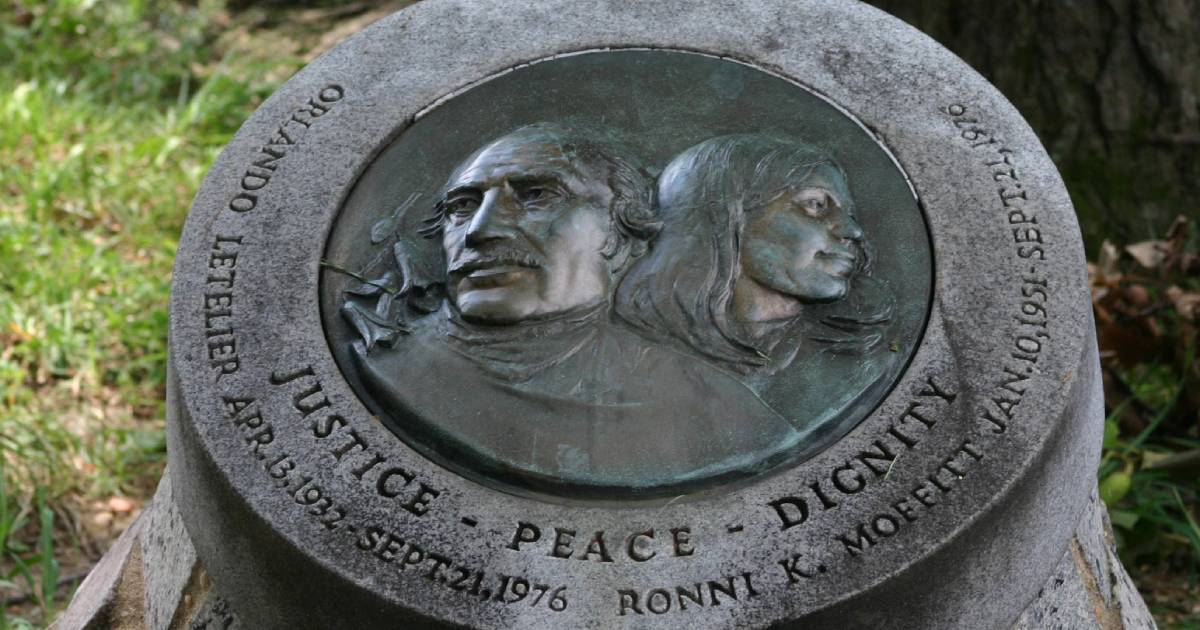
On September 21, 1976, a bomb placed beneath the driver's seat of Letelier's car exploded as it traveled through Sheridan Circle in Washington's diplomatic district. The attack claimed the lives of the Chilean ex-ambassador and American Ronni Karpen Moffitt.
Subsequent investigations revealed ties to the Chilean dictatorship's secret police, known as DINA, and anti-Castro Cuban exiles. The CIA later determined that Chilean dictator Augusto Pinochet had ordered the assassination.
Paz was identified as the person who allegedly triggered the bomb's remote detonator. He evaded U.S. authorities for 15 years, living near Miami under the alias Frank Báez and running a landscaping business.
A Fugitive's Capture and Legal Battles
His escape came to an end in 1991 after his photograph was featured on the TV show "America's Most Wanted," leading to recognition by neighbors.
Paz pleaded guilty to a lesser charge of murder and served seven years out of a 12-year sentence. After his prison release, he spent an additional three years in immigration custody, but in 2001, he was freed as the U.S. was unable to deport him to Cuba.
Reflecting on his involvement in the bombing, Paz once described it as a "grave human mistake" attributed to "my youth."
The Ongoing Deportation Dilemma
Now, 25 years later, Paz faces deportation once more. While Cuba currently accepts deportation flights from the U.S., he has consistently expressed his reluctance to return to the island, where he left as a teenager. According to The Washington Post, he never sought U.S. citizenship, holding onto the hope of returning to Cuba someday.
A Department of Homeland Security spokesperson defended the government's actions, noting that the Trump administration is employing "all legal options" to carry out its deportation campaign. When individuals refuse to return to their home countries, authorities seek alternative nations to accept them.
However, Paz's potential removal is set against a backdrop of legal challenges over third-country deportations. The First Circuit Court of Appeals recently rejected the procedure used by the Trump administration, citing violations of due process when migrants are not given adequate notice or a meaningful chance to argue against potential persecution or torture in the destination country.
This ruling could impact Paz's immediate future, although it remains unclear which third country Washington is negotiating with to accept him.
As uncertainty surrounds his fate, commemorations were held this Monday at Sheridan Circle, where a monument marks the spot where Letelier and Moffitt perished half a century ago.
Legal and Historical Aspects of Paz Romero's Case
Who was Orlando Letelier?
Orlando Letelier was a former Chilean ambassador who became a prominent critic of Chile's military dictatorship. He was assassinated in a bombing in Washington, D.C., in 1976, orchestrated by the Chilean secret police and anti-Castro Cuban exiles.
What is the significance of the First Circuit Court of Appeals ruling?
The ruling by the First Circuit Court of Appeals challenges the legality of the Trump administration's deportation processes to third countries, highlighting issues of due process for migrants who may face persecution or torture if deported.
Why has Virgilio Paz Romero resisted deportation to Cuba?
Paz Romero has resisted deportation to Cuba, citing his reluctance to return to the island where he left as a teenager. He has maintained a desire to return to Cuba eventually but has not pursued U.S. citizenship.