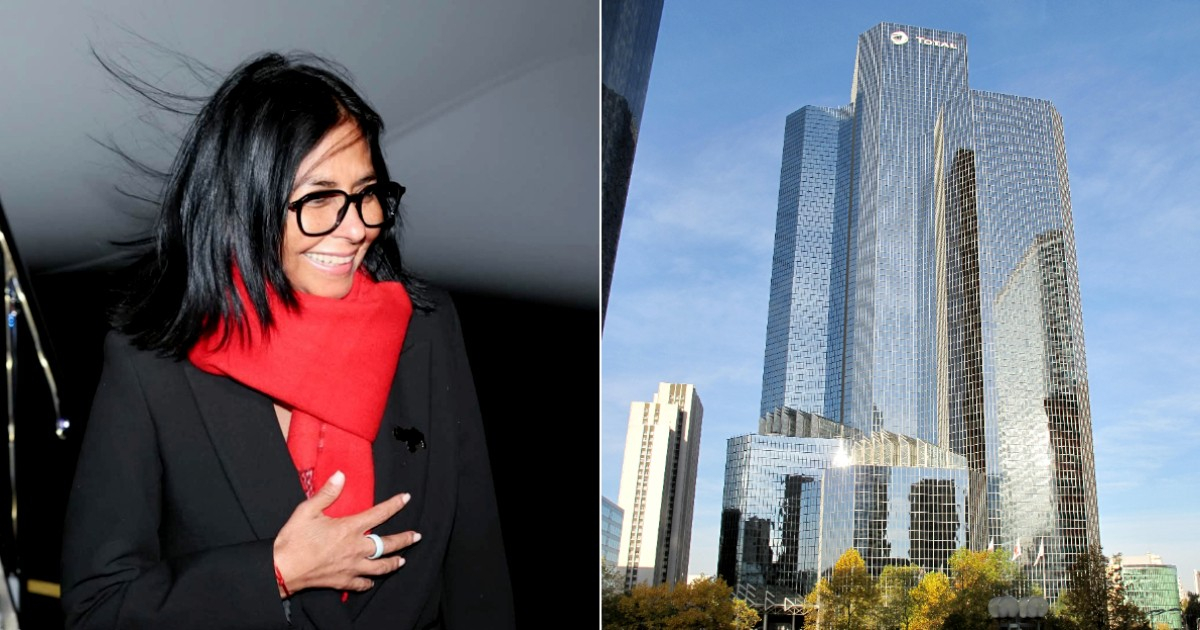
On Saturday, Delcy Rodríguez, the interim president of Venezuela, signed a memorandum of understanding with the French energy giant TotalEnergies for strategic cooperation in the hydrocarbons sector, as reported by Reuters from Caracas.
The agreement was signed by Héctor Obregón on behalf of PDVSA, and Francisco Javier Rielo, the senior vice president for the Americas at TotalEnergies. Specifics regarding operational scope, economic value, involved oil fields, or implementation timeline were not disclosed.
This partnership signifies a notable shift for the French company, which had completely exited Venezuela in 2022 after relinquishing its stake in the heavy crude project Petrocedeño and selling its natural gas assets. By the end of that year, TotalEnergies had no presence in the country.
Earlier this year, the company's CEO, Patrick Pouyanné, had indicated that returning to Venezuela was "not a high priority" and that they were "in no rush," further cautioning that reviving production to one million barrels per day would demand an investment of around $100 billion.
Diplomatic Thaw Between France and Venezuela
The memorandum also coincides with a thaw in relations between Paris and Caracas. In early 2025, the Maduro government limited the presence of French, Dutch, and Italian diplomats in Caracas to three, citing "hostile conduct."
France responded by ordering Venezuela to reduce its diplomatic staff in Paris within five days. This diplomatic crisis stemmed from France's and Europe's rejection of Maduro's inauguration for a third term. Therefore, the agreement with TotalEnergies signifies an economic normalization between the two nations following a period of tension.
Venezuela's Wave of International Agreements
The deal with the French energy firm is the latest in a series of agreements that Rodríguez's government has signed with multinational corporations since Maduro's capture by U.S. forces in January 2026.
The Trump administration immediately initiated a strategy to rejuvenate the sector: convening executives from Chevron, ExxonMobil, Shell, and Repsol at the White House to coordinate the rebuilding of Venezuela's industry and mobilize up to $100 billion in investment.
At the end of August, Trump announced what he described as "the biggest oil deal in history," involving 17 fields, reserves of 65 billion barrels, and a 100-year concession with a 35% stake for the United States.
Upcoming U.S.-Venezuela Diplomatic Engagements
U.S. Energy Secretary Chris Wright visited Caracas in early September to advance these commitments, and Venezuela later participated in the G20 energy ministerial meeting in Houston.
This week, diplomatic engagements are intensifying: the White House confirmed a meeting between Trump and Delcy Rodríguez on the sidelines of the UN General Assembly in New York, scheduled for Monday, September 22. This would mark the first face-to-face meeting between a U.S. president and a Venezuelan leader in over a decade.
Key Questions About Venezuela's Oil Agreements
What is the significance of TotalEnergies' return to Venezuela?
TotalEnergies' return to Venezuela marks a strategic reversal for the company, which had previously exited the country. This move signals potential economic normalization and international investment opportunities in Venezuela's hydrocarbons sector.
How has the diplomatic relationship between France and Venezuela evolved recently?
Diplomatic relations have improved following a previous crisis over diplomatic expulsions and political tensions. The recent agreement with TotalEnergies suggests a thaw in relations and a move towards economic cooperation.
What role does the Trump administration play in Venezuela's oil industry revival?
The Trump administration has been instrumental in coordinating efforts to rebuild Venezuela's oil sector, inviting major multinational energy companies to invest and collaborate in reviving the industry.