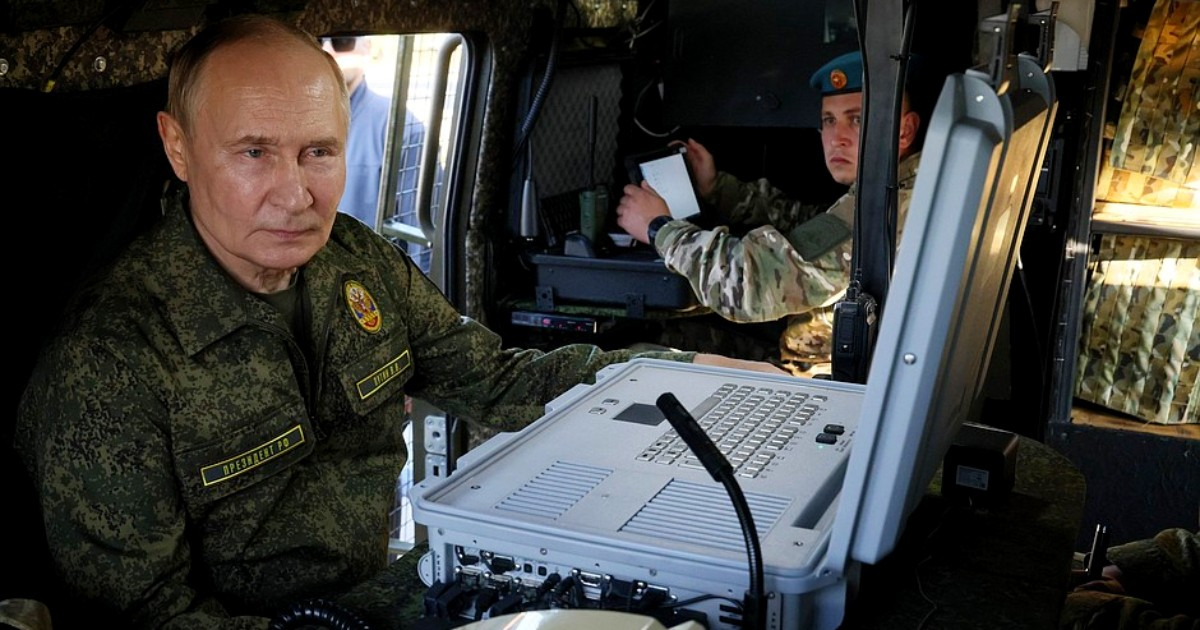
A senior Kremlin official has issued a stark warning, suggesting that Poland could be "wiped off the map" within days if it were to engage militarily against Russia. This alarming statement has further strained the already tense relations between Moscow and NATO, amid heightened alert in Eastern Europe.
Nikolai Patrushev, advisor to President Vladimir Putin and former Secretary of Russia's Security Council, made this threat during an interview with the Russian newspaper Argumenty i Fakty, as reported by the state-run TASS and the Kyiv Post.
"Should Poland engage in military action against Russia, our nation will employ all available forces and means, leading to Warsaw's disappearance within two or three days," Patrushev declared on September 15.
Despite Russia's vast nuclear arsenal, Patrushev did not explicitly mention nuclear weapons in his remarks. Nevertheless, his comments were widely interpreted as a threat of total annihilation.
Response to Polish Diplomatic Comments
The provocative remarks were a direct response to Polish Foreign Minister Radosław Sikorski, who had recently asserted at the Yalta European Strategy conference in Kiev, held between September 12 and 13, that NATO could swiftly defeat Russia if Moscow initiated an attack on the alliance.
"If Russia were to attack us and we responded vigorously, I believe we would quickly defeat them," Sikorski stated, emphasizing the superior air power of the European allies, which includes around 2,500 military aircraft.
Patrushev dismissed Sikorski's analysis as "amateurish," asserting that Russian forces were not fully utilizing their capabilities in Ukraine. This claim contrasts sharply with over four years of intense warfare, during which Moscow has failed to conquer its neighbor and has suffered substantial losses in both personnel and equipment.
Escalation in Eastern Europe
The Russian official's threats come amid a broader escalation in Eastern Europe. This week, Belarus—Russia's closest military ally—conducted significant maneuvers with tanks and mechanized troops near the Suwałki Gap, a 105-kilometer strip between Poland and Lithuania that is considered NATO's most vulnerable point due to it being the sole land connection between the Baltic states and the rest of the alliance.
Polish Prime Minister Donald Tusk has cautioned that his country's intelligence services have uncovered Russian plans for hybrid attacks using drones and missiles against Ukraine's allies, disguised as accidents. "We do not seek war, but if someone starts it, we will defend ourselves," Tusk declared.
This episode is part of a larger Russian hybrid warfare campaign against Europe, which includes cyberattacks, sabotage, and incursions into allied airspace.
European Preparedness
In late July, a Russian Kh-101 missile struck Polish territory in an agricultural field in Lublin, marking the most severe NATO airspace violation since the invasion began.
In August, Germany accused Russia of a drone attack on a civilian airport, and U.S. federal prosecutors charged five individuals with running a Russian intelligence network planning attacks in Europe and America.
Amid this backdrop, European leaders have ramped up their preparedness efforts. France has convened high-level intelligence meetings; the United Kingdom has urged its citizens to stockpile food and water; Germany is readying its hospitals for potential attacks; and NATO has released new national resilience requirements covering everything from energy supplies to healthcare during "crises and conflicts."
Poland, sharing borders with Ukraine, the Russian exclave of Kaliningrad, and Belarus, has been a leading military and political supporter of Kiev since Russia's 2022 invasion.
NATO Secretary General Mark Rutte stated that the alliance regularly conducts exercises against Russian aggression scenarios and that any attack would "provoke a devastating response." However, analysts point out that uncertainty about Washington's commitment to the mutual defense clause weakens deterrence against Moscow.
Understanding the Tensions Between Russia and Poland
What prompted the recent threats from Russia towards Poland?
The threats from Russia were a reaction to comments made by Polish Foreign Minister Radosław Sikorski, who suggested that NATO could quickly defeat Russia if it attacked the alliance.
How has Poland responded to potential Russian aggression?
Poland has warned of possible Russian hybrid attacks and has stated that it will defend itself if provoked. The Polish government is actively preparing for potential conflicts.
What measures are European countries taking in response to Russian threats?
European countries are increasing their preparedness by holding intelligence meetings, advising citizens to stockpile essentials, and ensuring hospitals are ready for emergencies. NATO has also updated its resilience requirements.