The Cuban regime has firmly dismissed allegations by the U.S. Department of State linking Havana to a Russian intelligence network under FBI investigation for alleged criminal and sabotage plans in the United States and Europe.
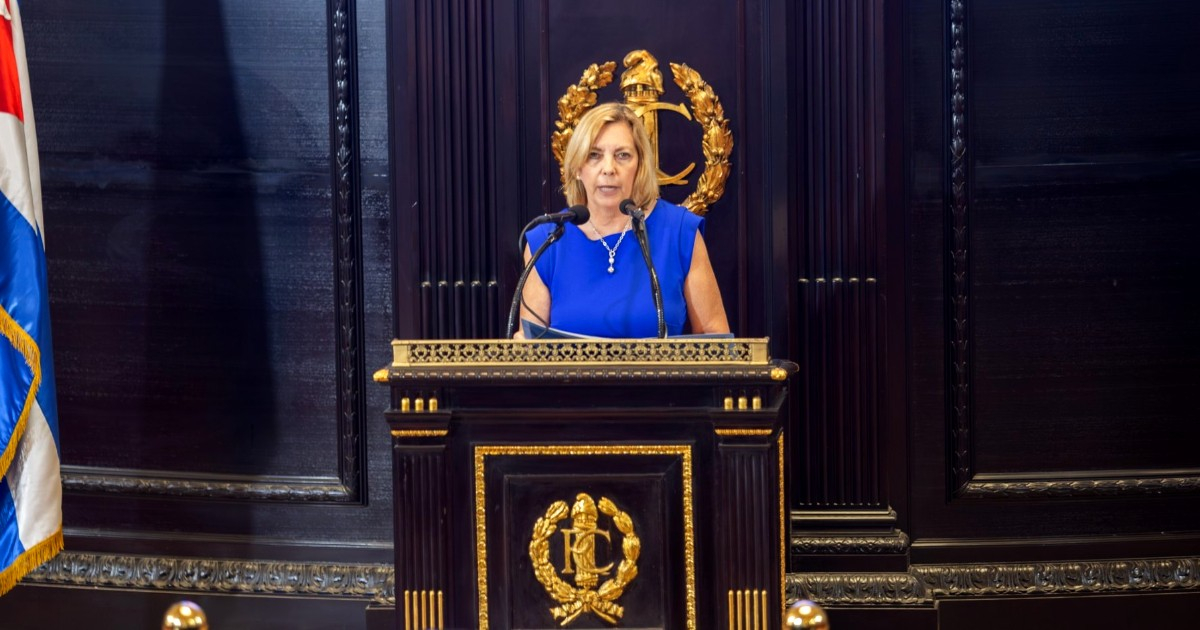
Josefina Vidal Ferreiro, Cuba's Deputy Minister of Foreign Affairs, led the response, echoing the regime's long-standing pattern of systematically denying any involvement in international illicit activities despite emerging evidence.
On social media, Vidal stated that the U.S. Department of State had issued "yet another baseless accusation against Cuba" involving two Cuban citizens connected to the case.
"Attempting to link Cuba to unrelated crimes is a common tactic of those seeking to rationalize the collective punishment imposed on the Cuban people," she added in a follow-up message.
The response came just days after the U.S. Department of Justice officially charged five individuals in a federal court in the Southern District of New York as part of the so-called RIS Network (Russian Intelligence Services).
Among the accused are two Cubans: Oemis Romagoza Durruthy and Yaidel Delgado Suárez, known as "Viking," both 35 years old and currently on the run.
Romagoza Durruthy, originally from Camagüey and living in Petrozavodsk, Russia, where he managed a Latin dance academy named "Made in Cuba," is alleged to be a high-ranking coordinator within the network. The charges claim he orchestrated attacks in Prague and Lithuania during 2024 and gathered images of a Russian dissident's U.S. residence in November 2025. Lithuania has issued an international warrant for his arrest.
Delgado Suárez is identified as a recruiter in the United States for the organization's operations. Alongside 22-year-old Venezuelan Ángel Eduardo Castro, he purportedly offered between $1,000 and $1,500 for preliminary surveillance tasks and up to $40,000 to "eliminate" a dissident referred to as Victim-1 in the indictment. The other accused are Russian nationals Yuri Khrameev, a former 63-year-old intelligence colonel, and his son Kirill, a 27-year-old FSB officer.
The Justice Department claims that the five RIS Network members have been collaborating with Russian intelligence since at least 2024, focusing on dissident surveillance and planning attacks on infrastructure in Ukraine’s allied nations. Their communications were reportedly conducted via encrypted apps to discuss murder-for-hire assignments, surveillance directives, and payment methods.
John A. Eisenberg, Assistant Attorney General for National Security, asserted, "These defendants allegedly operated as part of a global crime network reaching the United States, attempting to recruit both American and foreign citizens to commit crimes at the Kremlin's behest."
Havana’s denials follow a well-documented script. In October 2025, amid reports of Cuban mercenaries in Ukraine, the Ministry of Foreign Affairs (MINREX) declared that Cuba "is not part of the armed conflict in Ukraine" and that any involved Cubans were acting independently without state involvement.
In May 2026, Vidal herself dismissed accusations of Russian and Chinese intelligence operations based in Cuba, asserting that the U.S. had "never presented any official evidence."
This incident is part of the context surrounding the "Cuba: The Capital of 21st Century Communism" report released by the Department of State on July 20, 2026. The report describes the Cuban regime as a "persistent threat" to U.S. national security, documenting decades of espionage, infiltration, and ties with Russia and China.
Last Thursday, the Department of State vowed to dismantle "once and for all" the Cuban networks operating within U.S. borders.
All accused individuals remain at large and face up to 20 years in prison for conspiracy to finance terrorism, along with additional sentences ranging from three to ten years for conspiracy to commit murder-for-hire.
Key Questions on Alleged Cuban Involvement in Russian Intelligence Network
What are the charges against the accused members of the RIS Network?
The accused face charges of conspiracy to finance terrorism and conspiracy to commit murder-for-hire, with potential prison sentences of up to 20 years, plus additional sentences ranging from three to ten years for the latter charge.
Who are the key figures involved in the RIS Network case?
The key figures include two Cuban nationals, Oemis Romagoza Durruthy and Yaidel Delgado Suárez, along with Venezuelan Ángel Eduardo Castro, and Russians Yuri Khrameev and his son Kirill.
How has Cuba responded to the allegations?
Cuba, through Deputy Minister Josefina Vidal Ferreiro, has categorically denied any involvement, labeling the accusations as baseless and a pretext for justifying punitive measures against Cuba.