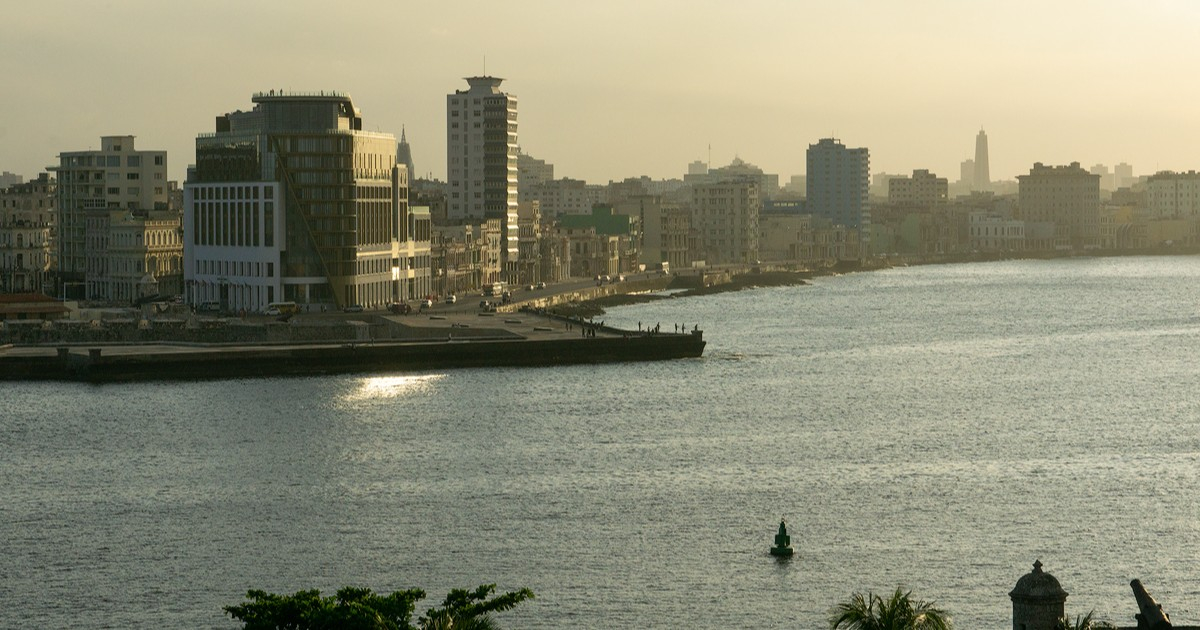
An international study, which included the participation of the Center for Environmental Studies of Cienfuegos (CEAC), has confirmed the presence of several benthic microalgae species from the Gambierdiscus genus along the Havana coastline. Some of these species are associated with the production of ciguatoxins. Notably, this study marks the first identification of Gambierdiscus australes in both Cuban waters and the Caribbean Sea.
The research, published in August 2026 in the scientific journal ACS Environmental Au, identified six species of Gambierdiscus from 35 isolates gathered at two locations on the Havana coast. These analyses also confirmed the presence of C-CTX5 in a Cuban strain of Gambierdiscus silvae, providing new evidence about the origin of ciguatoxins in the Caribbean region.
CEAC publicly released the findings on Tuesday, September 15, with Prensa Latina covering the study the following day.
Significant Discovery of Toxin-Producing Algae
The multidisciplinary and international scientific team isolated and analyzed 35 monoclonal strains of benthic microalgae from samples collected along the Havana coastline. Among these, Gambierdiscus caribaeus was identified as the most prevalent species, according to the Prensa Latina report.
A particularly noteworthy result was the confirmation, through biological assays and mass spectrometry, of the production of ciguatoxin C-CTX5 by a Cuban strain of Gambierdiscus silvae. According to state media, this evidence "reinforces the role of this species as a significant source of ciguatoxins in the region." This toxin could act as a precursor to C-CTX1 and C-CTX2 ciguatoxins, which are predominant in ciguatoxic fish in the Caribbean.
Expanding Knowledge on Microalgal Diversity
Chemical analyses also revealed the presence of other metabolites: gambierone and 44-methylgambierone. Prensa Latina noted that these findings "expand the understanding of microalgal biodiversity in the Caribbean."
The study involved not only CEAC but also specialists from the Institute of Agri-Food Research and Technology and the Rovira i Virgili University in Spain, as well as the Center for Scientific Research and Higher Education of Ensenada (CICESE) in Mexico. The research was part of the CIGUATOX project — "Diversity, distribution, and toxicity of Gambierdiscus spp. and Fukuyoa spp. in Cuba" — funded by the Nuclear Energy Agency and Advanced Technologies (AENTA), with additional support from Spain's BiOCEANsing and CIGUAADAPT programs, and the European project BlueShellfish.
Ciguatera: A Longstanding Health Concern in Cuba
Ciguatera is a food poisoning endemic to the Caribbean, primarily caused by consuming fish that accumulate ciguatoxins initially produced by benthic microalgae from genera like Gambierdiscus and Fukuyoa. In Cuba, this illness has a well-documented history.
An epidemiological study conducted over 16 years in Ciego de Ávila province recorded 46 outbreaks with 305 cases from 1983 to 1998, with no fatalities; nearly half of the outbreaks (47.8%) occurred between July and September. Another study with 227 patients treated in Havana between 1999 and 2005 identified barracuda as the most frequently associated species with intoxications, accounting for 74 cases.
Cuban regulations prohibit or restrict, depending on species and weight, the capture, landing, and sale of various potentially toxic fish, including barracuda, coronado, jack crevalle, and certain species of groupers and snappers. These regulations have historically helped reduce incidents linked to the formal fishing circuit, although controlling ciguatera requires ongoing epidemiological and health surveillance, especially concerning unauthorized catches and sales.
Symptoms of ciguatera range from gastrointestinal issues — such as nausea, vomiting, diarrhea, and abdominal pain — to neurological conditions like tingling, numbness, and muscle weakness, as well as cardiovascular disturbances. The 2026 Cuban health context exacerbates concerns: in August, 52 individuals were affected by a mass food poisoning in Santiago de Cuba, and another outbreak was reported this Friday in Matanzas.
The CEAC, based in Cienfuegos, is a Cuban institution dedicated to environmental research with a significant focus on marine-coastal ecosystems. In 2024, it was designated by the International Atomic Energy Agency (IAEA) as a collaborative center in Cuba for coastal and marine health issues.
Understanding Ciguatera and Its Impact
What is ciguatera poisoning?
Ciguatera poisoning is a type of food poisoning that occurs when people consume fish contaminated with ciguatoxins. These toxins are produced by certain types of microalgae, such as those from the Gambierdiscus genus.
How is ciguatera being managed in Cuba?
Cuba has implemented regulations that prohibit or restrict the capture and sale of fish species known to accumulate ciguatoxins. Additionally, ongoing epidemiological and health surveillance is necessary to manage and control ciguatera outbreaks.
Which fish are most commonly associated with ciguatera poisoning in Cuba?
In Cuba, the barracuda is the fish species most frequently associated with ciguatera poisoning. Other species include coronado, jack crevalle, and certain groupers and snappers.