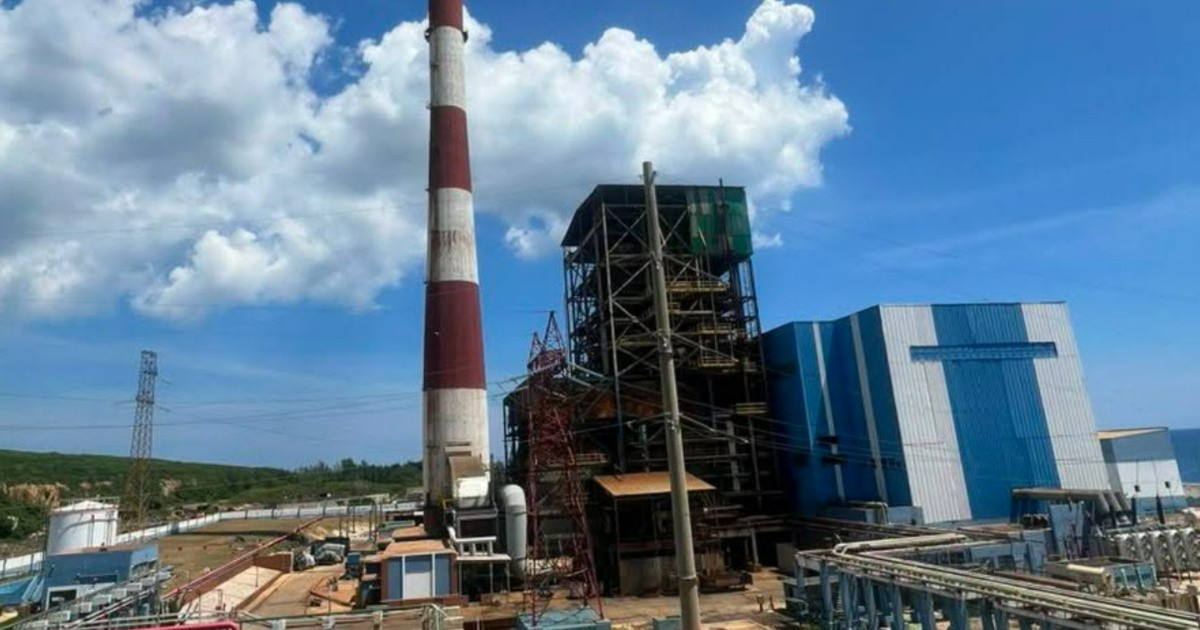
A preliminary inspection conducted on Saturday confirmed that the latest malfunction at the Antonio Guiteras Thermoelectric Plant, Cuba's largest power facility, is located in the economizer of its boiler. This information was shared by the plant itself on its Facebook page.
This breakdown comes in the wake of the eighth nationwide blackout of the National Electric System (SEN) in 2026, which occurred on Friday at 1:57 PM. The outage was triggered by the successive disconnection of two 220 kV transmission lines originating from Matanzas—the Matanzas-Cienfuegos and Matanzas-Santa Clara lines. The mechanical stresses from this complete disconnection likely exacerbated or caused the malfunction at the Matanzas plant.
Although the SEN was restored across the country by 4:42 AM on Saturday, the Guiteras plant remained offline due to the confirmed issue with the economizer.
Maintenance and Repairs Amidst System Challenges
According to official reports from the plant, maintenance teams are utilizing the downtime to perform additional tasks such as cleaning and adjusting all elements of the burner lances and washing the regenerative air heaters (CAR).
The economizer, a heat exchanger that preheats boiler feedwater using waste heat from combustion gases, is crucial for the thermal efficiency of the plant. Its failure leads to steam losses, necessitating a complete shutdown of the unit.
This component has been a persistent problem for the Guiteras throughout 2026. The plant has experienced at least 17 unplanned outages this year, with approximately half attributed to the economizer, according to reports on the status of Cuba's largest thermoelectric plant.
Ongoing Issues and Future Prospects
The economizer comprises 136 elements, each containing three tubes, with failures occurring in various locations, indicating widespread deterioration. In June, the plant's director, Román Pérez Castañeda, mentioned that over 100 faulty weld seams needed replacement, and a compromised seam had damaged three additional tubes.
A comprehensive solution would require replacing about 500 tubes and between 1,000 and 1,200 weld seams during an overhaul expected to last around 180 days—maintenance the authorities have acknowledged they cannot currently undertake. Partial repairs—such as replacing specific tubes and redoing welds—create a repetitive cycle of shutdowns, brief reactivations, and new failures within days.
Situated in Matanzas, the Guiteras plant has an installed capacity of 320 MW, has been in operation for approximately 38 years, and has not undergone a complete overhaul in 16 years. This situation, acknowledged by the Cuban regime, remains unaddressed due to resource constraints.
Following a disconnection, the boiler takes nearly 72 hours to cool down sufficiently for safe inspection and repair, meaning that the plant cannot rejoin the SEN until several days have passed, prolonging the impact on an electrical system that experienced an estimated 1,400 MW outage during midday on Friday.
Understanding the Challenges of Cuba's Energy Sector
What caused the recent blackout in Cuba's National Electric System?
The recent blackout was caused by the successive disconnection of two 220 kV transmission lines originating from Matanzas, which led to a complete system outage.
What is the role of the economizer in a thermoelectric plant?
The economizer is a heat exchanger that preheats boiler feedwater using waste heat from combustion gases, thereby improving the plant's thermal efficiency.
How long does it take for the Guiteras plant to be inspected after a shutdown?
After a shutdown, the plant's boiler requires almost 72 hours to cool down before it can be safely inspected and repaired.