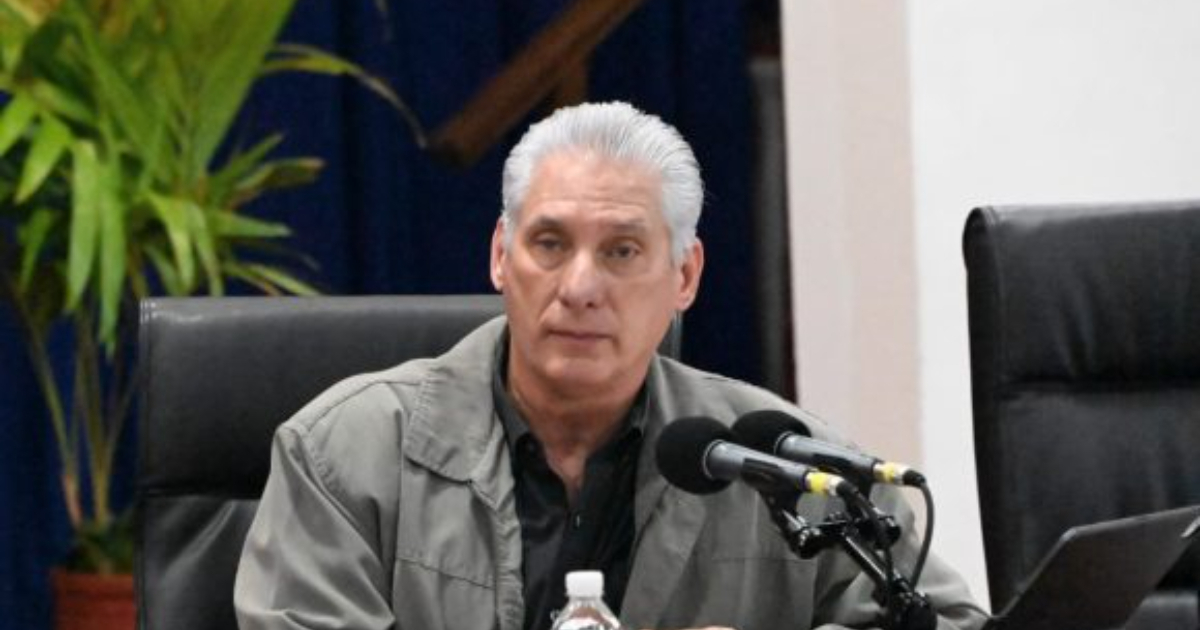
Over the weekend, Cuban leader Miguel Díaz-Canel issued a defiant response to the latest U.S. sanctions aimed at Cuba, posting a bold message on the social media platform X. He declared, "The week ends with new imperial dictates against those working for Cuba's livelihood."
In his social media post, Díaz-Canel challenged Washington, encapsulating the official stance of Havana: "The list of 'sanctioned' will be endless. We are millions—in Cuba and worldwide—crafting the grand saga of Cuban resistance with talent, patriotism, and solidarity."
This statement came just two days after Secretary of State Marco Rubio announced punitive measures against 11 Cuban actors—eight entities and three individuals—connected to the Revolutionary Armed Forces and the nickel sector.
The military-related entities named include SIMPRO, CIDNAV, CIDAI, and GELCOM, which are involved in simulation, the Navy, infantry weaponry, and military electronics.
In the mining sector, sanctions impacted SERCONI, CEPRONIQUEL, CEDINIQ, and PINARES S.A., targeting a crucial source of revenue for the regime.
These actions were taken under Executive Order 14404, signed by Trump on May 1, 2026, expanding the legal framework to block assets, deny entry to the U.S., and penalize foreign financial institutions dealing with designated Cuban entities.
Foreign Minister Bruno Rodríguez condemned the new measures as part of a strategy of "maximum economic strangulation" and "collective punishment" against the Cuban people, reiterating that no negotiations are currently underway with Washington.
Díaz-Canel's response fits into a consistent pattern of resistance rhetoric maintained throughout 2026, amid a steady increase in U.S. pressure. In July, he described the sanctions as a "genocidal design plan"; in September, he called them "state terrorism" and accused Washington of aiming to "starve" the Cuban population into submission.
The Trump administration's pressure campaign has resulted in over 250 sanctions since January, affecting sectors like energy, tourism, mining, medical missions, and intelligence.
Noteworthy events include the direct sanctioning of Díaz-Canel, his wife Lis Cuesta Peraza, and Alejandro Castro Espín on June 4; and the designation of Raúl Castro's grandson and five additional entities on September 3.
While the regime continues its defiant declarations, Cuba's economic and energy situation worsens.
Rodríguez reported the embargo's accumulated damage at $8.083 billion between March 2025 and February 2026, a 7% increase over the previous period, based on figures presented to international bodies.
Rubio stated that the U.S. has imposed "the strongest sanctions in history" against Cuba and that pressure will persist unless the regime changes course.
Understanding Recent U.S. Sanctions on Cuba
What prompted the latest U.S. sanctions against Cuba?
The recent U.S. sanctions were imposed due to Cuba's continued support for its military apparatus and nickel sector, which are seen as key components of the regime's power structure.
Who are the main targets of these sanctions?
The sanctions target eight entities and three individuals connected to the Revolutionary Armed Forces and the nickel industry, including entities like SIMPRO and Pinares S.A.
How has Cuba responded to these measures?
Cuban leader Miguel Díaz-Canel and Foreign Minister Bruno Rodríguez have condemned the sanctions, labeling them as economic warfare and accusing the U.S. of trying to force Cuba into submission through economic hardship.
What are the potential impacts of these sanctions on Cuba?
The sanctions are expected to worsen Cuba's economic and energy crises by targeting crucial revenue sources, further straining the country's financial stability.