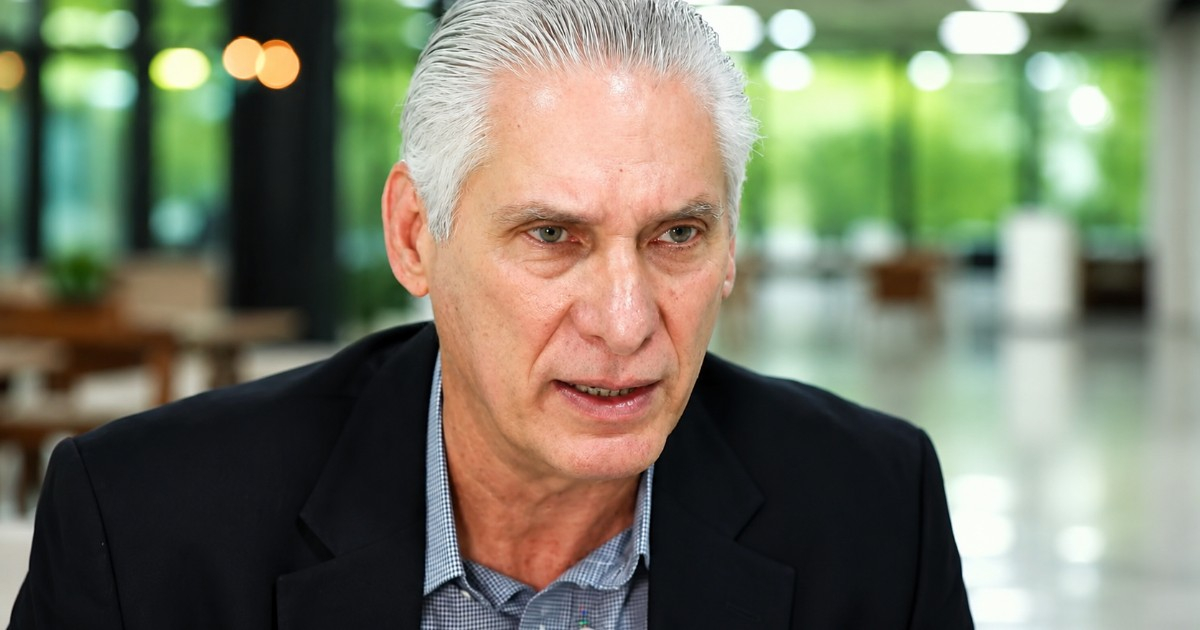
On Saturday, Cuban President Miguel Díaz-Canel took to his social media account on X to express gratitude towards Democrat Congresswoman Maxine Waters. Waters had delivered a passionate critique to U.S. Treasury Secretary Scott Bessent, questioning the Trump administration’s sanctions against Cuba.
Díaz-Canel shared a video of Waters' remarks, praising her for her courage: "With her characteristic dignity, Representative Maxine Waters has confronted the Treasury Secretary about the criminal policy of the #Blockade. Thank you, Maxine. As you rightly say, history will not forgive them, but it will honor the dignified Americans who speak out against this crime."
Waters' comments were made on September 15 during a hearing of the House Financial Services Committee. She directly challenged Bessent concerning the energy restrictions imposed on the island.
"They have cut off all oil to Cuba. They are starving families, starving children. They have no electricity, they can't get food. What are you doing, Mr. Secretary? Why are you so cruel?" Waters demanded, according to the video transcript shared by Díaz-Canel.
Waters further urged Bessent to act independently: "I know we have a cruel president, but do you have to be a puppet? Do you have to do everything he wants?"
The congresswoman, who has represented California's 43rd district since 1991, concluded with a warning: "History will not be kind to you or this administration. Let the oil flow. Allow them to have electricity. Let them trade and feed themselves."
Díaz-Canel's message comes amid a steady increase in U.S. sanctions against Cuba. Just two days earlier, on September 17, Washington announced measures targeting 11 entities and individuals linked to Cuba's military and mining sectors, as reported by Reuters.
Earlier this month, Secretary of State Marco Rubio revealed new sanctions on the energy, financial, and mining sectors, including Comercial CUPET S.A. and ABAPET.
This mounting pressure coincides with Cuba's worst energy crisis in decades. By 2026, the electrical generation deficit is expected to surpass 2,400 MW, with blackouts affecting up to 70% of national demand.
In May, Energy and Mines Minister Vicente de la O Levy admitted the island lacked reserves of fuel oil and diesel for electricity generation.
The Cuban regime blames the U.S. embargo for the crisis, although analysts point to internal structural issues such as chronic underinvestment, mismanagement, and deteriorating electrical infrastructure.
Díaz-Canel has previously sought support from Democrat lawmakers. In April, he welcomed Congress members Pramila Jayapal and Jonathan Jackson to Havana, and in July, he met with four other Democrat legislators to discuss the embargo's impact.
Meanwhile, Waters has a long-standing critical stance on these sanctions, dating back to 1999 when she led the first Congressional Black Caucus delegation to visit the island.
Understanding U.S. Sanctions on Cuba
What prompted Díaz-Canel's public thanks to Maxine Waters?
Díaz-Canel thanked Waters for her vocal criticism of the U.S. Treasury’s sanctions against Cuba, highlighting her defense against the policies he deems harmful to the Cuban people.
What are the main criticisms against the sanctions imposed on Cuba?
Critics argue that the sanctions exacerbate the hardships faced by Cuban families, leading to shortages of essential goods and energy, and hindering economic development.
How has the Cuban energy crisis been affected by recent sanctions?
The sanctions have intensified Cuba's energy crisis, contributing to significant electrical generation deficits and widespread blackouts affecting large portions of the population.