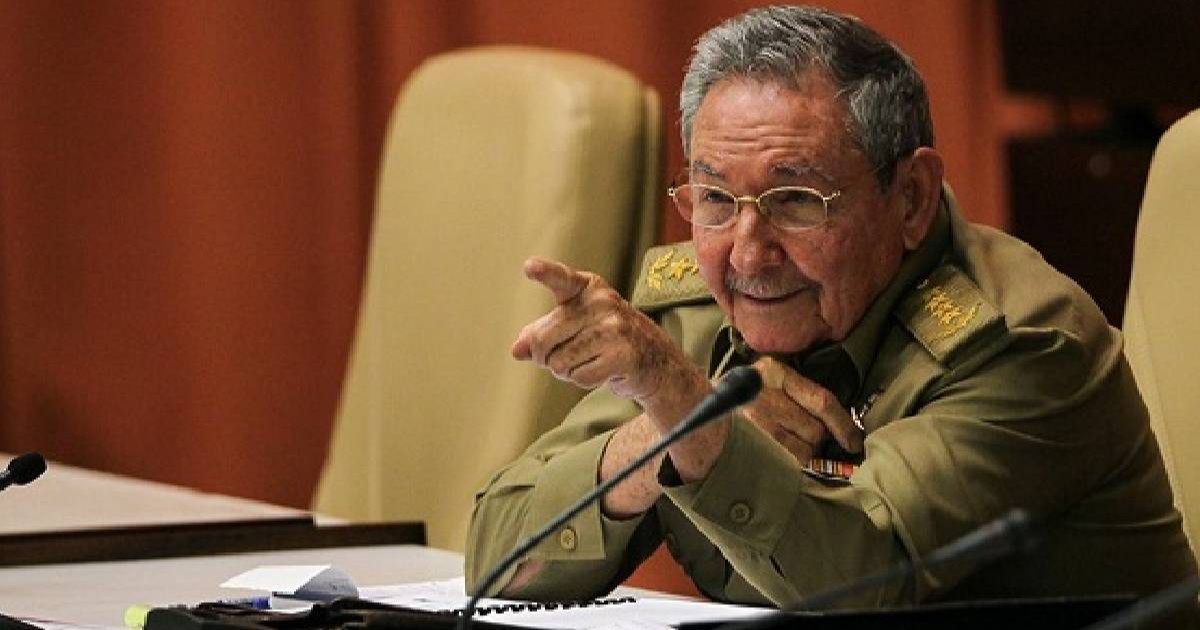
The state-run media outlet Cubadebate recently published an opinion piece titled "Raúl," authored by Mexican philosopher and communicator Fernando Buen Abad. The article showers praise upon Raúl Castro, portraying him as a beacon of "revolutionary permanence" endowed with an "extraordinary capacity for political leadership."
This piece is part of a coordinated propaganda effort by the Cuban regime surrounding the 95-year-old former leader, whose health remains a topic of growing concern and whose actual political influence is debated.
Buen Abad, who has longstanding ties to Cuban media and forums, depicts Castro as the embodiment of "discipline, memory, method, experience, and responsibility," arguing that surviving such a succession of eras requires more than mere biological longevity: it demands an extraordinary political leadership capacity.
The article traces the ex-leader's journey from the Moncada Barracks assault in 1953, his 13-year prison sentence, the 1955 amnesty, the Granma landing in 1956, to commanding the Second Eastern Front Frank País in 1958. It concludes that "permanence is not mere repetition, and perhaps therein lies the deepest hallmark of his persona."
This publication follows Raúl Castro's public reappearance on September 6 at an event commemorating the 65th anniversary of the MININT's Personal Security Directorate, alongside Miguel Díaz-Canel, where he did not speak, fueling speculation about his health after months of rumors about his possible demise or severe physical decline.
Just days before the article, on September 7, the International Book Fair in Santiago de Cuba concluded with the presentation of "Raúl Castro's Selected Works," a nine-volume collection comprising over 500 documents and more than 5,000 pages, published by Ediciones Celia.
The regime's propaganda campaign around Castro has intensified throughout 2026, with slogans such as "Raúl is Raúl" and "With One Foot in the Stirrup," which have been active since September 2025 and revitalized this year.
His public appearances have been sparse and laden with symbolism: he appeared visibly weakened on May 1, resurfaced for Fidel Castro's centennial event on August 14, and, for the first time in decades, he missed the central act for National Rebellion Day on July 26, where Díaz-Canel read a message signed by him.
In June, Díaz-Canel himself described him as "alive but retired for health reasons" and "frail due to his advanced age" while Castro turned 95 amid news of his indictment in the United States for the 1996 shootdown of aircraft.
Thus, the regime enlists sympathetic foreign intellectuals to project an image of historical relevance and legitimacy that starkly contrasts with the reality of an ex-leader whose health is fragile and whose real influence on the lives of Cubans—marked by decades of repression, scarcity, and mass exodus—is entirely omitted by the Cubadebate article.
Buen Abad's piece concludes with a statement encapsulating the propagandistic tone: "Raúl Castro has embodied conviction in discipline, memory, method, experience, and responsibility. This is, perhaps, the soberest form of revolutionary integrity."
Understanding Raúl Castro's Political Influence
What is the current state of Raúl Castro's health?
Raúl Castro's health is reportedly fragile due to his advanced age, fueling speculation and concern about his well-being.
How does the Cuban regime portray Raúl Castro?
The Cuban regime portrays Raúl Castro as a symbol of revolutionary resilience and political leadership, using propaganda to maintain his historical legitimacy.
What role does Raúl Castro currently play in Cuban politics?
While Raúl Castro is described as retired due to health reasons, his actual influence in Cuban politics remains a topic of debate.