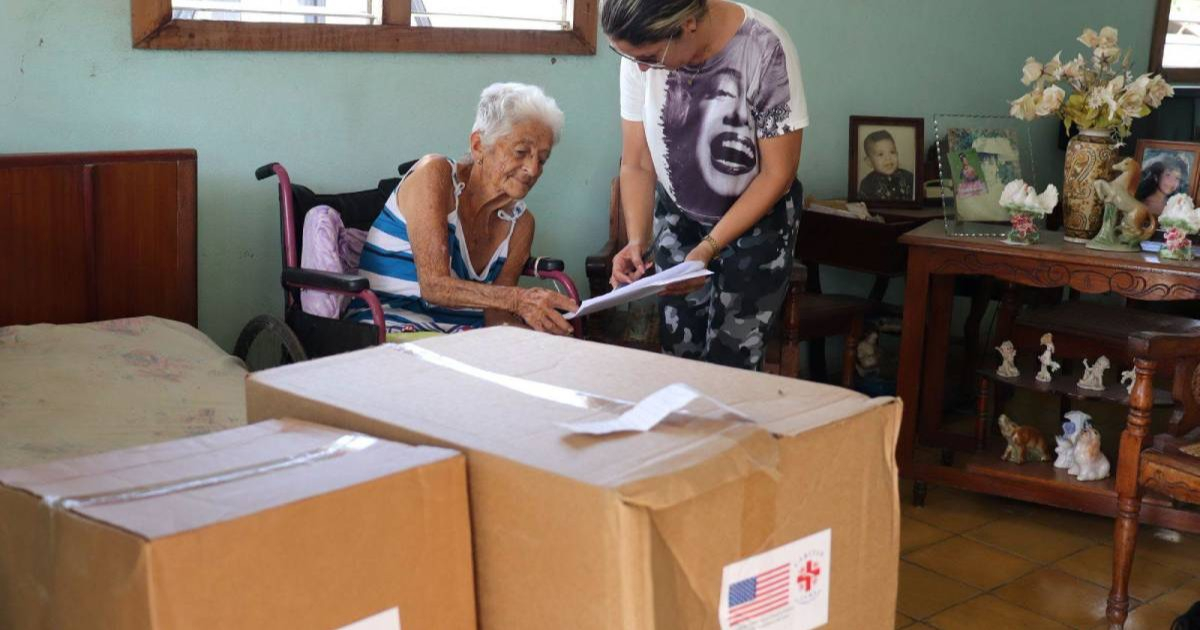
On Saturday, Cáritas Cienfuegos successfully distributed around 700 food and hygiene kits to families in the Parish of San Antonio de Padua and nearby communities in the Lajas municipality. This delivery occurred just 24 hours after the shipment, sent from the United States, touched down in the province, as noted by the organization on its social media platforms.
The distribution, organized under the $100 million humanitarian program approved by the U.S. government, was completed in a single day. This was made possible by the efforts of approximately 50 volunteers and more than a dozen dockworkers who began their tasks at the break of dawn.
Essential Supplies for Vulnerable Communities
The food packages consisted of rice, beans, oil, sugar, pasta, sardines, and tuna, while the hygiene kits included soap, detergent, toothpaste, toothbrushes, water purification tablets, and rechargeable lamps.
To ensure the aid reached even the most isolated areas, carts were used to transport the boxes to remote and rural regions.
Cáritas emphasized that this approach ensured that aid also reached homes of individuals with disabilities, the sick, and bedridden, who received the assistance directly from Cáritas volunteers in Lajas.
Prioritizing Those in Greatest Need
The selection criteria focused on those most at risk: seniors over 60, individuals with disabilities, pregnant or nursing women, and children under five. These groups were directed to distribution points established within the parish and its surrounding communities after being identified as vulnerable.
The local response was deeply moving. Cáritas recounted touching scenes from the streets of Lajas—hometown of the legendary musician Benny Moré—where a neighbor expressed joy because a bedridden woman in her neighborhood received help, and an elderly woman in a wheelchair couldn't hold back her tears. Many simply gave thanks to God.
Logistics and Impact of the Aid Program
The shipment had arrived the previous Friday at Abel Santamaría International Airport in Santa Clara, welcomed by Father Manel Homar Toboso, the Vicar General of the Diocese of Cienfuegos, and Ana Isabel Palenque Guillemí, director of Cáritas Cienfuegos.
The organization acknowledged the limitations of this initiative: "The aid does not cover all needs nor reaches all the Cuban citizens currently in vulnerable situations," though it emphasized the relief it provided to the people of Lajas amidst the ongoing crisis.
This delivery to Cienfuegos marks part of a broader geographic expansion of the program, which, as of September 16, extended its reach to five provinces: Camagüey, Ciego de Ávila, Cienfuegos, Matanzas, and Pinar del Río. Of the total $100 million, $60 million is channeled through the Catholic Church—via Cáritas Cuba and Catholic Relief Services—and the remaining $40 million through other independent organizations, with no involvement from the Cuban state at any stage of the process.
Cáritas announced plans to provide more details on the distribution in Lajas, including testimonials from beneficiaries and volunteers who took part in the event. The overall program is expected to benefit between 100,000 and 120,000 families across Cuba.
Frequently Asked Questions about U.S. Aid in Cienfuegos
What items are included in the aid kits distributed by Cáritas Cienfuegos?
The aid kits include essential food items like rice, beans, oil, sugar, pasta, sardines, and tuna, as well as hygiene products such as soap, detergent, toothpaste, toothbrushes, water purification tablets, and rechargeable lamps.
Who is prioritized to receive aid in Cienfuegos?
The aid prioritizes vulnerable groups, including seniors over 60, individuals with disabilities, pregnant or nursing women, and children under five, who have been pre-identified based on their vulnerable conditions.
How is the aid distributed to remote areas?
Carts are used to transport the aid boxes to rural and hard-to-reach regions, ensuring that even the most isolated communities receive the necessary supplies.