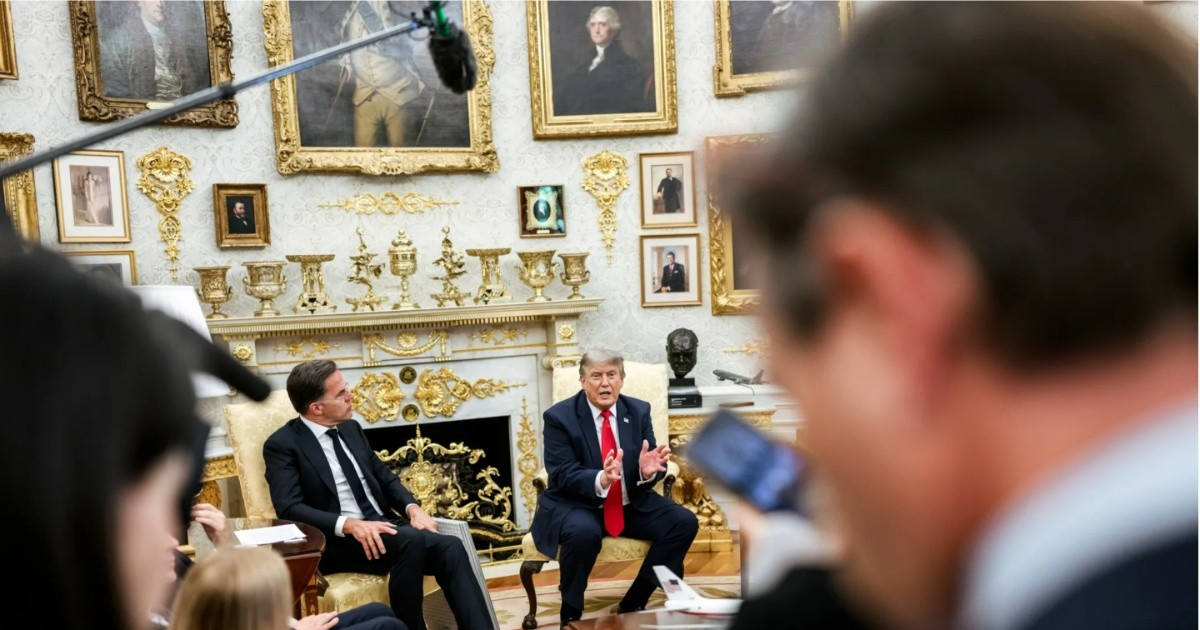
Journalists representing CNN, MS NOW, and Politico were physically barred at the White House gates this Saturday, following President Donald Trump's announcement of an entry ban for these three media outlets, accusing them of spreading "fake news."
According to CNN reports, reporter Betsy Klein was stopped at the entrance, with a Secret Service agent confiscating her press pass, informing her it had been "deactivated." Klein recounted the incident live, stating, "I asked if he could explain why it was deactivated. He said he had no further information. I inquired again if there were any additional details, and he directed me to the White House Press Office."
MS NOW correspondent Akayla Gardner faced a similar situation when attempting to scan her credentials through security checkpoints. "An officer asked me to hand over my credential, stating it was deactivated. I asked why I couldn't enter, and he said it was beyond him," Gardner reported during a live broadcast outside the premises. The channel's photographer also had their pass removed. Conversely, a producer from the same network who arrived later was allowed in without issues, causing confusion among the security personnel.
Later that morning, Politico journalist Cheyenne Haslett faced rejection at the entrance. The outlet's editor-in-chief, Jonathan Greenberger, issued an internal memo asserting, "We will vigorously defend our First Amendment rights."
Legal Actions and Constitutional Concerns
The three media organizations announced plans to pursue legal action. CNN released a statement calling the ban "an illegal attack on this fundamental right" and vowed to continue their journalistic mission "regardless of any attempt to limit physical access to the White House." MS NOW declared that they would take "all necessary steps to defend our First Amendment rights and the essential role of independent journalism in our democracy."
Constitutional experts have labeled the measure unconstitutional. Bruce D. Brown, president of the Reporters Committee for Freedom of the Press, stated, "The First Amendment is clear: once the White House invites some journalists, it cannot exclude others because it dislikes their coverage. This is viewpoint discrimination and will be swiftly overturned by the courts if challenged." Clayton Weimers, executive director of Reporters Without Borders in North America, added, "Press access is not a privilege for journalists. It is a right to ensure the American public can be independently informed."
Impact on Upcoming Events and Historical Context
The ban, announced on Friday via Truth Social, surprised several White House staff members, including those within the press office, who scrambled to understand the details of the measure. This action comes just weeks before the 2026 midterm elections, as Trump grapples with a 33% approval rating—his lowest ever according to a Reuters/Ipsos poll—and a week fraught with negative headlines, including an unpopular war in Iran and rising gas prices.
The ban is part of a pattern of press restrictions during Trump's second term. In February 2025, the administration barred an AP reporter from the Oval Office after the agency refused to adopt the term "Gulf of America." In April 2026, Trump threatened a journalist with imprisonment over leaked classified information.
It remains unclear how the ban will affect CNN's role in the presidential press pool, as it is one of the five television networks that rotate this responsibility. The network was scheduled to cover Trump's trip to New York on Monday for the United Nations General Assembly, and all five major networks were actively discussing the implications of the ban this Saturday.
Questions and Answers on Press Freedom and White House Access
Why were CNN, MS NOW, and Politico banned from the White House?
President Trump accused these media outlets of spreading "fake news" and announced the ban as a response.
What legal actions are being taken by the media organizations?
CNN, MS NOW, and Politico have announced plans to pursue legal action, defending their First Amendment rights against the ban.
How does this ban relate to previous actions by the Trump administration?
The ban is part of a series of press restrictions during Trump's second term, including barring specific reporters and threatening journalists with imprisonment over leaks.