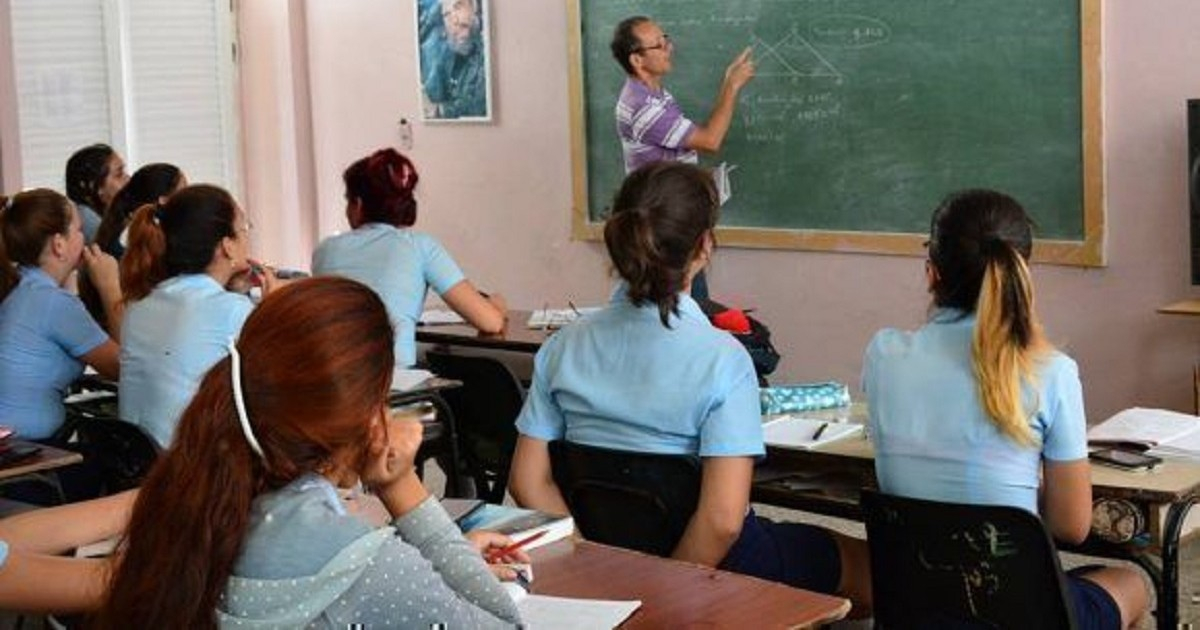
The Cuban Ministry of Education (MINED) has sanctioned Resolution 31/2026, which outlines a fresh approach for assessing the performance of educational staff. This new methodology was detailed on Friday in the Official Gazette No. 78, Ordinary 2026, spanning pages 176 to 188.
Authorized by Minister Naima Ariatne Trujillo Barreto, this directive replaces Resolution 160 from June 16, 2014, which had governed the evaluation process for more than a decade.
The updated evaluation criteria are applicable to the entire National Education System, encompassing not only classroom teachers but also those involved in advisory roles, inspections, methodological training, and specialized student support.
The resolution emphasizes that evaluation is an ongoing process, intended to educate and correct individuals as they progress in their professional duties.
School administrators, in collaboration with union organizations, are required to conduct monthly reviews focusing on each teacher's objectives, responsibilities, duties, and personal development plans.
Performance assessments will consider three key factors: work results, preparation for task execution, and personal traits aligned with pedagogical and professional ethics. Among these, 'work results' is the most comprehensive indicator, evaluating aspects such as work discipline, teaching quality, engagement with student and community organizations, political-ideological education, student attendance and retention rates, attention to individual student needs, and family coordination.
At the end of each academic year, evaluators must prepare a three-part evaluation certificate: one copy for the institution's administration for future reference, another for the employee's personnel file in Human Resources, and a third for the teacher as a formal notification.
This resolution is legally grounded in the Third Special Provision of the new Cuban Labor Code (Law 189/2026), sanctioned by the National Assembly on July 30, and also featured in Gazette No. 78. This provision explicitly empowers MINED to regulate teacher evaluations.
Simultaneously, the same issue of Gazette No. 78, Ordinary 2026, published Resolution 56/2026 from the Ministry of Higher Education, which similarly governs the evaluation of university faculty members.
This regulation emerges amid a profound educational crisis: at the start of the current school year, Cuba faced a shortage of around 24,000 teachers, with only 73% of teaching positions filled. Minister Trujillo herself admitted that schools would open under "very challenging" conditions, lacking uniforms, materials, and sufficient educational staff.
Understanding Cuba's New Educational Evaluation System
What is the purpose of the new evaluation methodology introduced by MINED?
The new evaluation methodology aims to provide a continuous process for educating and correcting educators, enhancing their professional growth and ensuring high standards in educational delivery.
How does the new regulation affect teachers in Cuba?
Teachers in Cuba will be subject to monthly reviews of their performance, focusing on their objectives, responsibilities, and development plans, with an emphasis on work results, task preparation, and personal attributes aligned with ethical standards.
What challenges are currently faced by the Cuban educational system?
Cuba's educational system is grappling with a severe shortage of teachers, with only 73% of positions filled, alongside a lack of resources like uniforms and teaching materials, leading to difficult conditions for schools.