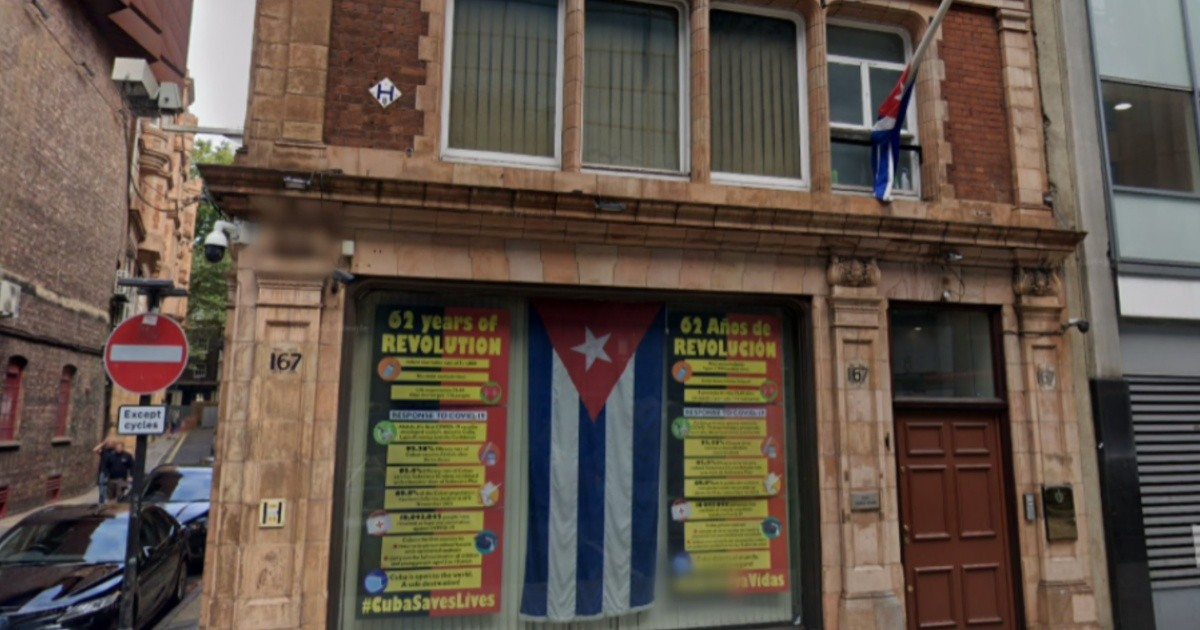
A diplomatic vehicle belonging to the Cuban embassy in London has set a new record by accruing fines totaling £52,200—equivalent to approximately $69,921—for failing to pay the city's congestion charge from July 2025 to June 2026.
Information obtained by MyLondon through a freedom of information request to Transport for London (TfL) reveals that over a twelve-month span, this Cuban diplomatic-plated vehicle was issued 290 penalty notices, averaging more than five violations per working week.
TfL reported uncertainty about the specific model of the car involved and noted that the license plate may have been used on various vehicles throughout the year.
Located at 167 High Holborn, the Cuban embassy is just a short distance from Tottenham Court Road station, right in the heart of the charge zone.
Vehicles driving through this area between 7:00 AM and 6:00 PM on weekdays—or between 12:00 PM and 6:00 PM on weekends and public holidays—are required to pay a daily fee of £18.
Failure to pay results in a £180 fine, which is reduced to £90 if settled within two weeks, but escalates to £270 if unpaid after 28 days.
Both TfL and the British government maintain that the congestion charge is a service fee, not a tax, meaning diplomats are not exempt from paying it. A spokesperson emphasized, "Both we and the UK Government are clear that the congestion charge is a service fee and not a tax. This means diplomats are not exempt from paying it."
However, TfL lacks enforcement mechanisms to compel diplomatic missions to pay and must rely on diplomatic channels to exert pressure.
The spokesperson acknowledged the ongoing dilemma: "Most embassies in London do pay the charge, but there is a stubborn minority that refuses, despite our diplomatic efforts. We will continue to pursue all unpaid congestion charges and penalty notices."
The Cuban vehicle case is not an isolated incident but rather the latest manifestation of a longstanding debt. TfL's records show that the total accumulated debt of the Cuban embassy with TfL exceeded £2,996,540 by the end of March 2025.
In 2022, that figure stood at £2,446,640, and as far back as 2013, it was around one million pounds with over 8,800 unpaid fines.
Globally, diplomatic missions in London owed over £164 million in unpaid congestion fines by the end of September 2025.
The largest debtor is the United States Embassy, with more than £15 million accrued since the charge was introduced in 2003, followed by China with £11.5 million, and Japan with £10.9 million.
MyLondon reached out to the Cuban embassy for a statement, but as of publication, no response had been received.
The new British Prime Minister has recently clashed with Cuba on various issues, while the United Kingdom has raised concerns about the critical situation on the island, adding tension to the already strained bilateral relationship.
TfL has urged the government to intensify pressure on embassies refusing to pay, as diplomatic debt has continued to rise since the charge was implemented more than two decades ago.
Understanding Congestion Charges and Diplomatic Immunity
What is the congestion charge in London?
The congestion charge is a daily fee imposed on vehicles driving through designated areas of central London during specified hours to reduce traffic congestion.
Are diplomats exempt from paying the congestion charge?
No, diplomats are not exempt from paying the congestion charge as it is considered a service fee, not a tax.
How does TfL handle unpaid fines from diplomatic missions?
TfL lacks direct enforcement power over diplomatic missions and relies on diplomatic channels to exert pressure for payment of unpaid fines.