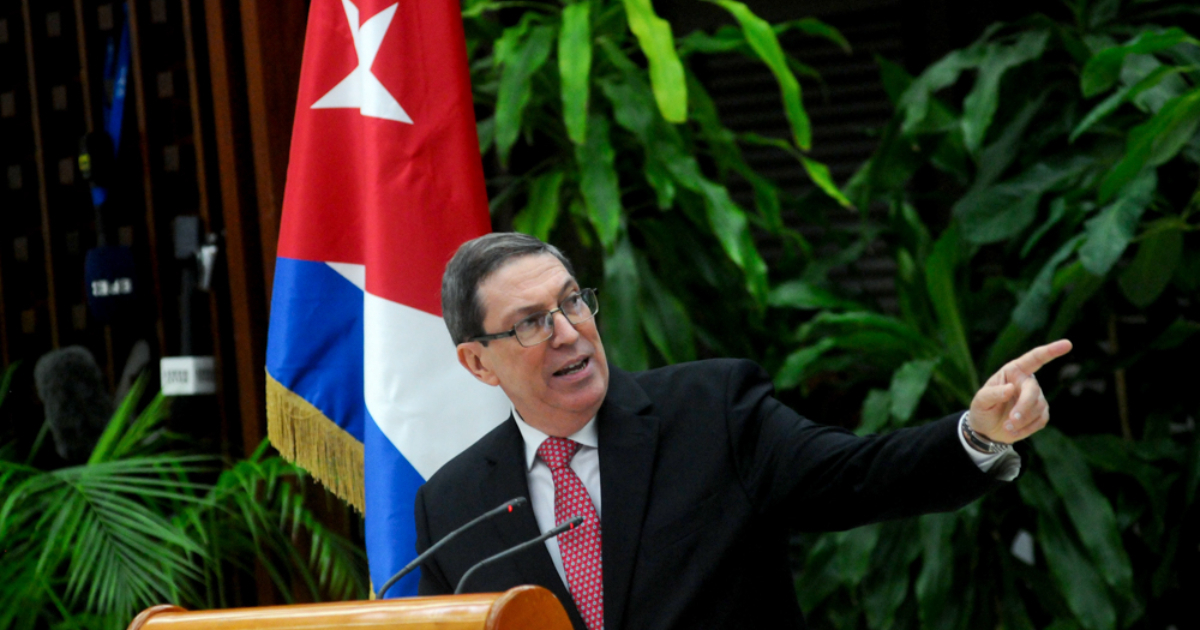
The Cuban Foreign Minister, Bruno Rodríguez Parrilla, dismissed a report from Harvard University's Working Group on the Future of Cuba as "pseudo-scientific." He accused the document of aligning with U.S. State Department propaganda and engaging in "psychological warfare" against the Cuban populace.
In a post on his social media account, Rodríguez accused the report's authors of "significant ideological biases and clear financial interests," questioning the "prestige and scientific rigor of the renowned American university they claim to represent."
Economic Impact and Allegations of Bias
Rodríguez's criticism focused heavily on what he described as a deliberate omission: the report allegedly ignores the nearly 70-year economic stranglehold imposed by the United States, including commercial and financial persecution and intimidation of those who trade or invest in Cuba.
Using official figures from the Cuban government, Rodríguez argued that the embargo led to losses amounting to $8,083.3 million between March 1, 2025, and February 28, 2026—a record figure exceeding the previous period by 7%.
Historically accumulated damages, according to Havana, reach $178,700.5 million in current prices. The minister claimed that without the embargo, Cuba's GDP in 2025 would have been 10.8% higher than projected.
A Call for Democratic Transition
The controversial report, released on September 10 by Harvard's Cuba Studies Program and the David Rockefeller Center for Latin American Studies, emerged after six months of research by 14 Cuban and international scholars. It outlines a multidimensional crisis in Cuba—economic, political, demographic, energy, health, food, and education—and advocates for a peaceful democratic transition.
Immediate steps proposed include unconditional amnesty for political prisoners and the repeal of decrees 349, 370, and 35. For the medium and long term, it suggests a Constituent Assembly and a social market economy recognizing private property, alongside reintegration into the IMF and other international financial institutions.
Official Response and Broader Reactions
The report suggests that current Cuban authorities should facilitate, rather than obstruct, the transition process—a stance that likely contributed to the harsh official backlash. Rodríguez's reaction follows his established pattern; in July, he labeled another U.S. State Department report as a "slanderous pamphlet" and accused Secretary of State Marco Rubio of seeking a pretext for military aggression against Cuba.
Outside the Cuban government, reactions to the Harvard report have varied. Economist Pedro Monreal saw compatibility between the report and the "Cuba Transformation" initiative, while activist Ariel Ruiz Urquiola criticized some of its recommendations before the official response.
The clash occurs amid Latin America's worst economic downturn in 2026, with Cuba suffering particularly severely. The regime continues to attribute its crisis to the U.S. embargo while dismissing any internal responsibility.
Bruno Rodríguez's Response to Harvard Report: Key Questions
What are the main criticisms from Bruno Rodríguez about the Harvard report?
Bruno Rodríguez criticizes the report as "pseudo-scientific," accusing it of ideological bias and financial interests. He argues it deliberately omits the impact of the U.S. economic embargo on Cuba.
What does the Harvard report propose for Cuba's future?
The report suggests a peaceful democratic transition, amnesty for political prisoners, the repeal of specific decrees, and a shift towards a social market economy with private property recognition.
How has the Cuban government typically responded to foreign reports and criticisms?
The Cuban government frequently dismisses foreign reports and criticisms, attributing the country's challenges to the U.S. embargo and rejecting internal accountability.