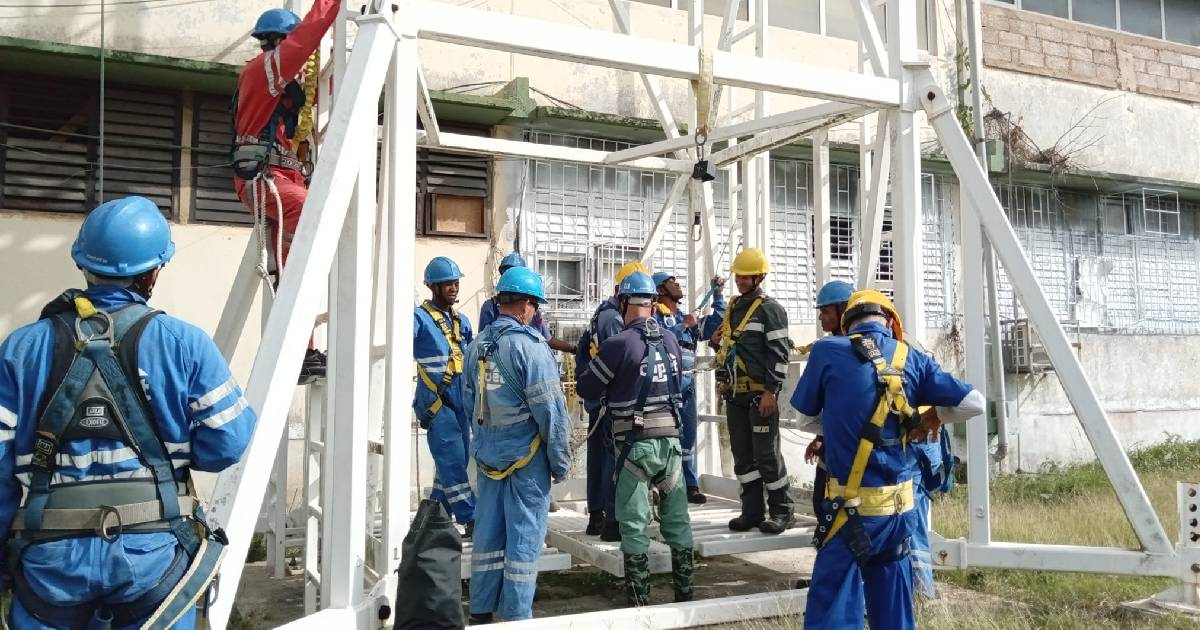
The Ministry of Public Health (MINSAP) has introduced Resolution 114/2026, establishing a revised list of occupational diseases along with the procedures for their prevention, diagnosis, analysis, and management within the National Health System.
Issued on September 15, this regulation was made public in the Ordinary Gazette No. 78 of the Republic of Cuba 2026, spanning pages 197 to 225, released this past Friday.
The resolution arises from the mandate of Law 189/2026, the newly sanctioned Labor Code approved by the National Assembly on July 30. This law, specifically its Second Final Provision, required MINSAP to present these updated regulations to the Ministry of Labor and Social Security within a 45-day deadline.
With its implementation, this resolution supersedes Resolution 283 from June 2014, which had previously governed the same area as a supplement to the former Labor Code.
According to Article 1 of the new regulation, its aim is to "revise the list of occupational diseases and the procedures for their prevention, diagnosis, analysis, and control in the National Health System, aligned with the principles of the new Labor Code."
The resolution categorizes occupational diseases into eight groups, detailed across several annexes: those caused by chemical, physical, and biological agents; diseases affecting the respiratory system, skin, musculoskeletal system, mental health; and those caused by carcinogenic agents.
To be acknowledged as an occupational disease, a condition must meet five diagnostic criteria: occupational, hygienic-epidemiological, clinical, laboratory, and legal.
The occupational criterion requires a "documented history of the worker's exposure to a causal agent or special working conditions potentially harmful to their health," considering factors such as the job performed, exposure duration, shifts, raw materials, and equipment used.
The hygienic-epidemiological criterion involves verifying the presence of risk factors in the workplace, adherence to preventive standards, use of personal protective equipment, and environmental monitoring in work settings.
Regarding the procedure, the regulation stipulates that if a healthcare provider "suspects that the illness is of occupational origin, they will refer the worker to the appropriate occupational diseases consultation based on the location of the workplace."
MINSAP clarifies that it will work in coordination with the Ministry of Labor and Social Security to validate the cases, with the involvement of labor unions and support from national reference units and specialized groups.
The resolution also mandates employers to comply with medical recommendations included in the official declaration of an occupational disease.
Gazette No. 78 encompasses a total of 14 regulations related to the implementation of the new Labor Code, including two additional MINSAP resolutions: 115/2026, concerning the hiring and placement of healthcare professionals and technicians, and 116/2026, regarding occupational health medical examinations.
Understanding Cuba's Occupational Health Regulations
What is the purpose of MINSAP's new resolution?
The new resolution aims to update the list of occupational diseases and establish procedures for their prevention, diagnosis, analysis, and management within Cuba's National Health System, in line with the new Labor Code.
How are occupational diseases classified under the new resolution?
Occupational diseases are categorized into eight groups, including those caused by chemical, physical, and biological agents, and those affecting the respiratory system, skin, musculoskeletal system, mental health, and those caused by carcinogens.
What are the criteria for diagnosing an occupational disease?
To diagnose an occupational disease, five criteria must be met: occupational, hygienic-epidemiological, clinical, laboratory, and legal.