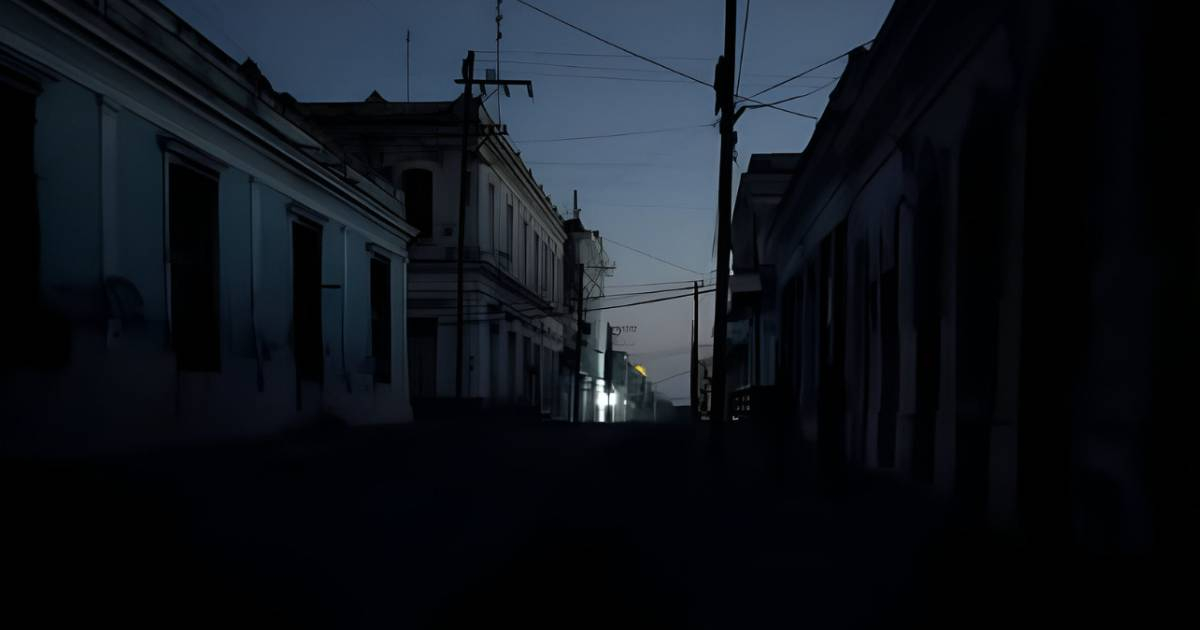
The ongoing electricity crisis in Cuba shows no signs of easing. On Thursday, the island experienced a peak power disruption of 2,051 MW, and the Electric Union (UNE) forecasts another 2,007 MW shortfall for Friday evening during peak usage hours.
According to an update from the National Electric System (SEN) released on Friday, there was a 24-hour service disruption on Thursday due to insufficient capacity, with blackouts continuing throughout the night.
The worst moment occurred at 8:10 p.m. when the power interruption reached 2,051 MW.
Friday's outlook is equally grim. At 6:00 a.m., the SEN had just 1,113 MW available to meet a demand of 2,686 MW, resulting in a deficit of 1,575 MW. By midday, UNE estimated a disruption of around 1,400 MW.
The state-run company reported that solar photovoltaic parks generated 5,360 MWh on Thursday, reaching a peak output of 833 MW during daylight hours, yet this contribution failed to prevent widespread outages.
Numerous breakdowns and maintenance issues persist in the system. Units 5 and 8 at the Mariel Thermoelectric Plant (CTE), unit 2 at Felton, and unit 6 at Renté remain out of service. Meanwhile, units under maintenance include unit 3 at Santa Cruz, unit 5 at Nuevitas, and unit 5 at Renté.
The fuel shortage remains a significant challenge. UNE reported 114 distributed generation plants offline, totaling 926 MW, along with the Regla and Melones barges and the Fuel stations at Mariel and Moa. Altogether, fuel-related unavailability amounts to 1,242 MW.
Adding to the crisis, there are another 455 MW of thermal generation limitations.
For peak hours, authorities aim to bring units 5 at Mariel and 6 at Renté online, each adding 60 MW. However, even with these additions, the available capacity would be only 1,233 MW against a demand of 3,210 MW, leaving a shortfall of 1,977 MW and an estimated impact of 2,007 MW.
These figures have spurred further frustration among Cubans. "Nah, this is the damn NORMALITY," wrote one user on UNE's post, reflecting the sentiment that extreme shortages have become a daily routine rather than exceptions.
Another individual reported that circuit 415 in Pinar del Río had been "out for 48 hours," while an online commentator ironically summarized the immediate future: "Cuba will be affected in aeternum."
Questions have also been raised about the usefulness of official reports given the duration and distribution of power cuts. "I don't know why they even share information when they do whatever they want anyway," one user commented, while another claimed that in her area, "they don't even provide electricity."
These levels are not an isolated incident. In early September, Cuba faced a maximum disruption of 2,292 MW, with just 990 MW available for the nighttime peak. Weeks earlier, UNE admitted that between September and December, multiple thermoelectric units might be simultaneously under maintenance or out of service, potentially sustaining high disruptions despite a seasonal drop in demand.
In August, the recurrence of figures exceeding 2,000 MW had already prompted strong criticism, as users warned that what once seemed extreme shortages were becoming routine.
Understanding Cuba's Power Crisis: Key Questions Answered
What is causing the power outages in Cuba?
The power outages are primarily due to insufficient generation capacity, technical failures, maintenance issues, and a significant fuel shortage across the country.
How is the Cuban government addressing the electricity crisis?
The government is attempting to manage the crisis by repairing and maintaining existing power units and integrating additional units into the grid. However, these efforts have not yet resolved the widespread blackouts.
What role do solar energy and renewable sources play in Cuba's power supply?
Solar energy contributes to the grid, with photovoltaic parks generating significant power during daylight hours. However, this contribution is insufficient to prevent widespread outages due to overall demand exceeding supply.
Are power outages expected to continue in the coming months?
Yes, power outages are likely to persist due to ongoing maintenance, potential unit failures, and fuel shortages, despite a potential decrease in demand during certain months.