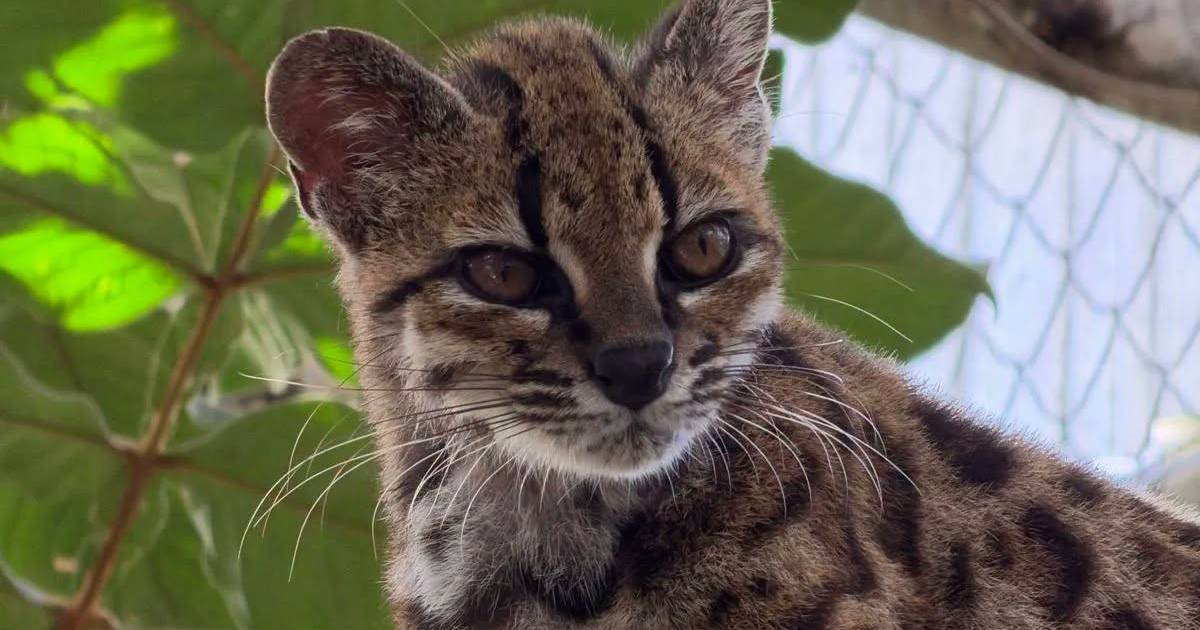
For over a year, a family in Bolivia cared for what they believed was a domestic cat, only to discover that its unusual behavior—hunting chickens, making distinctive sounds, and exhibiting wild predator traits—suggested otherwise.
A DNA analysis confirmed an unexpected truth: this was a species previously unknown to science, now formally named Leopardus tilcayo and detailed in the journal Current Biology.
This marks the first official naming and description of a new living feline species in over a century, a milestone achieved by researchers from Bolivia, Belgium, and Brazil.
Known locally as tilcayo, this feline inhabits the cloud forests of the Yungas region in Bolivia, an area notable for its high humidity and constant cloud cover on the eastern slopes of the Andes.
In terms of size, the tilcayo is smaller than the average domestic cat, measuring about 18 inches in length and weighing around 3 pounds.
Paola Nogales-Ascarrunz, a National Geographic explorer and one of the study's authors, described its fur as light brown with irregularly shaped rosettes scattered across its body.
The tilcayo that lived with the local family—a 10-year-old male—is now housed at the Senda Verde Wildlife Sanctuary in Coroico, Bolivia. This specific animal prompted scientists to question its identity, as its physical traits didn't match existing descriptions of tiger cats, most of which were based on Brazilian specimens.
"This led us to wonder: what tiger cat do we actually have in Bolivia?" explained Nogales-Ascarrunz.
The team examined the DNA of 38 cats from various South American countries, including eight museum specimens, leading to a taxonomic revelation: rather than the two species of tiger cats previously recognized by the IUCN Red List, there are actually five genetically distinct species.
Analyses suggest that the tilcayo's lineage diverged from other tiger cats approximately 1.4 million years ago. "We never expected that this Bolivian tiger cat was a distinct species, and it had never been proposed as a different animal before," admitted Jonas Lescroart, an evolutionary biologist at the University of Antwerp and co-lead author of the study.
Much remains to be discovered about tilcayo's habits. Trail cameras indicate nocturnal activity, and remnants of small rodents found in its feces suggest its diet. "Currently, our knowledge is limited to the two living specimens we examined and a few camera trap records," Lescroart acknowledged.
The researchers also identified a new subspecies of tiger cat in the Peruvian Yungas, named Leopardus tigrinus antisuyo, in homage to the Antisuyo region of the former Inca Empire where it resides.
The findings have been shared with the IUCN, which in its next review will assess the five lineages separately. Lescroart noted that the tilcayo might be classified as endangered when evaluated independently, a concern heightened by the increasing threats of deforestation, agricultural expansion, fires, and mining in the Yungas.
"Many species remain undiscovered in the world, and they risk vanishing before we have the chance to know them," warned Eduardo Eizirik, an evolutionary biologist at the Pontifical Catholic University of Rio Grande do Sul and the study's lead author.
Frequently Asked Questions About the Newly Discovered Feline Species in Bolivia
What makes the Leopardus tilcayo different from other tiger cats?
Leopardus tilcayo is genetically distinct, with DNA analyses revealing it as a separate species from other tiger cats. Its unique physical features and behaviors, such as its smaller size and distinctive fur patterns, set it apart.
Where can the tilcayo be found?
The tilcayo inhabits the cloud forests of the Yungas region in Bolivia, known for its high humidity and persistent cloud cover in the Andes.
Why is the discovery of the tilcayo significant?
This discovery marks the first time in over a century that a new living feline species has been officially named and described, highlighting the richness of biodiversity yet to be fully understood.