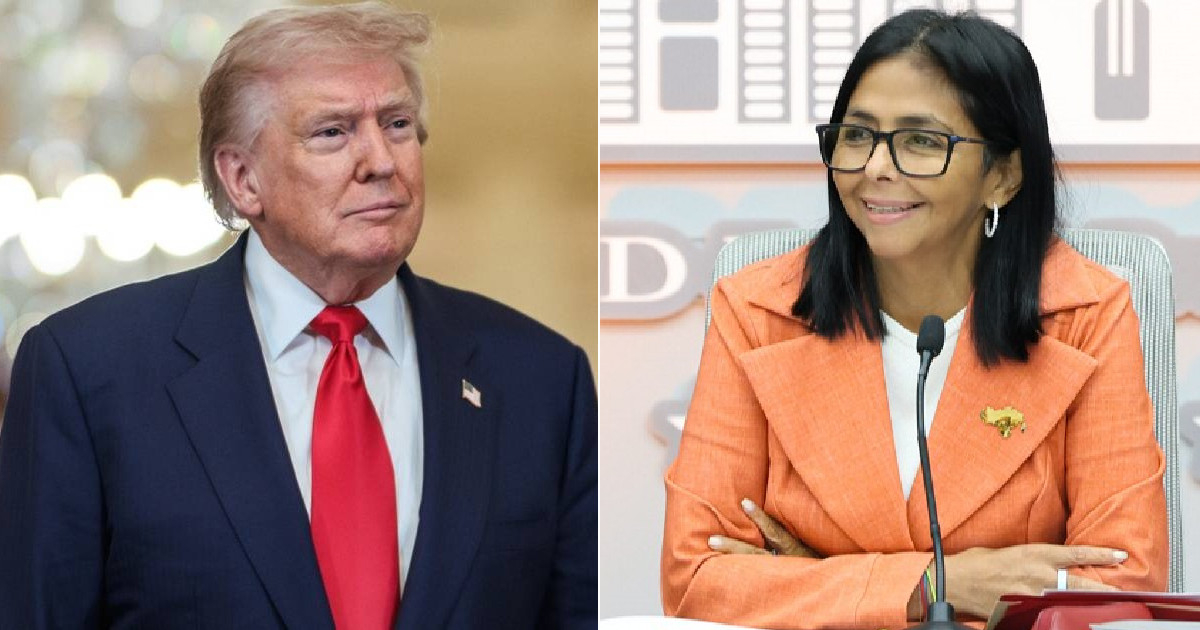
President Donald Trump is planning to meet with Delcy Rodríguez, the interim president of Venezuela, next week in New York, on the sidelines of the United Nations General Assembly.
According to sources close to President Trump, who spoke with Axios, preparations for the meeting are already underway. This gathering is said to highlight the improving relations between the two nations, although it is fraught with potential political pitfalls.
If it happens, this would mark the first face-to-face meeting between a U.S. president and a Venezuelan leader in over eleven years, dating back to the brief encounter between Barack Obama and Nicolás Maduro at the 2015 Summit of the Americas in Panama.
Trump is slated to deliver a speech to the General Assembly on September 23 and engage with Gulf leaders concerning the conflict in Iran. However, there's also room in his schedule for a bilateral meeting with Rodríguez.
On Sunday, while aboard Air Force One, Trump hinted at the possibility of this meeting, responding to reporters with a cryptic, "It could happen, maybe it will," when asked about a potential exchange with the Venezuelan leader.
The Diplomatic Shift Between Washington and Caracas
This meeting is part of a rapid diplomatic thaw between Washington and Caracas, initiated after Nicolás Maduro was captured by U.S. forces on January 3, 2026, in Caracas.
Rodríguez assumed the interim presidency, and the Trump administration promptly recognized the new Venezuelan government, reestablishing full diplomatic relations and lifting sanctions against her on April 1, 2026, removing her from the Office of Foreign Assets Control (OFAC) list.
The two leaders had already engaged in a telephone conversation in January, which Trump described as "fantastic," while Rodríguez called it "long, productive, and courteous."
Significant Economic Developments
The most noteworthy achievement of this diplomatic rapprochement came at the end of August, with the announcement of a historic oil agreement. This deal grants North American Blue Energy Partners, a U.S. company, rights to 17 Venezuelan oil fields with an estimated 65 billion barrels, which accounts for about 21% of Venezuela's certified reserves.
Additionally, Venezuela is reportedly nearing an agreement to transfer its gold reserves, valued at roughly $4 billion, from the Bank of England to the Federal Reserve Bank of New York. This gold transfer would serve as collateral for financing, although the deal is still under negotiation and includes limitations on how the funds can be used.
Described by the Financial Times as one of the first tangible outcomes of U.S.-backed negotiations, this potential agreement signifies a major financial maneuver.
Criticism of Trump's Engagement with Rodríguez
The warming relationship between the U.S. and Venezuela has not been without its detractors. Opposition leader María Corina Machado questioned the legitimacy of the oil deal, arguing that "the wealth of our land does not belong to an illegitimate regime."
Some factions within the Venezuelan opposition argue that Washington is not doing enough to promote democratic transition in the country.
Furthermore, this week, Trump removed Venezuela from the list of countries failing to meet anti-narcotics commitments, a move that underscores the new bilateral understanding but also raises questions about the political conditions Washington may be overlooking.
Key Questions Regarding U.S.-Venezuelan Relations
What is the significance of the Trump-Rodríguez meeting?
The meeting could symbolize a historic diplomatic shift between the U.S. and Venezuela, potentially strengthening ties and shaping future interactions.
What are the political risks of this meeting?
The meeting carries political risks by possibly legitimizing a contested regime and stirring opposition from political rivals and critics.
How does the oil agreement impact U.S.-Venezuelan relations?
The oil agreement enhances economic ties and signifies a collaborative effort between the two nations, potentially benefiting both economies.