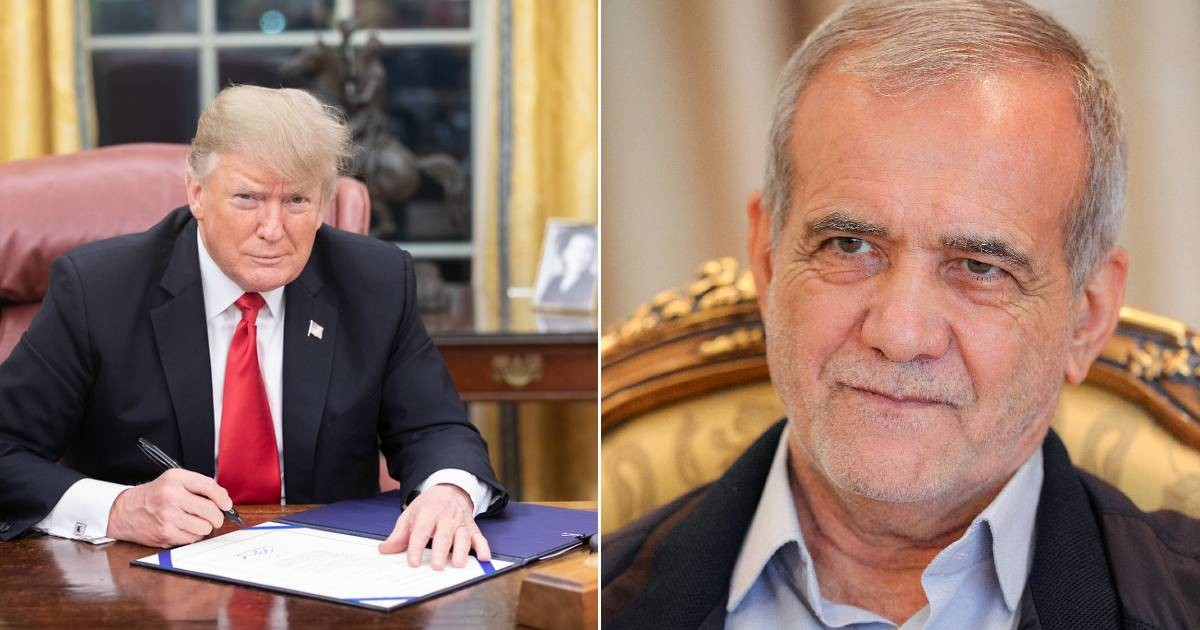
The Trump administration has granted permission for the Iranian delegation, led by President Masud Pezeshkian, to travel to New York for the High-Level Week of the United Nations General Assembly, as reported by EFE. This decision was explained by a State Department spokesperson, who cited the U.S.'s obligations as a host country, allowing the primary delegation of the Iranian regime to attend the UN event.
This marks the first occasion the Iranian leader will set foot on American soil since the outbreak of hostilities between the two nations.
UN Hosting Obligations
The authorization aligns with the Headquarters Agreement signed between the United Nations and the U.S. in 1947, which mandates Washington to grant access to accredited delegations to the UN, even if they originate from countries with which the U.S. has severed diplomatic relations or is currently in conflict.
Prior to this decision, uncertainty surrounded the visit, as Tehran had publicly announced on Monday that Pezeshkian had yet to receive his U.S. visa.
Travel Limitations for the Iranian Delegation
The Iranian delegation, which includes Foreign Minister Abbas Araghchi, will face restrictions during their visit. The group will be smaller than last year's delegation—when the U.S. denied visas to several members of the president's press team—and will be prohibited from purchasing luxury goods, along with limitations on their movements within the city.
Context of the Ongoing Conflict
This visit occurs amidst a backdrop of unprecedented conflict. The war between the U.S., Israel, and Iran commenced on February 28, 2026, with Operation Epic Fury, a surprise coordinated airstrike targeting Iranian military sites.
Despite extensive bombings, the Iranian regime remained intact, defying Washington's stated objective. In March, Trump declared the war "virtually over," and in April, the White House announced a ceasefire as a victory after 38 days of operations.
However, hostilities persisted. In June, Trump called off an attack and announced a "great deal" to end the war, mediated by Pakistan with Qatar's facilitation. The ceasefire unraveled in July when Iran resumed attacks on commercial ships in the Strait of Hormuz, prompting new U.S. bombing campaigns.
In August, Trump increased economic sanctions against Iran, declaring an "economic war" on Tehran. By September, the U.S. had targeted the Iranian oil fleet following another attack on a vessel.
Previous Restrictions on Iran
Iran faced similar restrictions earlier in 2026. During the summer's World Cup hosted by the U.S., the Iranian soccer team was based in Tijuana, Mexico, crossing the border only for matches.
Pezeshkian is scheduled to deliver his speech to the General Assembly on Wednesday, September 23, marking his most significant international appearance since the start of the conflict.
FAQs on U.S.-Iran Relations and UN Assembly
Why did the U.S. allow the Iranian President to enter amid conflict?
The U.S. permitted entry in accordance with the 1947 Headquarters Agreement, obligating it to allow accredited UN delegations, regardless of diplomatic relations or ongoing conflicts.
What limitations does the Iranian delegation face in New York?
The delegation will be smaller, with restrictions on luxury purchases and movement within the city, reflecting the tense relations and previous visa denials.
What triggered the ongoing conflict between the U.S. and Iran?
The conflict began with Operation Epic Fury on February 28, 2026, involving a surprise airstrike by the U.S. and Israel on Iranian military targets.