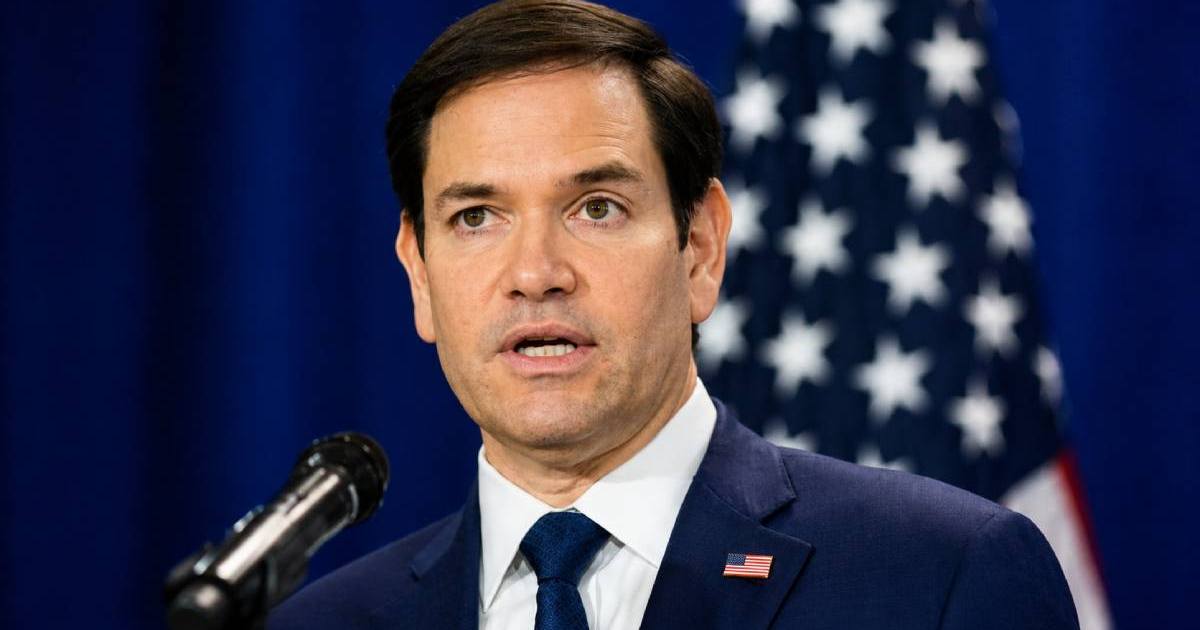
U.S. Secretary of State Marco Rubio reaffirmed Washington's strategy of exerting pressure on the Cuban regime by announcing sanctions against eight organizations and three individuals associated with Cuba's military and nickel sectors.
Rubio publicized this decision on the social media platform X, followed by an official statement and a fact sheet released by the Department of State on Thursday.
"Communist Cuba is a failed and corrupt state, posing an ongoing threat to U.S. national security, located less than 100 miles from American shores," Rubio declared.
The U.S. diplomat highlighted the disparity between the hardships faced by ordinary Cubans and the resource management by the ruling elite.
"As everyday Cubans endure power outages, food shortages, and brutality, the regime's elites continue to hoard the island’s resources for themselves and Cuba's oppressive security apparatus," he wrote.
Rubio emphasized that Washington would persist with this approach: "The United States will keep exposing and sanctioning those who uphold this system."
The secretary specified that the new measures target a total of 11 entities: eight organizations and three individuals allegedly involved in bolstering Cuba's military capabilities and exploiting its mining sector, according to the U.S. government.
"Today I am sanctioning another 11 actors involved in the development of Cuba's military capabilities and the exploitation of its mining sector," Rubio stated.
Targeted Entities and Individuals
In the announcement, Rubio accused the Cuban government of funneling the nation's resources into "a small and corrupt military elite," a charge that Havana routinely denies, countering with criticisms of the sanctions' impact.
"The Trump Administration will not stand idle as the Cuban elite grows richer through resource extraction while the Cuban populace suffers," Rubio asserted.
The sanctions specifically target four research and development entities tied to the Revolutionary Armed Forces (FAR): the Center for Research and Development of Simulators (SIMPRO), the Center for Naval Research and Development (CIDNAV), the Center for Infantry Weaponry Research and Development (CIDAI), and the Grito de Baire Research, Development, and Production Center (GELCOM).
The Department of State attributes roles such as military simulation and training, naval research, and the modernization of infantry weapons to these entities.
Three officials of these organizations were also designated: Joaquín Francisco Cancio Monteagudo, a senior FAR colonel and general director of SIMPRO; Dioglis Pedrera Argüello, a FAR captain and general director of CIDNAV; and Julio Hurtado Betancourt, a senior colonel and general director of CIDAI.
Impact on Nickel Industry
The second group of sanctions targets four state-run entities within Cuba's nickel industry: SERCONI, which provides services and tools to the sector; CEPRONIQUEL, focused on engineering projects; CEDINIQ, a state center for research and innovation; and PINARES S.A., a mining company involved in geological studies.
The Department of State emphasized that nickel is "a critical source of revenue" for the Cuban government, with the new sanctions aiming to disrupt these financial flows and associated military development structures.
The sanctions were enacted under Executive Order 14404, signed by President Donald Trump on May 1, 2026.
This order authorizes sanctions against individuals operating in various Cuban sectors, including energy, defense, metals and mining, financial services, and security.
As a result of these designations, assets and interests of the sanctioned parties located in the United States or under U.S. control are frozen and must be reported to the Office of Foreign Assets Control (OFAC).
Additionally, entities owned 50% or more, directly or indirectly, by one or more blocked persons are also restricted.
The Department of State also warned that foreign individuals and entities engaging in specific transactions with sanctioned parties might face U.S. actions.
This latest round of sanctions follows Rubio's assertion just a week prior, claiming that Washington had imposed "the toughest sanctions in history" against Cuba, leaving the door open for further measures.
"There can always be actions. I won’t speculate on what they might be, but we reserve the right to act to protect U.S. national security," he stated in a September 10th interview.
Rubio had hinted at this pressure strategy months earlier. On May 21st, he stated that the Cuban government would not be able to wait out a change in Washington's stance: "They won’t be able to wait us out or buy time. We are very serious. We are very focused."
The sanctions announced on Thursday continue this policy, adding to measures taken in recent months against Cuban business, military, and financial structures.
Understanding the U.S. Sanctions on Cuba
What are the latest U.S. sanctions on Cuba targeting?
The latest sanctions target eight organizations and three individuals tied to Cuba's military and nickel industries, aiming to disrupt the financial flows and development structures associated with these sectors.
Why is the U.S. imposing these sanctions on Cuba?
The U.S. imposes these sanctions to pressure the Cuban regime, which it views as a corrupt and failed state, while seeking to disrupt the financial resources that support Cuba's military and oppressive security apparatus.
How do these sanctions impact individuals and entities associated with Cuba?
The sanctions freeze the assets and interests of designated individuals and entities in the U.S., restrict ownership of entities by blocked persons, and warn foreign entities against transactions with sanctioned parties.