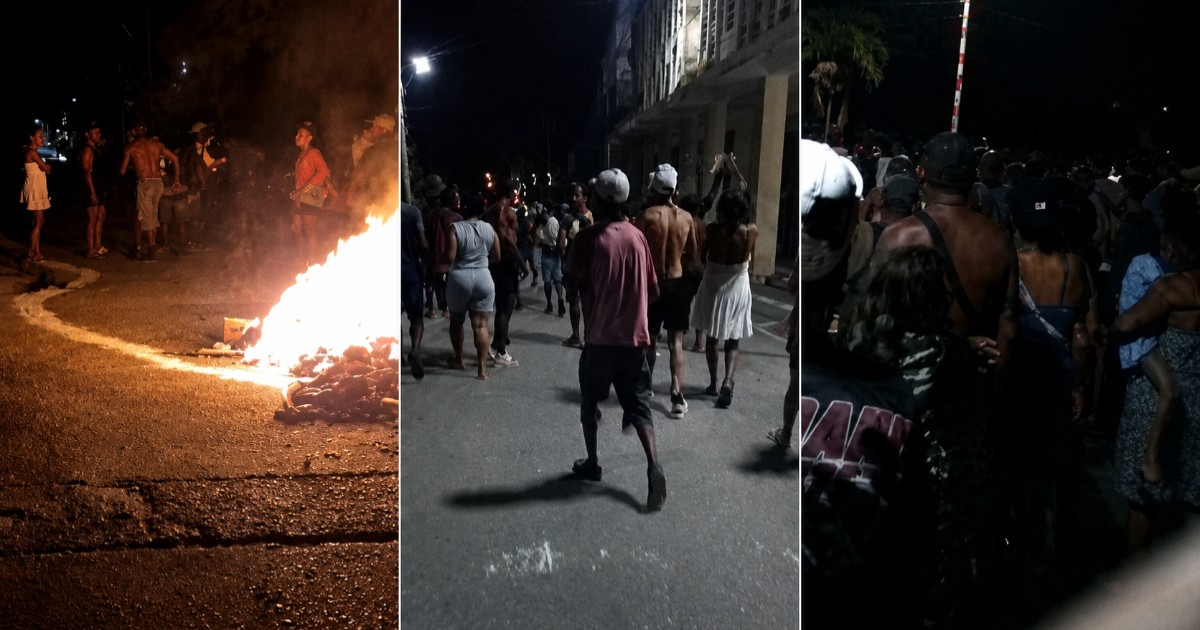
Foreign Affairs, widely regarded as the most influential publication on international policy, has recently released an analysis warning that Cuba is on the brink of a rapid governmental and economic collapse. Such a downturn could make it nearly impossible to rebuild the island into a stable, prosperous, and democratic society.
The article, titled "Cuba's Point of No Return," was penned by Will Freeman, a researcher with the Latin American Studies Program at the Council on Foreign Relations (CFR). The piece draws from Freeman’s personal visit to Havana in June 2026.
A City in Ruins: The Symbol of Decay
Freeman begins his piece with a metaphorical image that captures the essence of Cuba's current state: a 166-year-old building in central Havana, known as the Higher Institute of Industrial Design, collapsed in February after suffering partial collapses in 2025. The government failed to respond with repairs, resulting in the tragic burial of several illegal occupants.
During his visit, Freeman observed emaciated men scavenging bricks from the rubble to construct makeshift shelters. "Should no changes occur soon, any transitional government might find itself in a similarly impossible situation as those men on the ruins: striving to create something safe, livable, and enduring from debris," Freeman reflects.
Authoritarian Anarchy: A Failing State
Freeman describes Cuba's situation using a phrase attributed to a European diplomat in Havana: "authoritarian anarchy." This captures a state that still suppresses political expression yet fails to provide public services or maintain social order. "Repression is the one thing the Cuban state still does effectively," Freeman asserts.
Highlighting the nation's decline, the article notes the alarming increase in infant mortality rates, which surged from 4.0 per 1,000 live births in 2018 to 9.9 per 1,000 by 2025. Hospitals are devoid of essential supplies, forcing patients to resort to the black market for everything from antibiotics to amputation saws.
Diplomatic Deadlock and Economic Reforms
The analysis also delves into the diplomatic landscape of 2026. As reported by the Miami Herald, secret negotiations between Washington and Havana broke down in late May due to opposition from Florida Republicans and Cuba's refusal of the U.S. offer: investment and oil in exchange for the resignation of President Miguel Díaz-Canel and the privatization of the state oil company, CUPET.
In June, the Cuban regime announced 176 economic reforms across 23 sectors to expand the private sector, but Washington deemed them insufficient, imposing further sanctions on state enterprises and officials.
By August, Secretary of State Marco Rubio told Axios that the policy required "patience and persistence," suggesting the regime might endure until 2028 or beyond. Freeman interprets this as a sign that the Trump administration has placed Cuba on "autopilot," allowing enough fuel and food to enter through private distributors to stave off complete societal collapse, yet lacking a new strategy.
Long-Term Implications and Future Prospects
Freeman outlines three potential interpretations of the U.S. stance: bluffing to reignite stalled talks, deprioritizing Cuba due to conflicts in Iran and Venezuela, or betting on an internal collapse of the one-party system. The gravest danger identified is not an immediate regime collapse but the solidification of deterioration as a baseline for any future transition. "The longer the stalemate lasts, the more these trends will harden as starting conditions for any future transition, diminishing the chances that Cuba will ever become a well-governed country," warns Freeman.
The publication's timing coincides with projections placing Cuba as the Latin American economy with the steepest GDP decline in 2026, estimated to contract between 6.5% and 7.2%, according to the Economic Commission for Latin America and the Caribbean (ECLAC) and the Economist Intelligence Unit, with a cumulative drop nearing 23% since 2019.
Understanding Cuba's Economic and Political Challenges
What are the main causes of Cuba's potential collapse?
The potential collapse is attributed to a combination of economic mismanagement, lack of effective public services, increased repression, and diplomatic isolation, exacerbated by the deteriorating infrastructure and healthcare system.
How has the international community responded to Cuba's situation?
The international response has been mixed, with some countries advocating for engagement and others, particularly the U.S., increasing sanctions and adopting a wait-and-see approach. Efforts to negotiate reforms have largely stalled.