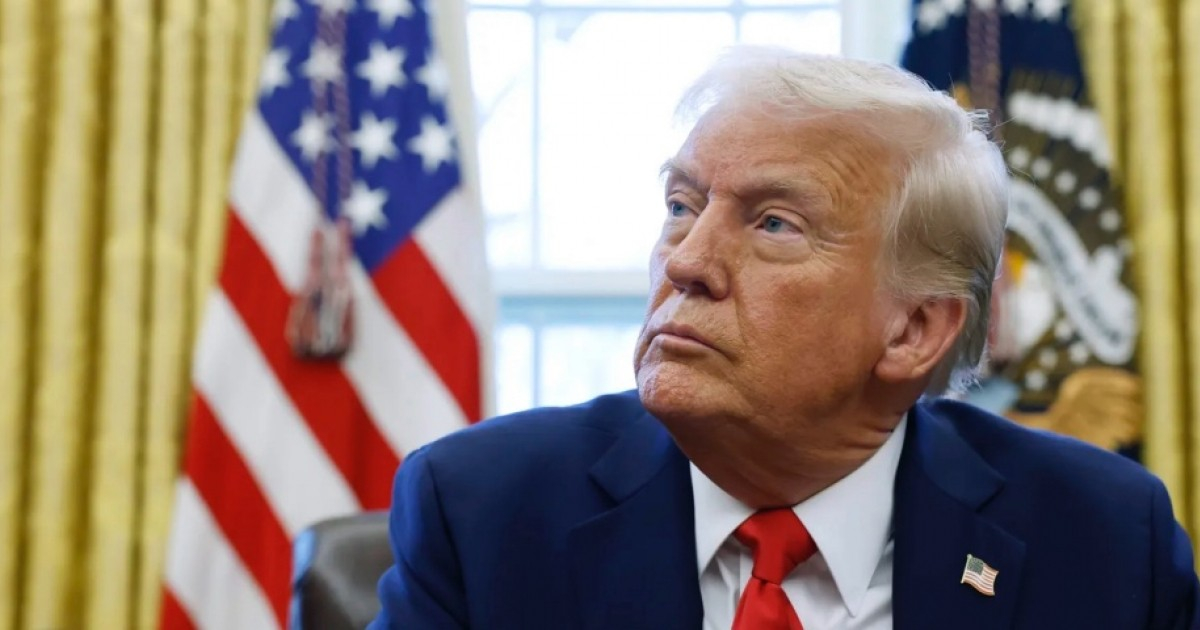
President Donald Trump has issued a stern warning that he might impose "severe tariffs" on the European Union—or potentially cut off trade in several sectors—if Canada is granted the status of the EU's first "associate member." Trump described this possible integration as a "hostile act" against the United States.
The American leader made these remarks during a press conference in North Carolina. His comments were a direct response to a proposal made earlier that day by European Commission President Ursula von der Leyen, who addressed the European Parliament in Strasbourg.
"This is absurd. Canada has been a terrible trade partner," Trump declared, indicating he might reconsider if the initiative was pursued with "good intentions," yet he cautioned that he would respond with "very serious" tariffs otherwise.
EU's Proposal for Canada
Von der Leyen suggested "opening the door" for Canada to become the EU's first "associate member," a concept currently absent from European treaties. Establishing such a status would necessitate negotiating terms and securing unanimous approval from all 27 EU member states.
The proposed cooperation would cover areas such as technology, defense, energy, critical minerals, artificial intelligence, and economic security. This suggestion comes at a time when trade tensions with Washington are escalating.
Canada's Perspective on EU Association
Canadian Prime Minister Mark Carney clarified on Sunday that his government does not seek full EU membership but rather aims to forge a "unique alliance" based on shared values and interests while preserving national sovereignty.
This development occurs amidst an ongoing tariff war between Washington and Ottawa. Following unsuccessful bilateral negotiations in August, both countries implemented 50% tariffs on each other's imports. Canada retaliated with duties on U.S. products valued at 27.6 billion Canadian dollars.
Public Support in Canada
Trump also announced a 50% tariff on Canadian vehicles and steel effective January 1, 2027, and in July, he ruled out renewing the USMCA under its current terms.
The prospect of closer ties between Ottawa and Brussels enjoys significant public support in Canada. According to an Abacus Data survey conducted between September 4 and 9 with 1,479 adults, 81% favor deeper integration with the EU short of full membership, 80% support enhanced strategic cooperation in foreign policy, defense, and economics, and 49% would even back formal accession to the bloc.
Canada and the EU currently share the CETA trade agreement and defense cooperation mechanisms. Von der Leyen's proposal aims to build on this foundation, seeking a closer relationship at a time when both entities are eager to reduce their economic dependence on the U.S.
Frequently Asked Questions on Canada's Potential EU Associate Membership
What is an EU "associate member"?
An EU "associate member" would be a new category for countries like Canada that seek closer ties with the EU without full membership. This status would involve negotiating specific terms and require the unanimous approval of all EU member states.
Why does Trump oppose Canada's potential EU association?
Trump views Canada's potential association with the EU as a "hostile act" against the United States, citing Canada's history as a "terrible trade partner." He has threatened severe tariffs as a response.
How do Canadians feel about closer ties with the EU?
A significant majority of Canadians support increased integration with the EU. According to a survey, 81% favor deeper ties without full membership, and 80% back enhanced strategic cooperation.