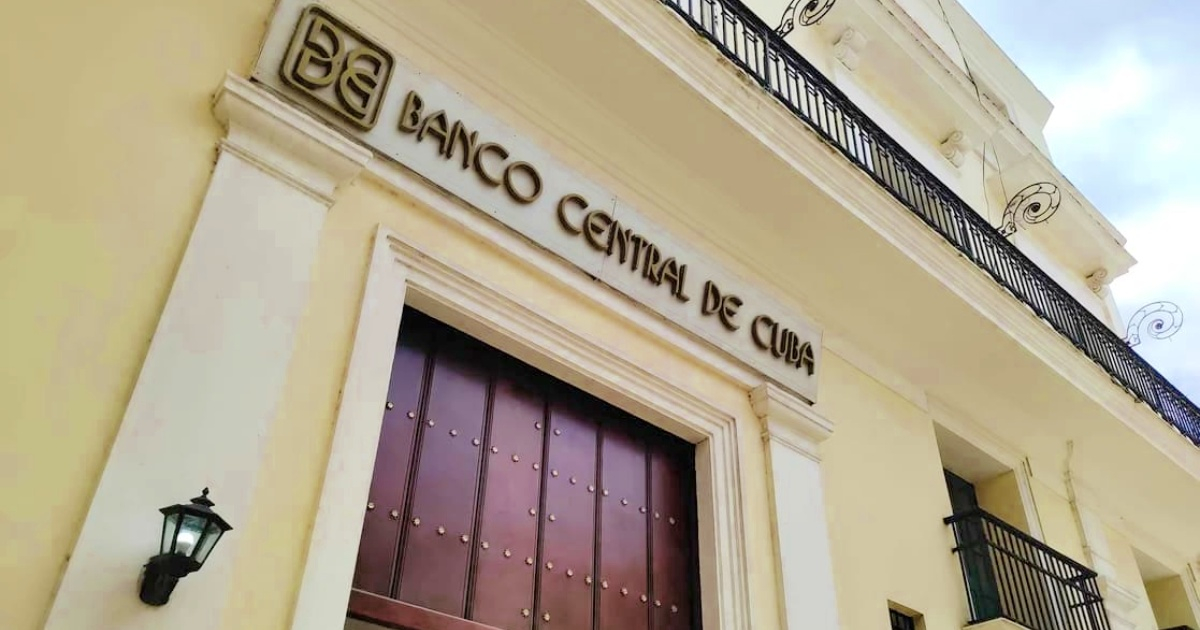
In a significant shift, Cuba is gearing up to transform its banking sector by welcoming new banks and financial institutions infused with private, foreign, and state capital. This marks one of the most profound changes for a sector that has long been under the near-total control of the state.
Alberto Javier Quiñones Betancourt, the vice president of the Central Bank of Cuba (BCC), stated that the goal is to evolve toward a "broader and more diverse" financial system, encouraging the integration of new participants.
The initiative is part of a suite of banking reforms unveiled on Tuesday during the official Mesa Redonda program, as reported by Cubadebate.
The new framework includes banks and financial institutions that incorporate state, private, and foreign capital, according to the official's presentation. However, this opening does not imply a lack of oversight. Prospective entrants must submit required documentation, obtain a license from the BCC, and remain subject to its supervisory mechanisms.
Importantly, the influx of capital is envisioned not just as a financial resource. Quiñones highlighted that investments could bring in technology, expertise, and innovative management practices, which would enhance the range of financial products and modernize banking infrastructure.
This announcement builds on a gradual opening that began in June, when private banking, virtual assets, currency reforms, and private exchange houses were introduced among 176 economic and social transformations presented by the government.
The package also allowed for increased private and foreign capital involvement across other economic sectors. Notably, a day before this package's formal approval, it was revealed that Cuba was permitting private banking for the first time in decades.
Among the measures were non-banking financial institutions with national or foreign private capital, as well as changes to facilitate microcredit, foreign currency accounts, and financial technologies.
Currently, the Central Bank positions the opening and capitalization as one of the four major pillars of the reform. The others include credit, savings, and financing; innovation and new service channels; and the currency market and remittances.
As part of the restructuring, the BCC is also developing the Agricultural Development and Promotion Bank, which, according to Quiñones, is in its final stages and aims to finance agricultural and food production.
Simultaneously, authorities aim to broaden credit use within the economy. The Central Bank acknowledged that current offerings fall short of meeting the diverse needs of businesses and individuals, and it is working on future consumer credit, though details have yet to be disclosed.
A new interest rate mechanism is also in the works to give commercial banks more autonomy in crafting their offerings, with the goal of stimulating savings and fostering competition among institutions vying for resources.
The financial opening is also aligned with recent changes aimed at facilitating foreign currency transactions. Since September, new resolutions have allowed foreign currency accounts to be opened without prior Central Bank authorization, expanded the ability to make international payments, receive cash in dollars and euros, and manage foreign currency income.
Additionally, foreign investment legislation has been revised. Decree-Law 128 has expanded access for joint ventures and investors to international banks, permitted foreign account operations, and relaxed aspects related to hiring workers and profit allocation.
In the foreign exchange market, the opening is already taking shape. The first private exchange house was announced as a pilot project in July and is now operational in Santa Clara under BCC supervision. Authorities report other applications for similar entities.
The financial plan also includes new fintech figures, updated cryptocurrency regulations, projects related to artificial intelligence, new digital solutions for remittances, and a future platform for currency auctions.
All these developments occur while the Central Bank seeks to restore the Cuban peso's role as a means of payment, unit of account, and store of value, following years of inflation, depreciation, and loss of confidence in the national currency.
The extent of this deterioration was underscored on Tuesday with the introduction of new 10,000 and 20,000 Cuban peso banknotes, which the BCC justified due to the price levels and monetary circulation needs.
These reforms unveil an unprecedented scenario for Cuban banking: while the state will maintain regulation and oversight of the system, it will share the space with new private and foreign participants as it seeks to attract capital, expand credit, and regain some of the lost functionality of financial institutions.
Understanding Cuba's Banking Reforms
What is the aim of Cuba's banking reforms?
The reforms aim to create a more diverse financial system by integrating private, foreign, and state capital, introducing new technologies, and modernizing banking infrastructure.
How will the Central Bank of Cuba regulate new financial participants?
New participants must submit required documentation, obtain a Central Bank license, and will be subject to the Bank's supervisory mechanisms.
What changes have been made to foreign investment legislation?
Decree-Law 128 expanded access for joint ventures and investors to international banks, allowed foreign account operations, and relaxed regulations on hiring and profit allocation.