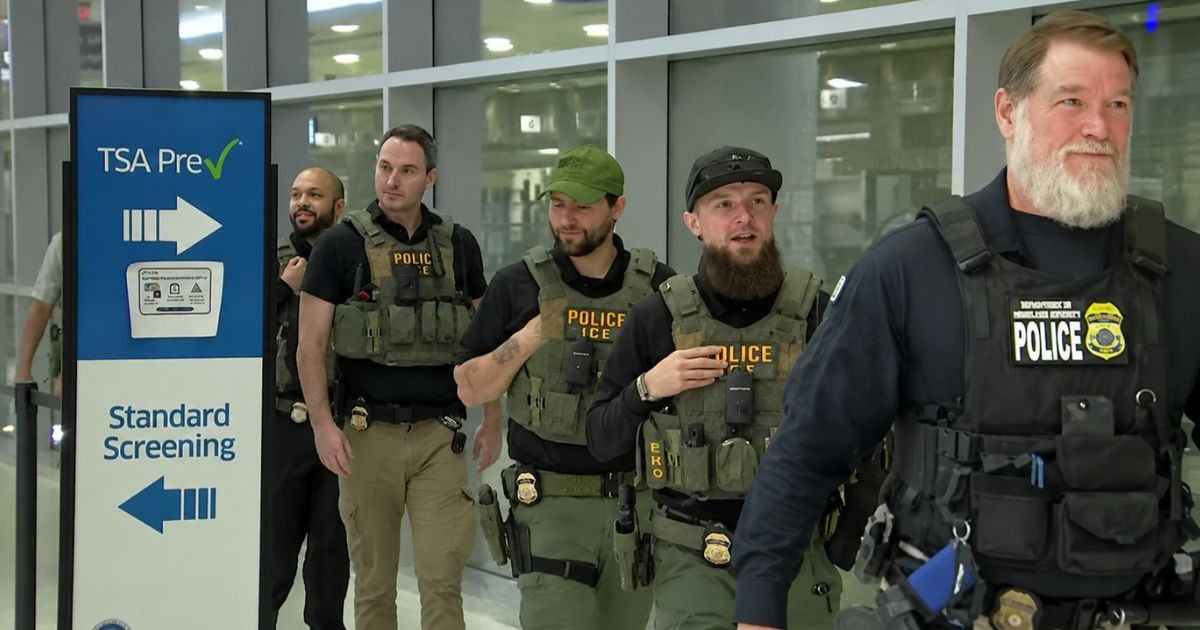
The U.S. Immigration and Customs Enforcement (ICE) has detained more than 1,200 migrants at American airports, a result of data sharing with the Transportation Security Administration (TSA), according to a Reuters report citing preliminary government data and figures from the Deportation Data Project obtained through public records requests.
This tally, as of early June, underscores the scale of a strategy that has made airports a central focus for immigration operations under the Trump administration.
Expanded Immigration Operations
An official agreement between TSA and ICE was signed on May 5, 2026, broadening the scope from individuals with final deportation orders to those merely with expired visas. This change potentially affects hundreds of thousands who were not prioritized for deportation in previous administrations unless they had criminal records.
Many have been arrested simply because their visas expired, regardless of whether they later sought asylum or married a U.S. citizen, providing a path to legal residency.
Impact on the Cuban Community
The Cuban community has not been spared in this crackdown. Two Cuban musicians awaiting permanent residency were detained in southern Florida and California airports. Percussionist Degnis Nelson Bofill Miranda, a Latin Grammy winner, was arrested on August 19 in Miami upon returning from a performance in New York. Pianist Andy García Palacios was taken into custody on August 15 in Los Angeles as he was about to fly back to Miami. In both instances, ICE agents awaited them with detailed information about their travel plans.
Both musicians were released following legal intervention: Bofill Miranda on September 3 and García Palacios on bail on September 11.
Wider Implications and Challenges
These airport detentions are just one aspect of the evolving immigration landscape in the U.S. Keep up with the latest developments in our Immigration section.
The TSA shared data on over 31,000 travelers with ICE, leading to more than 800 arrests by April, a number that exceeded 1,200 by early June, as previously reported by Reuters.
Operations have expanded to at least 15 airports, where plainclothes agents arrest individuals at check-in counters and boarding gates. Detainees come from over a dozen countries, including spouses of U.S. citizens and tech workers.
Abel Núñez, director of the Central American Resource Center (CARECEN), emphasized, "This isn't about bad luck. By the time someone arrives, immigration authorities already know who's traveling and their immigration status."
Warnings have extended beyond travelers. In August, activists and lawyers cautioned that family members and friends accompanying, picking up, or dropping off travelers at airports could also be subject to immigration operations.
Discrepancy Between Arrests and Deportations
The Reuters report highlights a central paradox: while ICE arrests have reached historic levels for three consecutive months, peaking at nearly 51,000 in August, the number of actual deportations has not increased proportionally, remaining around 1,200 per day—the same rate as in May, despite about 19,000 fewer arrests.
Five current and former officials attributed this disconnect to the profile of detainees: a growing number have no criminal convictions, charges, or final deportation orders, and many have pending asylum claims or other active legal proceedings that prevent immediate removal.
Logistical constraints also play a role: a shortage of available flights and restrictions from receiving countries hinder the Trump administration's mass deportation ambitions.
Immigration attorney Charles Kuck described the scale of the phenomenon to the New York Times: "In 38 years of practicing immigration law, I’ve never seen anything like this and I know it's happening to a lot of people."
Insights into ICE Airport Arrests
What led to the increase in ICE arrests at airports?
The increase is attributed to a formal agreement between TSA and ICE, allowing data sharing that targets individuals with expired visas, expanding the focus beyond those with final deportation orders.
Why hasn't the number of deportations increased with the arrests?
The lack of proportional increase in deportations is due to many detainees not having criminal records and having pending legal claims that prevent immediate removal, coupled with logistical and international constraints.
How are the Cuban community and other immigrants affected?
The Cuban community, among others, has been impacted, with instances of detentions at airports affecting individuals, including musicians waiting for permanent residency, highlighting the broad reach of these operations.