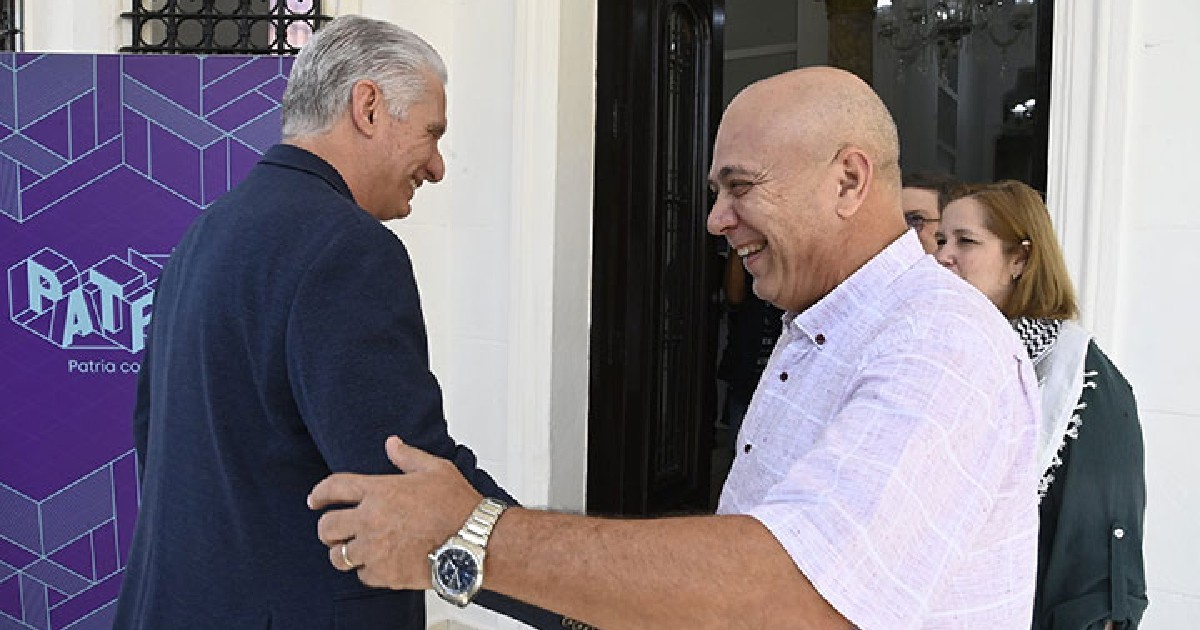
Roberto Morales Ojeda, the Organizational Secretary of the Central Committee of the Communist Party of Cuba, recently commemorated a historic student protest against Fulgencio Batista's regime. However, his post sparked a flood of responses drawing parallels to the suppression of the July 11th protests.
In a Facebook post, Morales Ojeda marked the anniversary of the "Función de Desagravio al Ballet de Cuba," which took place on September 15, 1956. This event was organized by the University Student Federation (FEU), led by José Antonio Echeverría, in response to Batista's government's decision to cut state funding for the ballet directed by Alicia Alonso.
"When Batista's dictatorship withdrew state support from the Ballet that Alicia Alonso tirelessly promoted, the FEU under José Antonio Echeverría did not hesitate: they called for a redress performance at the University Stadium," Morales Ojeda wrote.
He recalled that around 20,000 people attended the event, which he described as "a bastion of resistance against tyranny." Alicia Alonso performed "The Dying Swan" and was presented with a bouquet of red roses after her performance.
Historical Reflection Sparks Modern Critique
Morales Ojeda claimed that, decades later, the relationship between the FEU and the National Ballet of Cuba still enjoys the "happy marriage" Alicia Alonso once spoke of, and he reaffirmed the commitment to "defend art as a right for all people."
Yet, many Cubans found in the historical account a reason to question the current state of affairs. "No young person was arrested for that, right? So why now?" wrote Bárbara Álvarez Cuéllar, using the commemoration to challenge the government's handling of today's dissenters.
Another commenter referenced recent student discontent: "Now they raised the Internet price and almost jailed half the university."
The conversation quickly shifted to the events of July 11, 2021, after which hundreds of protesters were sentenced to prison. Five years later, 338 individuals involved in those demonstrations remain behind bars.
Criticism of Economic Conditions
The contrast is made even starker by Morales Ojeda's characterization of the government's response to July 11th as a "popular victory." While his recent post celebrates historical student mobilization against Batista, many questioned the current space for public protest against government decisions in Cuba.
Critics also addressed the nation's economic situation. One user highlighted data from the Economic Commission for Latin America and the Caribbean (CEPAL), which predicts a 10.3% contraction in Cuba's GDP by 2026. Another commentator, Andrés Vila, critically noted, "The sad truth is that the bright future Alicia envisioned never arrived; the new government turned out worse than Batista's."
This isn't the first time Morales Ojeda's attempts to glorify an official event or message have turned into a platform for criticism. Earlier in September, a post about the start of the school year also received numerous comments from Cubans challenging the official narrative with the harsh realities they face daily on the island.
Key Questions on Cuba's Political Climate and Economy
What was the "Función de Desagravio al Ballet de Cuba"?
The "Función de Desagravio al Ballet de Cuba" was an event organized by the University Student Federation in 1956 to protest the withdrawal of state funding from Alicia Alonso's ballet by Batista's government.
How are current protests in Cuba being handled by the government?
Current protests in Cuba, such as those on July 11, 2021, have been met with severe government repression, resulting in hundreds of demonstrators being imprisoned.
What economic challenges does Cuba face according to CEPAL?
According to CEPAL, Cuba is expected to face a significant economic challenge with a projected GDP contraction of 10.3% by 2026.