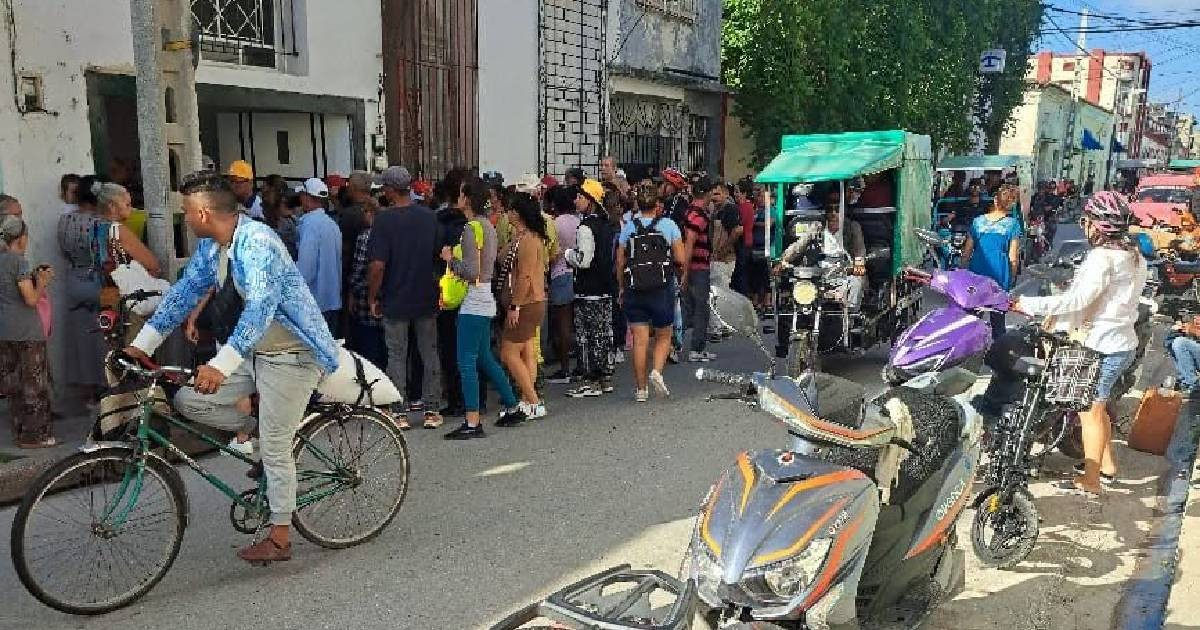
On Tuesday, a photo circulating on Facebook captured a line of over 50 people on a street in Holguín, all waiting to purchase 1.5-liter packets of powdered soft drink—an item that, according to the post's author, is available only at this singular location.
"This is to buy 1.5-liter packets of powdered soda in Holguín right now. It's the only place where you can find it, how sad, my God," wrote Odalgis Rojas Parra when she shared the image on her profile.
The snapshot reveals electric motorcycles parked along the sidewalk, a green bicycle, colonial buildings with peeling walls, and a throng extending down the block in front of what appears to be a commercial establishment—a scene that has become an everyday occurrence in the province.
The Underlying Crisis in Holguín
Holguín is dealing with multiple challenges exacerbating the crisis: power outages lasting up to 15 hours daily, fuel shortages, and a logistical breakdown that disrupts the regular distribution of essential goods. Back in August, due to the unavailability of cooking oil, many locals turned to pork fat as a substitute, but even that began to run out, leading people to queue from the early morning hours.
The powdered drink mix, which became a popular alternative due to the decline in bottled beverage production, is also not immune to shortages. In 2023, the state-owned company Los Portales acknowledged a lack of raw materials—such as sugar, cans, and plastic preforms—cutting its offerings down to just three flavors and notably affecting the 1.5-liter presentations.
Impact on Daily Life and School Meals
This issue comes at a particularly sensitive time: the start of the 2026-2027 school year on September 1 revealed that even the soft drink packets for school snacks could not be guaranteed to be in good condition, as reported by Cuban mothers just days before classes began.
In Holguín, a basic snack of bread, guava sweet, and soft drink cost over 500 Cuban pesos in early September, in a scenario where the average monthly salary reported by the National Office of Statistics and Information for April 2026 was just 7,074 pesos.
Beyond Beverages: Widespread Shortages
The scarcity extends beyond just soft drinks. The Minister of the Food Industry, Alberto López Díaz, admitted on June 6 that the rationed basket had not been able to distribute oil, chicken, or yogurt so far that year and that only one round of coffee had been delivered in Havana.
Statistics from the Food Monitor Program paint an even starker picture of the crisis: 96.91% of the Cuban population lacks adequate access to food, and 33.9% of households surveyed had at least one member who went to bed hungry in the 30 days before the survey.
Cuba imports about 80% of its food, making it extremely vulnerable to foreign currency shortages and internal logistical collapse. This combination has led to shortages in 2026 that the government can no longer conceal.
Understanding Holguín's Economic Struggles
Why are there long lines for powdered soft drinks in Holguín?
The long lines are due to the scarcity of powdered soft drinks, which are only available at a single location in Holguín. This scarcity is part of a broader shortage of essential goods in the region.
What factors are contributing to the crisis in Holguín?
The crisis in Holguín is exacerbated by prolonged power outages, fuel shortages, and a breakdown in logistics that hinder the distribution of basic goods.
How is the food shortage affecting daily life in Cuba?
The food shortage has led to increased costs for basic snacks and meals, making it difficult for many families to afford daily necessities, especially with the low average salaries reported.