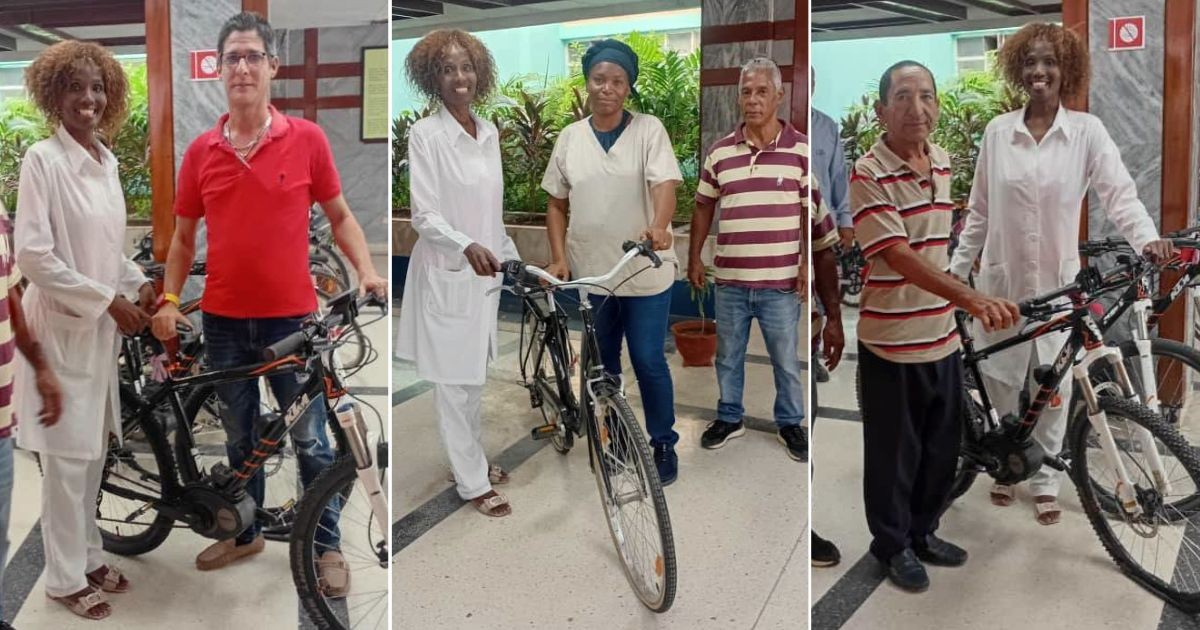
The decision to award a bicycle as a token of appreciation to outstanding staff at the Dr. Juan Bruno Zayas Alfonso General Hospital in Santiago de Cuba has sparked a wave of criticism, sarcasm, and disbelief on social media. Many have questioned whether this is an appropriate reward for professionals entrusted with saving lives every day.
On Monday, the hospital itself announced the recognition, which was part of the Cuba Soberana project and in collaboration with Belgium.
This gesture was portrayed by the institution as a tribute to its workers for their "daily dedication and spirit of service," emphasizing that the bicycle should be seen as more than just a material gift.
"The bicycle represents mobility, effort, and continuity in our collective work," the hospital stated, attempting to frame the gift as a symbol rather than a mere physical object.
The announcement highlighted the importance of international cooperation and described the bicycle as a "perpetual reminder" of each worker's "daily commitment and sacrifice."
Public Outcry Over Recognition
The gesture, however, received numerous critical reactions. One of the most discussed comments highlighted the perceived disparity between the healthcare professionals' responsibilities and the perceived inadequacy of the recognition.
"It's hard to stay silent... I promised myself not to comment, but seeing those who save lives in Cuba being given a bicycle as a gift is tough," one person commented.
Others were more blunt. "You have no shame. And those doctors who go along with this have even less. They have no pride," said another.
Sarcasm was also rampant. "This is a creative strategy by the Revolution to improve the physical fitness of healthcare workers," one user sarcastically remarked.
Practical Concerns and Comparisons
On the practical side, some questioned the utility of a bicycle in a city with many steep inclines. "Is it electric? The gesture is appreciated, but I can't imagine a surgeon, for instance, biking a few kilometers in this hilly city and still having steady hands for surgery," one user noted.
Another echoed this sentiment: "A bicycle in a place that's all uphill... that's bold, but congratulations anyway."
Others acknowledged the bicycle as a small relief amidst severe transportation issues, yet argued it was insufficient. "It's a small help, but why not electric scooters? They save lives and deserve the best; still, it's better than waiting indefinitely at a bus stop," someone remarked.
Another pointed out the irony: "A great idea from those who drive luxury cars and never have to pedal anywhere," read a sarcastic comment.
Comparisons with the economic opportunities available to Cuban doctors abroad were also prevalent.
One person shared that their brother, who practiced medicine in Cuba, could never afford a bicycle on his salary, but after moving to the U.S., he was able to buy two cars while working in construction.
"Laughable, a bicycle," summed up another user. "A grand prize for loyalty," added one more, while another reacted incredulously: "Is this a joke? A bicycle..."
Mixed Reactions and Distribution Concerns
Not all responses were negative. One user, whose sister received a bicycle, defended the gesture, albeit acknowledging its limitations: "Though it's not the best solution for their transport needs, it recognizes their dedication, effort, and excellence as healthcare workers. Hopefully, there will be more and better recognitions like this."
Criticism also extended to how the bicycles were distributed. A worker or someone connected to the hospital questioned why some recipients, who already had transportation means, were chosen, suggesting that general service employees also deserved recognition. "I'm outraged by this allocation," they stated.
In a context where demands for fair wages and criticism of insufficient recognitions are frequent, this is not the first time healthcare workers in Cuba have been controversially awarded such gifts.
A similar incident occurred in July when a bicycle was given to the head of Intensive Care at the Manuel Fajardo University Clinical Surgical Hospital in Havana, which also drew criticism and ridicule online.
In that instance, the project "A Cuba hay que quererla" presented the vehicle as a recognition of the specialist's career, while users questioned the practicality of an elderly doctor having to bike after a hospital shift.
The Juan Bruno Zayas Hospital has seen other modest recognitions for its staff. During the COVID-19 pandemic in 2020, healthcare workers received flowers and had access to purchasing chicken packages as part of tributes for their work against the virus.
At that time, some believed the food should have been given for free to the doctors.
Frequently Asked Questions about Healthcare Worker Recognitions in Cuba
Why did the hospital give bicycles to healthcare workers?
The bicycles were given as a symbol of appreciation for the healthcare workers' dedication and service, as part of a project in collaboration with Belgium. The hospital intended it to be more than just a material gift, representing mobility and effort.
What was the public's reaction to the bicycle recognition?
The public reaction was largely critical, with many questioning the adequacy of a bicycle as a reward for healthcare professionals. There was also sarcasm and comparisons to economic opportunities abroad.
Have there been similar recognitions in the past?
Yes, similar recognitions have occurred, such as in July when a bicycle was given to an intensive care head in Havana, which also led to criticism and sarcasm online.