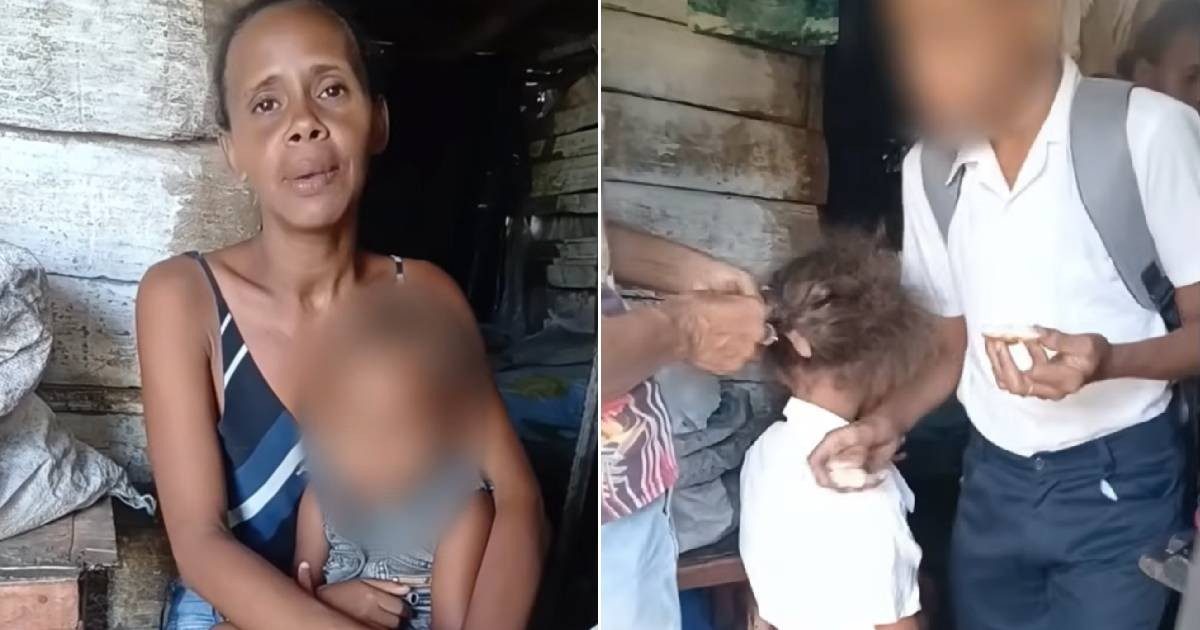
Every morning, Gricel Michelena, a mother of five in Cienfuegos, wakes up unsure of what she will place on the table. Unemployed and enduring four consecutive days without electricity at the time of this report, her story—captured by CubaNet in a piece about Cuba's dire poverty—paints a stark picture of the daily hardships faced by countless Cuban families.
The Daily Grind of Survival
Gricel's day begins around six in the morning, lighting charcoal to heat water, as power outages have become her norm.
"I always rise at six or six thirty to light the charcoal and warm the water. If I'm fortunate enough to have milk, I get up to prepare it and buy their bread," she shared.
The nights are equally exhausting; without electricity, the heat and mosquitoes make it impossible for the children to rest.
"They can't sleep well during the blackouts. Mosquitoes make it unbearable. Sometimes my hands get tired from fanning them. I could even fall asleep, because staying awake all night is impossible," she lamented.
Scraping By with Odd Jobs
To earn any money, Gricel takes on occasional jobs, like cleaning houses for 500 Cuban pesos.
"I clean, then buy them some bread or a little pack of soda. If I have a little oil, I prepare bread with oil for them to take to school," she explained.
When work is unavailable, she turns to neighbors and friends. Some lend her things; others, aware of her plight, give what they can.
"I spend the whole day looking for something to feed them. A neighbor might give me a small can of rice; another, a bit of beans," she described.
The Burden of School Transportation
School transportation is a luxury the family cannot afford. Spending 500 pesos on a ride means sacrificing basic groceries, so Gricel walks long distances, carrying the youngest, to get each child to their school. One child attends a special school where punctuality is mandatory.
"If I get 500 pesos and spend it on transport for school, then I can't even buy a pound of rice. That's why I always take them to and from school myself," she affirmed.
The state provides her with a monthly social assistance of 5,519 pesos, a practically symbolic amount in Cuba as of September 2026. A bottle of oil on the black market costs around 5,000 pesos or more, making it nearly impossible to afford anything else with the state aid.
"If you buy the oil, you can't buy anything else," Gricel summed up with stark clarity.
The Larger Picture of Hunger
This grim reality is not unique to her family.
According to the "En Cuba Hay Hambre 2025" study, presented by the Food Monitor Program in May 2026, a staggering 96.91% of the Cuban population lacks adequate food access, and 33.9% of households had at least one member who went to bed hungry in the month before the survey.
Cienfuegos is among the five provinces identified with critical levels of food insecurity by the same organization.
In August, the province experienced power outages lasting between 11 and 16 hours daily, with some cases reaching up to 50 consecutive hours without electricity, sparking protests outside the provincial government headquarters on the 22nd of that month.
Living in Fear of Collapse
The condition of their home also troubles Gricel; the building is deteriorating, and she fears it could collapse while they sleep.
"I feel very trapped because I see the situation I'm in, not making any progress. I have my children in this house, and I'm scared that one day, while we're sleeping, it might fall on us," she confessed.
Despite their youth, her children try to comfort her when they see her in tears.
"All they say is, 'Mom, don't cry. We'll get through this. If there are people poorer than us who've made it, why can't we?'"
Understanding the Struggles of Cuban Families
What are the main challenges faced by Gricel Michelena's family?
Gricel Michelena's family faces significant challenges, including unemployment, prolonged power outages, food insecurity, and the deteriorating condition of their home. These issues highlight the broader struggles of many Cuban families.
How does Gricel manage to feed her children?
To feed her children, Gricel takes on odd jobs, relies on the kindness of neighbors and friends for food donations, and makes do with what little she can afford. Her situation underscores the severe food insecurity prevalent in Cuba.
What is the impact of power outages on Gricel's family life?
Power outages significantly disrupt Gricel's family life, making it difficult to cook, keep cool, and allow her children to sleep comfortably. The lack of electricity exacerbates the challenges of daily survival.
How does the state support Gricel's family?
The state provides Gricel's family with a monthly social assistance of 5,519 pesos, an amount that is insufficient to meet basic needs, as highlighted by the high cost of goods like cooking oil in the informal market.