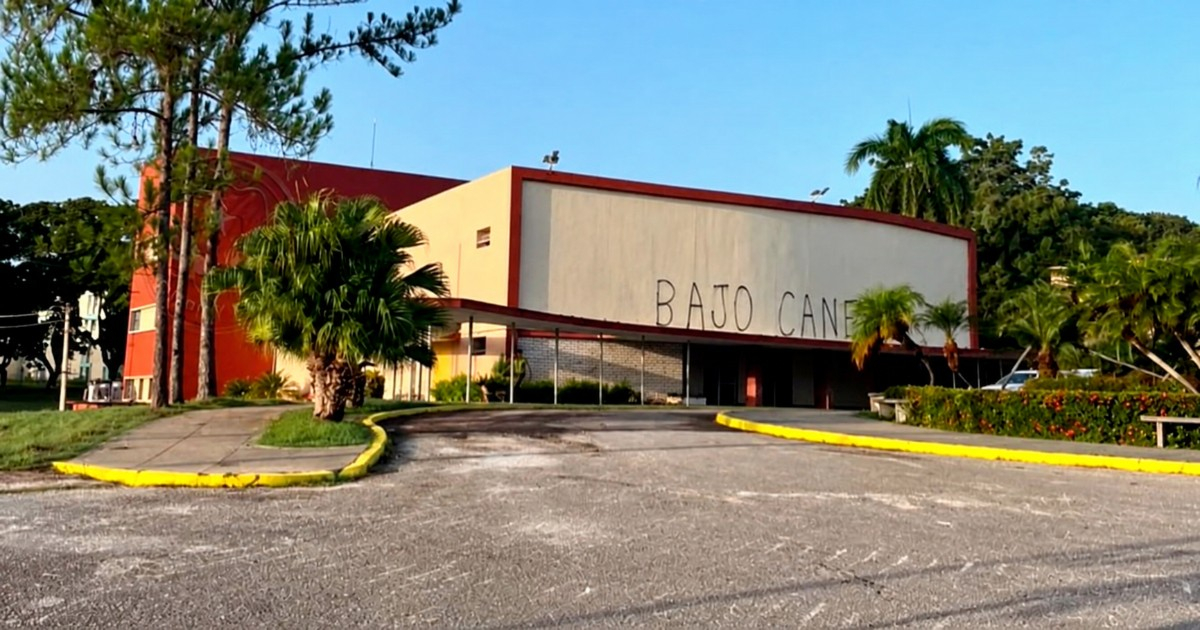
Graffiti with slogans such as "Down with Canel" and "Down with Canel and the Communist Party" reportedly appeared on the exterior of the University Theater at the Central University "Marta Abreu" of Las Villas (UCLV) in Santa Clara. This incident occurred during the night of Sunday, September 13, or the early hours of Monday, September 14, coinciding with the start of the new academic year for incoming students.
Photos of the graffiti circulated on social media through the Instagram account "Guapo y Fajao", which claimed to have received them from an anonymous source at the scene.
The Symbolic Choice of Venue
The location of the graffiti carries deep symbolic weight: UCLV is the alma mater of Miguel Díaz-Canel, who studied electronic engineering there and graduated in 1982. The university also awarded him a Doctorate in Technical Sciences in May 2021.
According to sources, the graffiti was strategically placed to "spoil the inauguration ceremony of the academic year," an event laden with political symbolism for the regime.
Carlos Alejandro Rodríguez Martínez, who identifies as a former student of UCLV, shared a nighttime photo of the building with the graffiti on Facebook, labeling it as a "verified photo." He clarified that the full text read "Down with Canel and the Communist Party," noting that two figures obscured the Communist Party of Cuba's initials in the image. "My university, where I vowed never to set foot again until political discrimination ends," he wrote.
Rapid Response from Authorities
According to the account from "Guapo y Fajao"—which the account itself warns has not been independently verified—Cuban authorities quickly concealed the messages with Cuban flags and 26th of July posters, then repainted the facade to erase any trace.
The same source reports that a security operation involving agents from the Technical Investigations Department (DTI) and canine units was deployed, preventing closer photographs from being obtained. Since the academic year began, a constant police presence has been maintained at the entrance of the facility.
Family Ties and Political Contrasts
The connection to UCLV extends beyond Díaz-Canel. María del Carmen Hernández Carús, a professor at the university, is the mother of Leticia Martínez Hernández, head of Communications for the Cuban Presidency and a key spokesperson for Díaz-Canel.
María del Carmen has made headlines for actions contrasting with her daughter's propaganda role: she publicly protested power outages in December 2024 and stirred controversy again in July 2026.
Martínez Hernández, in contrast, criticized Havana residents in October 2022 for protesting the lack of electricity, water, food, and freedom, labeling them as selfish.
A Growing Trend of Covert Protest
The graffiti is part of a documented trend of clandestine protest. The Cuban Conflict Observatory recorded a record 41 anti-government graffiti incidents in June 2026, the highest number since it began tracking them in September 2020.
In March of the same year, 70 graffiti and leaflet distributions were reported as part of what are called "acts of defiance against the police state." Similar messages also appeared in Havana and Bayamo that month.
"The regime can cover a statement with flags and repaint a wall, but it cannot hide the growing discontent within Cuba," concluded "Guapo y Fajao" in its post.
Understanding the Graffiti Protests in Cuba
What messages were painted at the Central University of Las Villas?
The graffiti included slogans such as "Down with Canel" and "Down with Canel and the Communist Party."
Why is the graffiti at UCLV significant?
UCLV is the alma mater of Miguel Díaz-Canel, Cuba's leader, making the location of the graffiti symbolically significant.
How did authorities respond to the graffiti?
Authorities quickly covered the graffiti with flags and posters, then repainted the wall to remove any traces.
What does the graffiti trend indicate about Cuban society?
The increasing number of graffiti incidents reflects a growing discontent and acts of defiance against Cuba's communist regime.