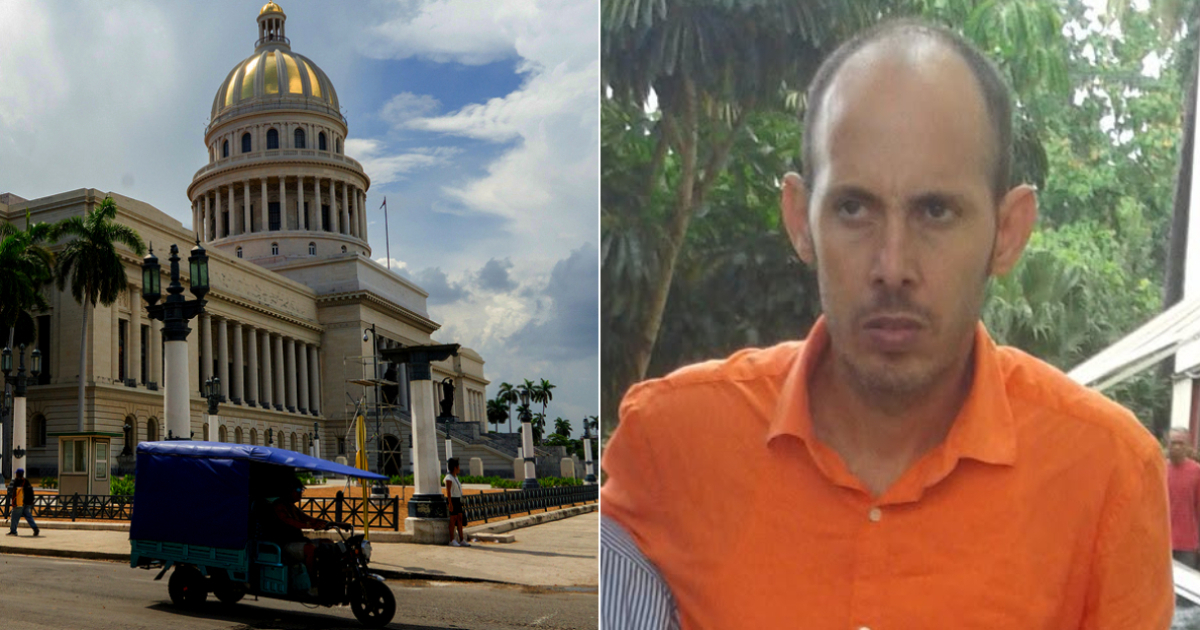
Renowned Cuban scientist and activist Ariel Ruiz Urquiola has openly criticized a sensitive aspect of the recent Harvard Working Group report on Cuba's future: the involvement of current Cuban authorities in facilitating a democratic transition.
In a comprehensive Facebook post titled "A New Zanjón: Power, Victims, and the Limits of a Negotiated Transition with 'Cuba'," Ruiz Urquiola argues that any democratization effort must address a fundamental question: "Who truly holds power and what motivation would they have to relinquish it?"
The Core of the Critique
His critique is aimed squarely at a key assumption of the report by academics and experts from Harvard's Cuba Studies Program and the Afro-Latin American Research Institute. The document argues for urgent political changes in Cuba leading to a legitimate transitional government, stating, "Cuban authorities should take the lead in this process and act as facilitators."
The authors acknowledge that not everyone, both inside and outside the island, agrees with this premise. However, they assert that a peaceful solution requires the involvement of the current authorities alongside the opposition, civil society, the diaspora, the United States, and the international community.
What Would Compel the Regime to Relinquish Power?
For Ruiz Urquiola, the main issue isn't negotiation itself. He acknowledges that historical transitions have involved negotiations, but warns that these do not inherently lead to democratization without a prior shift in the balance of power.
He cites the example of Poland's 1989 transition, emphasizing that negotiation followed years of resistance by Solidarność, internal crisis, and geopolitical changes that weakened Soviet support for Eastern European communist regimes.
Drawing on Gene Sharp's nonviolent action theories, Ruiz Urquiola argues that a dictatorship maintains control as long as it commands its principal power sources: institutions, administration, economic resources, coercive forces, and obedience. "A table can be round, yet the power dynamics around it profoundly vertical," he summarizes.
Political Prisoners and the Question of Amnesty
Another contentious point is the proposal to initiate the transition with a general amnesty and the unconditional release of political prisoners.
Harvard suggests this as a demand from Cuban citizens, not an imposition by Washington. They propose that the United States respond favorably by lifting fuel supply sanctions and later facilitating resources to stabilize the economy and support reforms.
However, Ruiz Urquiola warns against any dynamic that might turn the release of political prisoners into a bargaining chip. "Political prisoners are not the political capital of the state that imprisoned them," he asserts. For him, freeing someone jailed arbitrarily for exercising fundamental rights is not a power concession but "simply the cessation of an injustice."
From Prisoner of Conscience to Critic of the Proposed Transition
Ruiz Urquiola's stance is also shaped by his personal experience with Cuba's repressive apparatus. The biologist was ousted from the Marine Research Center at the University of Havana and sentenced to a year in prison in 2018 for contempt following a dispute with officials in Viñales.
During his imprisonment, he went on a hunger and thirst strike, and Amnesty International declared him a prisoner of conscience, calling for his release. His sister, art historian and activist Omara Ruiz Urquiola, has also reported detentions, harassment, and political reprisals. After traveling to the United States for cancer treatment, Cuban authorities barred her return to the island.
Reconciliation Without Impunity
Ruiz Urquiola highlights a problem he sees as inadequately addressed in any transition: the role of victims and how responsibilities for human rights violations will be determined.
He rejects the notion that justice equates to revenge, advocating for due process guarantees even for those who served the regime. Criminal responsibility, he argues, should be individual and proven in accordance with the law, not based merely on political affiliation. However, he cautions that avoiding reprisals must not lead to impunity: "Reconciliation and transitional justice can coexist; reconciliation and enforced forgetfulness are fundamentally different concepts."
The Warning of Zanjón and Baraguá
Finally, Ruiz Urquiola draws on two historical Cuban episodes to explain his opposition to negotiations that don't first alter the fundamental power structures: the Pact of Zanjón in 1878 and Antonio Maceo's subsequent Protest of Baraguá. He clarifies that while a contemporary negotiation and Zanjón are not identical events, he sees a similarity: resolving a conflict through an agreement doesn’t ensure the causes behind it disappear.
According to the activist, a future transition might negotiate timelines, electoral procedures, administrative mechanisms, and institutional guarantees. What should not become negotiable are popular sovereignty, pluralism, freedoms of expression and association, judicial independence, or the subordination of armed forces to civilian authority.
Harvard's report envisions these as the end goals of the process: a new Constituent Assembly, a democratic and pluralistic system, rule of law, and a social market economy with varied property forms, including private.
Ruiz Urquiola's disagreement centers on the path to reach this point: what would prevent those currently in control of arms, institutions, and much of the economic resources from using a negotiated transition to retain a substantial share of their power under a new framework?
"A transition is not synonymous with democratization. A regime can also transform to survive," he warns.
His critique distills the dilemma into a single phrase: "Cuba needs dialogue, but not the fiction of equality between oppressor and oppressed; reconciliation, but not amnesia; guarantees, but not impunity."
Understanding the Debate Around Cuba's Transition
Why does Ariel Ruiz Urquiola oppose involving current authorities in Cuba's transition?
Ruiz Urquiola believes that involving current authorities without altering power structures doesn't guarantee democratization. He argues that those in power may use negotiations to retain control.
What does the Harvard report propose for Cuba's political transition?
The report suggests immediate political changes leading to a legitimate transitional government, with Cuban authorities acting as facilitators alongside opposition, civil society, and international actors.
How does Ruiz Urquiola view the role of political prisoners in the transition?
He warns against using the release of political prisoners as a bargaining chip, emphasizing that their freedom is not a concession but a cessation of injustice.
What historical examples does Ruiz Urquiola use to illustrate his point?
He references the Pact of Zanjón and Antonio Maceo's Protest of Baraguá, emphasizing that agreements without structural changes don't necessarily resolve underlying conflicts.