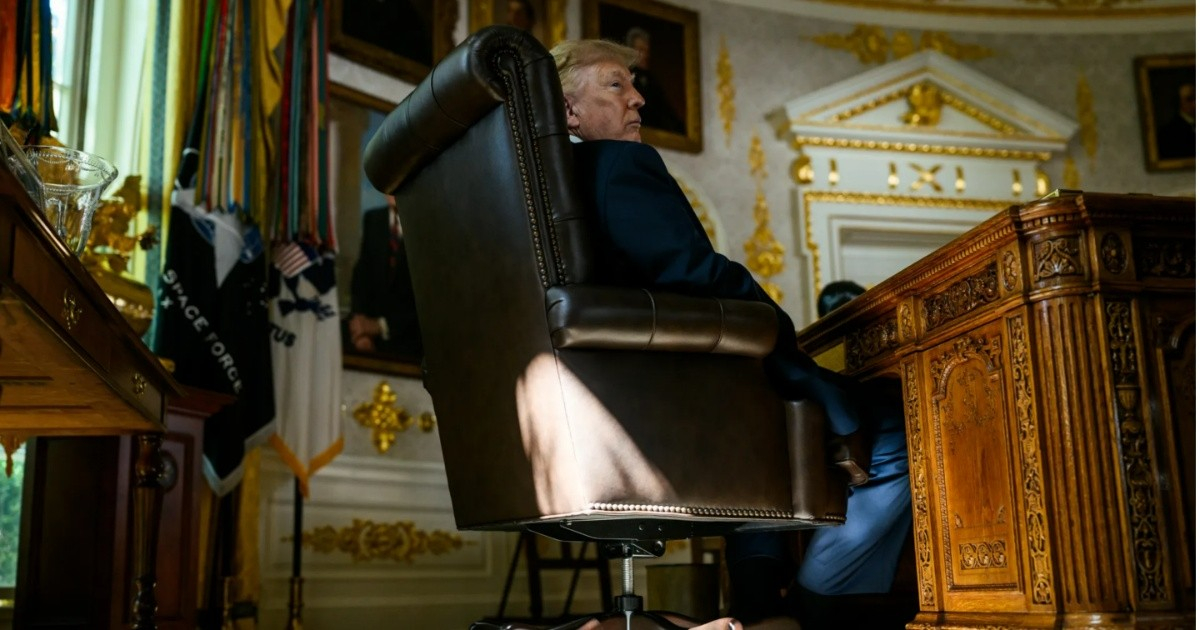
On Sunday, Donald Trump issued a stark warning that the United States might "pull out" of Iran unless Washington opts to "hold onto the oil, similar to Venezuela." This statement explicitly aligns his approach to the Iranian conflict with the energy control strategy applied in the South American nation following Nicolás Maduro's capture.
According to a report by EFE, Trump made these comments to the press while in Doonbeg, Ireland, where he was attending a golf tournament at his resort. He was responding to inquiries about an upcoming Monday meeting between Iran, Oman, and several Gulf countries concerning the Strait of Hormuz's future.
"Ultimately, we will leave Iran, unless we decide to stay and take the oil, like in Venezuela. Nobody talks about Venezuela anymore, right? We've received trillions and trillions of dollars. We've paid for the war many times over," Trump asserted.
The president portrayed Venezuela as a success story under U.S. influence: "It was a very sad country. And now people are very happy. The Venezuelan people are very happy. And they see what’s happening. By the way, jobs are being created by the thousands. All the big companies that couldn’t or wouldn’t go there are now all there."
Following the U.S. forces' capture of Maduro on January 3, 2026, Washington effectively took control of Venezuela's energy sector, supporting Delcy Rodríguez as interim president. By the end of August, Trump announced what he called "the largest oil deal in history," involving 17 Venezuelan oil fields with about 65 billion barrels of proven reserves, a 25-year term, and a projected investment exceeding $100 billion.
When asked about potential elections in Venezuela, Trump was terse: they will happen "when they’re ready," without providing specific timelines or conditions.
Regarding the Monday meeting between Iran and Gulf nations, the president downplayed its significance: "I don’t care. That’s up to them. That’s fine. As long as Israel, along with the nations we’re talking about, are happy."
The backdrop of these remarks is the U.S.-Iran war, which began on February 28, 2026, with a joint offensive with Israel. The conflict led to the closure or severe restriction of the Strait of Hormuz—through which one-fifth of the world's crude passed—and caused Brent oil prices to skyrocket from about $67 to over $126 per barrel.
Iranian Foreign Minister Abbas Araqchi warned on Sunday that the agreement reached with Oman would not entail reopening the strait unless the U.S. re-engages with the commitments of the peace memorandum signed in June.
On Saturday, Trump had already forecasted that he expected the war with Iran to wrap up after the U.S. legislative elections in November, suggesting that Washington is in no hurry to resolve the conflict before those polls.
Key Questions on U.S.-Iran Relations and Energy Control
What strategy does Trump propose for Iran?
Trump suggests that the U.S. might leave Iran unless it opts to control Iran's oil resources, similar to what was done in Venezuela.
How did the U.S. influence Venezuela's energy sector?
Following the capture of Nicolás Maduro, the U.S. took control of Venezuela's energy sector, supporting Delcy Rodríguez as interim president and negotiating a massive oil deal.
What are the consequences of the U.S.-Iran conflict?
The conflict has led to the closure of the Strait of Hormuz, affecting global oil supply and causing oil prices to surge significantly.