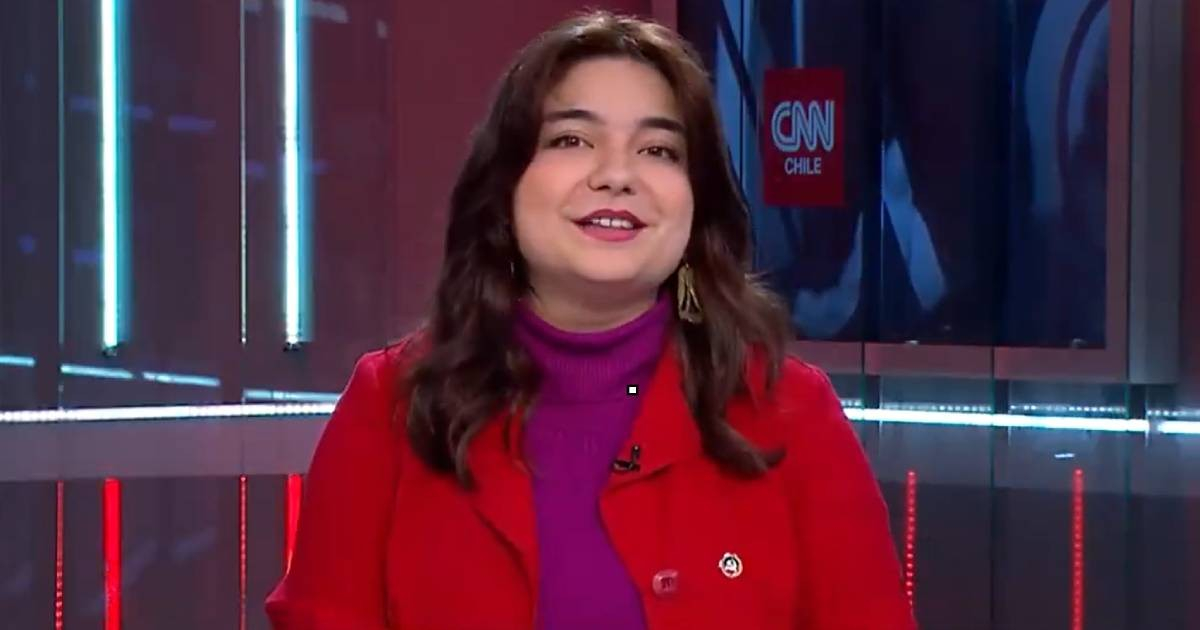
Catalina Lufín, the leader of the Communist Youth of Chile (JJCC), stirred controversy with her recent remarks, asserting that she does not view Cuba as a dictatorship. She attributed criticisms of the Cuban regime primarily to the island's lack of economic prosperity.
These statements were made during her appearance on CNN Chile's program "Aquí se Debate," where Lufín was questioned about Cuba's political system.
"I don't consider it a dictatorship," Lufín stated unequivocally.
She further criticized what she perceives as a double standard in evaluating Cuba compared to other nations, such as China. "It seems Cuba's real sin is not achieving economic prosperity," she argued.
Her comments sparked debate by focusing the discussion on economic conditions, despite numerous reports from international organizations highlighting political prisoners, opposition persecution, and restrictions on freedom of expression, association, and press.
Human Rights and Double Standards
When asked about human rights issues, Lufín acknowledged their importance but juxtaposed Cuba's situation with Chile's social challenges. "I have no problem stating that respecting human rights is essential. I believe healthcare is a human right, and here in Chile, it is not guaranteed," she remarked.
In Cuba, Prisoners Defenders reported 1,339 political prisoners in August, while the Cuban Observatory of Human Rights documented at least 1,949 repressive actions in the first half of 2026, according to a July report. Freedom House continues to classify the island as "not free," and Reporters Without Borders ranks it 160th out of 180 countries in global press freedom.
Persistent Views Within the Chilean Communist Party
Lufín's stance is not isolated within the Chilean Communist Party. In April 2025, then-presidential candidate Jeannette Jara also denied Cuba's dictatorship status, describing its system as "democratic but different." She later amended her position, admitting, "clearly Cuba is not a democracy."
In August, Lautaro Carmona, president of the Communist Party of Chile, echoed this sentiment, asserting that Cuba "is a democratic system from a historical perspective."
Criticism of Chile's Right-Wing Government
During her appearance, Lufín criticized President José Antonio Kast's government, which began on March 11 after his victory in the presidential runoff. She spoke of "an authoritarianism that doesn't allow them to govern by their own rules," though she acknowledged Kast's democratic election.
"In a short amount of time, unfortunately, the right has shown incompetence in areas it claimed expertise, such as security, economy, and patriotism," Lufín asserted.
The divisions within Chile's left regarding Cuba became particularly evident in January when former President Gabriel Boric labeled the Cuban regime as a dictatorship, prompting a response from Cuban Foreign Minister Bruno Rodríguez Parrilla, who accused him of "political opportunism."
Understanding the Debate on Cuba's Political System
Why does Catalina Lufín not consider Cuba a dictatorship?
Catalina Lufín believes that criticisms of Cuba stem mainly from its economic struggles rather than its political system, which she does not label as a dictatorship.
What are the key criticisms of Cuba's political system?
Critics highlight issues such as political prisoners, persecution of opposition, and restrictions on freedoms of expression, association, and press, as documented by international organizations.
How has the Chilean Communist Party historically viewed Cuba?
The Chilean Communist Party has had differing opinions on Cuba, with some members like Jeannette Jara initially denying its dictatorship status, though later acknowledging the lack of democracy.