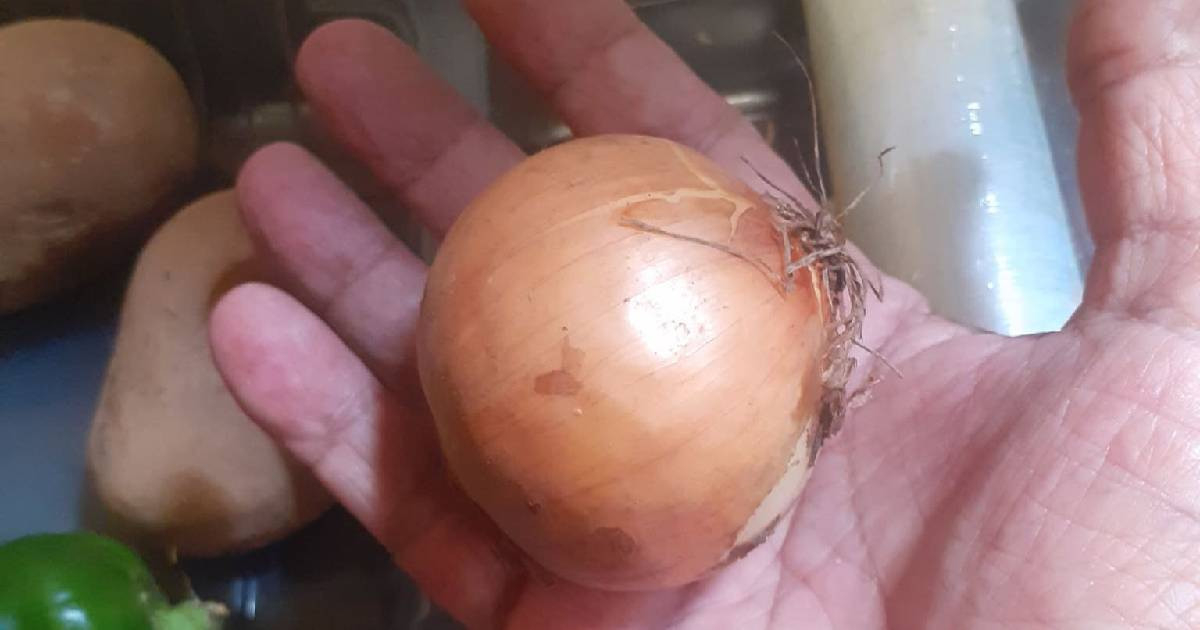
Dagoberto Pedraja, a Cuban musician in his late 60s, ventured out last Saturday to purchase food for his ailing wife at the Línea y L agricultural market in Havana's Vedado neighborhood. To his shock, a vendor attempted to charge him an exorbitant 910 pesos for a single onion.
Refusing to pay such a steep price, Pedraja moved along K Street to another vendor, notoriously known by locals as "the criminal" for his high prices. There, he managed to purchase the same onion for 400 pesos, along with a pepper for 300 and two potatoes for 310.
Pedraja expressed his frustration on Facebook, remarking, "I was charged less by 'the criminal' than at the so-called 'fair' for just one onion... What's up with 'the Fair'?" His post quickly gained traction, sparking numerous reactions.
High Expectations and Stark Reality
The experience sharply contrasted with the enthusiastic promotion by the local delegate, who had touted the market as "the best of the best." Other Havana residents chimed in with their own experiences of inflated prices. One user reported being asked for 2,100 pesos for a single onion, while another claimed to have spent 2,145 pesos for two. In Playa, prices reportedly soar to 1,800 pesos per pound, and at the 13th Street market, they are offered at 1,500 pesos per pound.
Additional reports highlighted other costly items. Four small peppers were priced at 500 pesos, and a cachucha pepper was going for 350 pesos. "The price of a pound of onion is 1,370 pesos; we're ruthlessly exploiting each other. I might as well cook with magic dust," lamented one commenter.
Disparity in Pricing and Its Impact
Another individual succinctly captured the impact on daily meals: "Onions here cost 1,500... I've scratched them off my menu." Several participants noted that independent vendors infiltrate these official fairs, setting prices that deviate from those agreed upon by municipal authorities and authorized sellers.
The Provincial Delegation of Agriculture in Havana had set the official price for dry onions at 180 pesos per pound at capital fairs. The stark contrast between this price and the amounts reported by consumers highlights a significant disparity, turning the government-promoted fair into yet another financial burden.
"Cuban Dubai. Opportunists selling with a touch of glass dust," one commentator summarized the situation. Pedraja concluded his commentary with a touch of irony that resonated with several elderly readers: "We have to eat, and it's the Yankees' fault. I've been hearing the same thing since I was a teenager."
A Broader Economic Context
This incident unfolds amidst a backdrop of inflation, which reached an annual rate of 20.70% in July, with food prices escalating by 26.36% annually, according to the National Office of Statistics and Information. The average monthly wage in Cuba stands at a mere 6,930 pesos, approximately $10 at the informal exchange rate. Earlier this month, a Cuban content creator demonstrated that preparing a typical lunch costs roughly 2,950 pesos, almost half of the monthly salary.
In response to these economic challenges, the Council of Ministers recently updated agricultural market regulations through Decree 161, published in the Official Gazette on September 9. This decree allows for price setting by mutual agreement and effectively removes the regulatory floor for consumers.
Meanwhile, journalists from the official newspaper Invasor, based in Ciego de Ávila, acknowledged in August that price caps in Cuba have always been "dead letters": published rules that never materialized in real markets.
Understanding the Economic Challenges in Cuba
Why are food prices so high in Cuba?
Food prices in Cuba have soared due to inflation, reaching an annual rate of 20.70% as of July. This inflation has been exacerbated by economic policies, inefficient market regulations, and a disconnect between official price controls and market realities.
What is the official price for onions in Havana's markets?
The official price set by the Provincial Delegation of Agriculture in Havana for dry onions at city fairs is 180 pesos per pound. However, actual market prices reported by consumers are significantly higher, often reaching over 1,000 pesos per pound.
How has the Cuban government responded to market price issues?
In response to the issue of high market prices, the Cuban government updated agricultural trade regulations with Decree 161, which permits price setting through negotiation between parties and removes the regulatory floor for consumers.