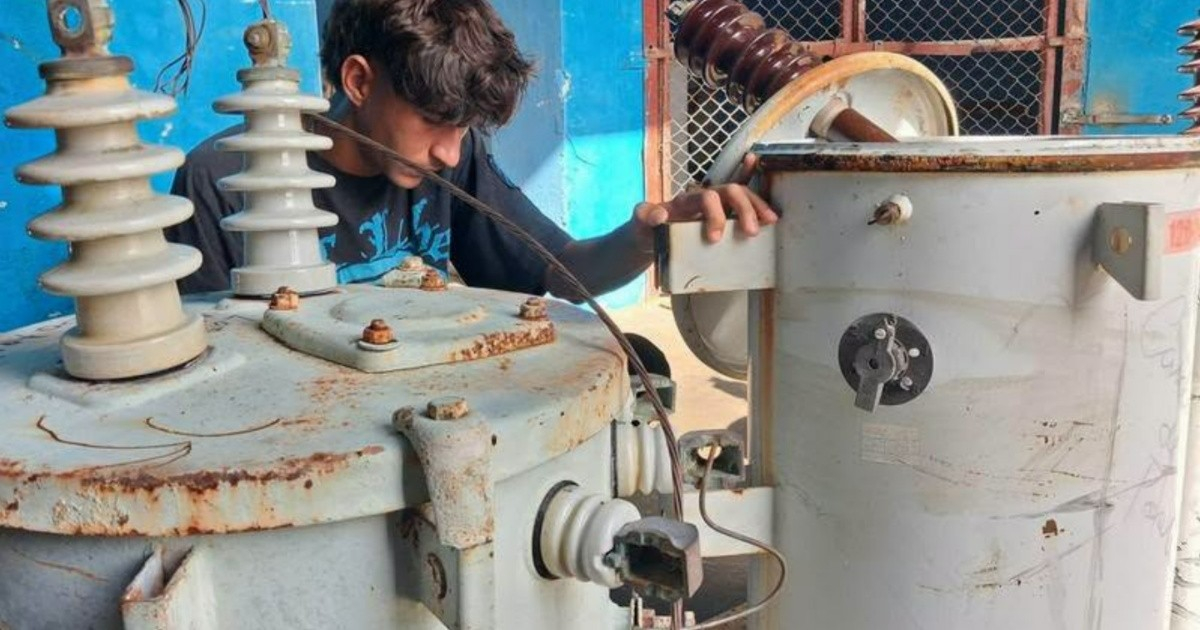
The electrical substation in Gratitud, located three kilometers from Jovellanos in Matanzas, has been targeted by thieves six times over the past three months of 2025. During each incident, the perpetrators drained dielectric oil from the transformers, leaving thousands without electricity and water, as reported by the government-run Juventud Rebelde on Thursday.
This facility supplies power to nine different communities, affecting about 4,000 residents in Cuba Libre, the Experimental Sugarcane Station, and Julio Reyes Cairo. Over these months, they have endured weeks without electricity, unable even to pump potable water.
Community Frustrations and Economic Impact
The start of 2026 has seen no improvement, with the substation being out of service for 70 consecutive days. When it was finally restored, it functioned for only three days before another severe failure occurred.
"The community is extremely frustrated with the vandalism targeting the transformers," stated Liosvany Hernández Tanquero, the municipal manager of Jovellanos, who also pointed fingers at those purchasing the stolen oil. "In the end, their families suffer too, as distributing water via tankers becomes increasingly difficult."
According to Maira Leiva Quiñones, delegate of district 49, the consequences extend beyond inconvenience: "Stealing oil from a transformer today is akin to stealing life, as it threatens the peace and safety of the area."
The Consequences of Dielectric Oil Theft
Dielectric oil, a mineral fluid, is essential for insulating and cooling transformers. Without it, the equipment overheats and is destroyed when power returns. In Cuba, thieves sell this oil on the black market as a substitute fuel for tractors and agricultural machinery, exacerbated by the severe diesel shortage.
Alejandro Rodríguez Azpeitía, director of the provincial electrical company, explained the chain of damage: "The oil is stolen during blackouts. When power returns, no one knows the transformer is dry, leading it to overheat and burn out. Replacing one of these transformers isn't easy; each costs upwards of $25,000."
Matanzas has lost over 55,950 liters of dielectric oil across distribution transformers and substations. Out of 98 substations connected in the province, 43 have been affected—some multiple times—and 12 remain inactive due to these issues. The hardest-hit areas include Jagüey Grande with 34 incidents, Jovellanos with 29, Colón with 24, and Cárdenas with 20.
Increased Sophistication in Theft Methods
Thieves have become more sophisticated: despite efforts by authorities to weld transformer valves shut, criminals at a substation in Mexico, also in Matanzas, used a drill to puncture holes and extract oil.
On a national level, the Ministry of Energy and Mines has recorded 479 incidents of dielectric oil theft by the end of August, with Matanzas being the most affected province, logging 175 incidents in 2026 compared to 136 in 2025. These thefts are classified as sabotage by the regime, with penalties ranging from seven to 30 years of imprisonment, and potentially the death penalty in severe cases. Despite harsher penalties, the crimes persist, with over 460 active investigations in 97 municipalities as of September 5.
Energy and Mines Minister Vicente de la O Levy acknowledged before the National Assembly that these thefts occur "daily" and the amount stolen is "nearly equivalent" to what Cuba produces in the same timeframe, with some communities experiencing up to 105 days without electricity due to transformer damage.
Understanding the Impact of Dielectric Oil Theft in Cuba
What is dielectric oil and why is it important?
Dielectric oil is a mineral fluid used to insulate and cool electrical transformers. Without it, transformers can overheat and become irreparably damaged, leading to power outages.
How does the theft of dielectric oil affect Cuban communities?
Theft of dielectric oil leads to power outages, leaving communities without electricity and water. This disrupts daily life and can lead to extended periods without these essential services.
What measures are being taken to prevent these thefts?
Authorities have attempted to secure transformers by welding valves shut, but thieves have adapted by using more sophisticated methods, such as drilling holes to extract oil.
What are the legal consequences for stealing dielectric oil in Cuba?
The Cuban regime categorizes these thefts as sabotage, with legal penalties ranging from seven to 30 years in prison, and in severe cases, the death penalty, although these measures have not deterred the crimes.