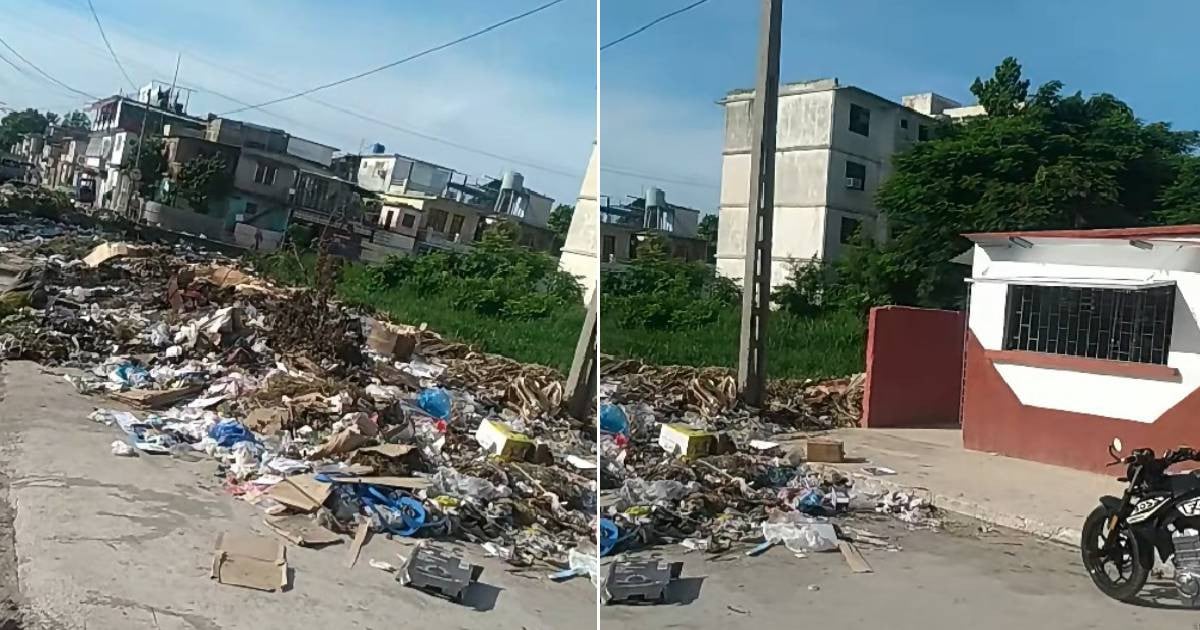
Recently, a video shared on social media highlighted a troubling scene in Holguín, Cuba, where piles of trash have accumulated next to the newly erected food kiosks. These kiosks were established following the eviction of the informal market known as Los Chinos, a move that local authorities claimed would promote urban cleanliness and order.
The brief 26-second clip, uploaded to Facebook, starkly reveals the chaotic heap of solid waste near these food stalls and adjacent homes, ironically mirroring the very issue officials cited as a reason to displace over 350 vendors last June.
The video's creator remarks, "They criticized Los Chinos for being dirty, but look at this, it's shameful," as the camera pans across the kiosk surroundings.
In the post's description, the individual was more pointed: "They complained about Los Chinos' filth; let's see what they say about this right by homes and food stalls. Holguín has gone from the cleanest city to the dirtiest. Where are the municipal services responsible for the city's cleanliness? Holguín is hurting."
The Los Chinos market eviction took place in early June, with officials citing unsanitary conditions, garbage build-up, wastewater issues, and public disorder. Situated in the Lenin neighborhood, it was a major food distribution hub for the region.
In its stead, the local government launched these kiosks and commercial boulevards across different city areas. Each structure reportedly cost around 1.6 million Cuban pesos, though initial reports on social media suggested the figure could be as high as two million. Vendors leasing these stalls do not gain property rights; if they cease operations, the state reclaims the space.
Public reactions in the video's comments section express both frustration and sarcasm. "Holguín was a model for clean streets; now we'll witness horrors," lamented one resident.
Another comment pointed out the inconsistency in the official narrative: "Today we rightly complain about the lack of hygiene, but tomorrow it will be about the higher food prices and the absence of those vendors."
Back in August, another video depicted Manuel Dositeo Aguilera Street, located between Cuba and Garayalde, near food stalls, overwhelmed by trash, just a short distance from the Vladimir Ilich Lenin provincial hospital.
Throughout the year, complaints have surfaced about how in Holguín, dubbed the City of Parks, garbage dumps burn nightly and rivers turn into dumpsites. This comes amidst the operational collapse of the Municipal Services Company, which has acknowledged shortages of trucks, fuel, spare parts, and personnel without providing concrete solutions.
Understanding Holguín's Waste Management Crisis
Why were the vendors at Los Chinos market evicted?
Vendors were evicted due to claims of unsanitary conditions, garbage accumulation, wastewater issues, and public disorder by local authorities.
What has been the public reaction to the new kiosks?
The public has reacted with frustration and irony, criticizing the ongoing sanitation issues and expressing concerns about higher food prices and the absence of vendors.
How has the waste issue impacted Holguín?
Holguín has seen a rise in garbage problems, with dumps burning at night and rivers becoming dumpsites, partly due to the collapse of the Municipal Services Company.