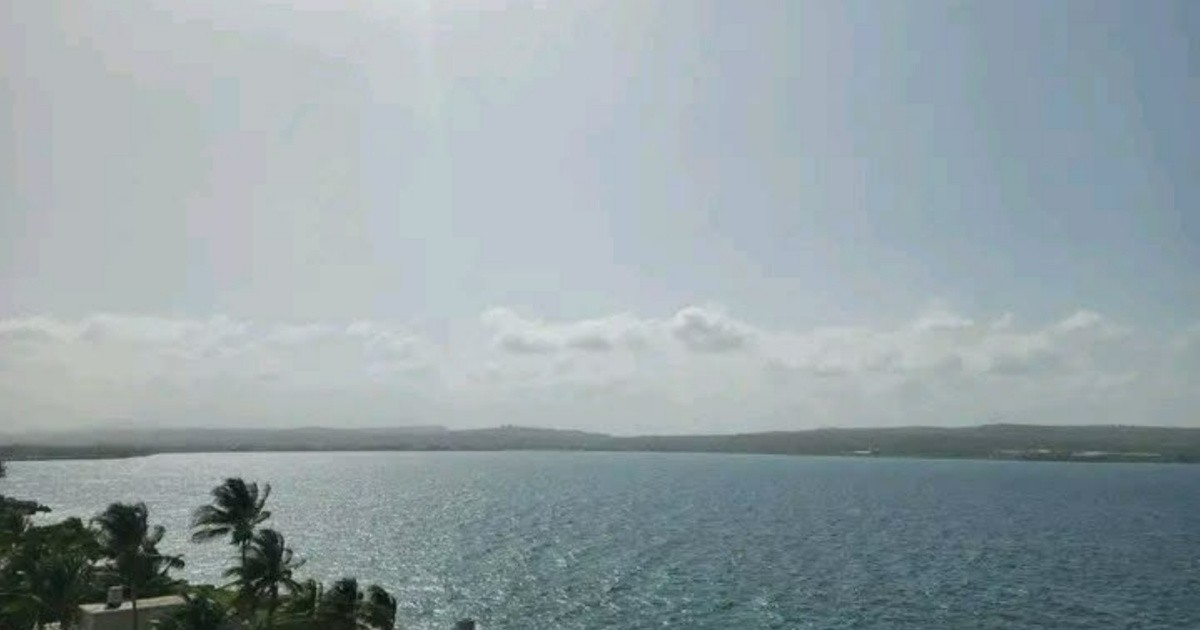
A low to moderate intensity cloud of dust from the Sahara began affecting the Cuban archipelago on Saturday, as reported by the Provincial Meteorological Center of Camagüey through the Institute of Meteorology and its Department of Solar Radiation and Atmospheric Optics.
Authorities predict this phenomenon will persist for four to five days, potentially influencing the region until Tuesday, September 15.
The peak of this event is expected on Sunday, with the highest particle concentrations anticipated between Saturday and Monday.
Impact on Air Quality and Public Health
Forecast models indicate a significant rise in Aerosol Optical Thickness at 550 nanometers, with values ranging from 0.3 to 0.4, surpassing the usual average for September.
Additionally, there is an expected increase in PM10 particulate matter—particles up to 10 microns in size—and authorities warn that in certain areas, it might exceed the Maximum Admissible Concentration set by Cuban standard NC 1020:2014, which limits are 200 µg/m³ per hour and 50 µg/m³ over 24 hours.
The Institute of Meteorology has indicated that this threshold could be surpassed, particularly over the weekend.
Precautionary Measures for Vulnerable Groups
Authorities advise the public to stay informed through official updates and adopt protective measures, especially for individuals with respiratory conditions, the elderly, and children, who are more susceptible to the adverse effects of these atmospheric conditions.
Recommended precautions include wearing masks when outdoors, avoiding prolonged outdoor activities, keeping doors and windows shut, staying hydrated, and rinsing eyes and nasal passages with clean water.
Historical Context and Seasonal Patterns
This September event occurs as the peak season for Saharan dust over Cuba—mainly spanning May to October—begins to wane. During the 2026 season, the highest concentration of Saharan dust over Cuba was recorded on July 11, with surface values reaching up to 800 µg/m³ and 1,500 µg/m³ between one and three kilometers in altitude, far exceeding current levels.
Two days later, the dust cloud enveloped the western half of the island, reducing visibility in Matanzas.
The phenomenon also plays a significant role during the Atlantic hurricane season: the Saharan Air Layer introduces warm, dry air that can temporarily hinder the formation and intensification of tropical cyclones.
Cuban research has linked the presence of Saharan dust with increased cases of bronchial asthma during summer months, highlighting the importance of personal protective measures during these episodes.
Frequently Asked Questions About Saharan Dust and Its Impact in Cuba
What are the health risks associated with Saharan dust in Cuba?
Saharan dust can exacerbate respiratory conditions, particularly in vulnerable groups such as individuals with asthma, the elderly, and children. It is crucial to take preventive measures to minimize exposure.
How long is the Saharan dust expected to affect Cuba?
The dust cloud is projected to impact Cuba for around four to five days, with its effects potentially lasting until mid-September.
What measures should be taken to protect against Saharan dust exposure?
Recommended measures include wearing masks outdoors, avoiding prolonged outdoor activities, keeping doors and windows closed, staying hydrated, and cleaning eyes and nasal passages with water.