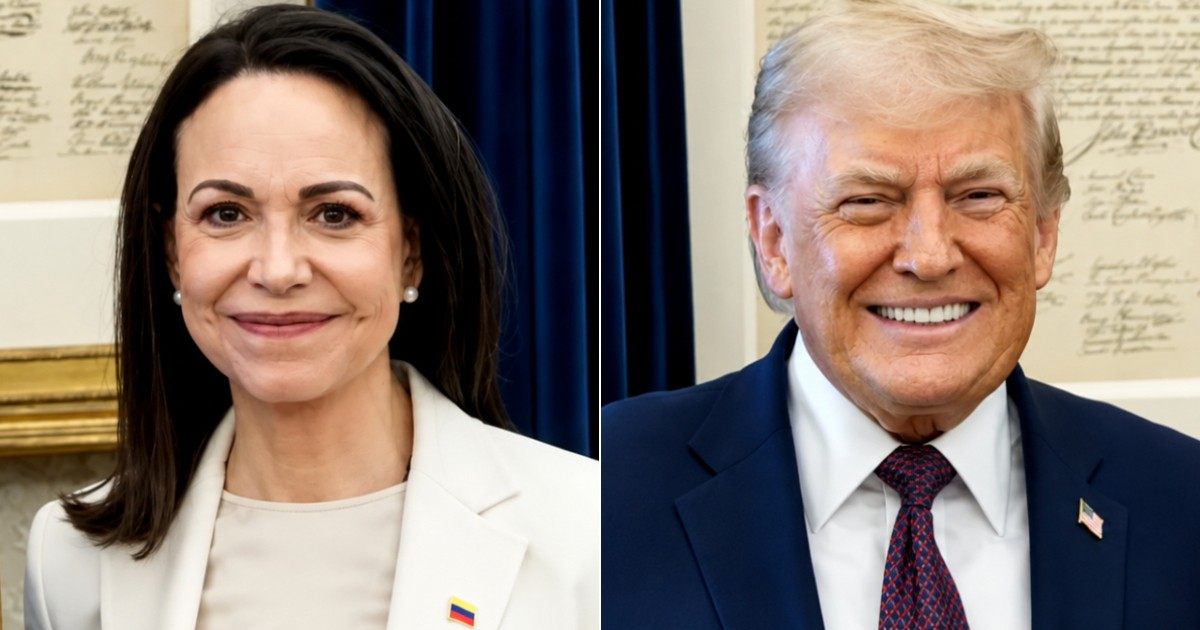
Recent data from the Venezuelan polling firm Meganálisis indicates a dramatic decline in approval ratings for Donald Trump among Venezuelans, dropping over 82 points since January. According to figures published by the Spanish newspaper ABC, Trump's approval has fallen from 92.2% to a mere 9.7%.
The most recent catalyst for this downturn is the oil agreement reached between the U.S. administration and interim President Delcy Rodríguez. Announced on August 28, this deal gives the U.S. control over 65 billion barrels—21% of Venezuela's certified oil reserves—through North American Blue Energy Partners (NABEP). This company is associated with Alejandro Betancourt, a 46-year-old Chavista entrepreneur under investigation for corruption and money laundering in Switzerland, Spain, and the UK, and allegedly shielded by the White House.
Rubén Chirino, president of Meganálisis, explained to Colombian broadcaster NTN24 that the decline stems from "the gap between high expectations for change and the lack of concrete progress towards freedom."
Economic Setbacks and Political Discontent
The survey, conducted from August 24 to 31, shows that Venezuelans largely feel that while Maduro was removed, Chavismo remains entrenched. Criticism of the agreement is not limited to public opinion. Economist and former opposition deputy José Guerra criticized the deal, stating it "is not favorable for Venezuela." He quantified the losses: 17 oil fields handed over to NABEP without bidding ceased generating $4.5 billion in bonds, and selling 21% of the crude at cost price resulted in an additional fiscal sacrifice of $1.7 billion, totaling nearly $6 billion in losses.
Under Rodríguez's government, the Venezuelan economy shows no signs of improvement. Inflation surged from 475% at the end of 2025 to a staggering 544% in July 2026. Meanwhile, the Central Bank of Venezuela spent $7.2 billion—more than half of the year's oil revenues—attempting unsuccessfully to contain the currency gap, according to the portal Descifrado.
Growing Support for María Corina Machado
In this context of frustration, María Corina Machado's popularity has surged. The Nobel Peace Prize laureate and founder of Vente Venezuela, who has been in exile for ten months, is gaining momentum. A significant 79.9% of Venezuelans demand open presidential elections, and in such a scenario, 61.2% would vote for her. If the election were solely between Machado and Rodríguez, the opposition leader would garner 95.2% of the votes.
Machado responded to the oil agreement with a video expressing "sadness and rage," challenging the Chavista regime's legitimacy to commit national resources without consulting the Venezuelan people. The sentiment of distrust towards Washington is widespread: 69.2% of Venezuelans do not believe Trump has the country's best interests at heart, while 70.9% think he captured Maduro to seize oil, not to liberate the people. Only 8.9% view the detention as motivated by democratic intentions.
Chirino concludes that, "after eight months of inconsistencies from international actors, especially Trump," Machado "emerges as the figure with the strongest popular support in the country."
The second round of dialogue between the Chavista government and moderate opposition leader Dinorah Figuera, president of the 2015 National Assembly and supported by both Trump and the regime, is scheduled for September 15. However, the survey indicates that this dialogue does not inspire confidence among the Venezuelan populace.
Key Insights into Venezuela's Political Landscape
Why has Donald Trump's approval rating fallen in Venezuela?
Trump's approval rating has dropped due to the oil agreement between the U.S. and Venezuela's interim government, which many Venezuelans see as exploitative and not in their best interest.
Who is María Corina Machado, and why is she gaining popularity?
María Corina Machado is a Nobel Peace Prize laureate and founder of Vente Venezuela. Her popularity is rising as she is seen as a strong opposition figure against the current regime, advocating for open presidential elections.
What are the economic implications of the oil agreement with the U.S.?
The agreement resulted in significant economic losses for Venezuela, including $4.5 billion in missed bond generation and an additional $1.7 billion fiscal loss, totaling nearly $6 billion.