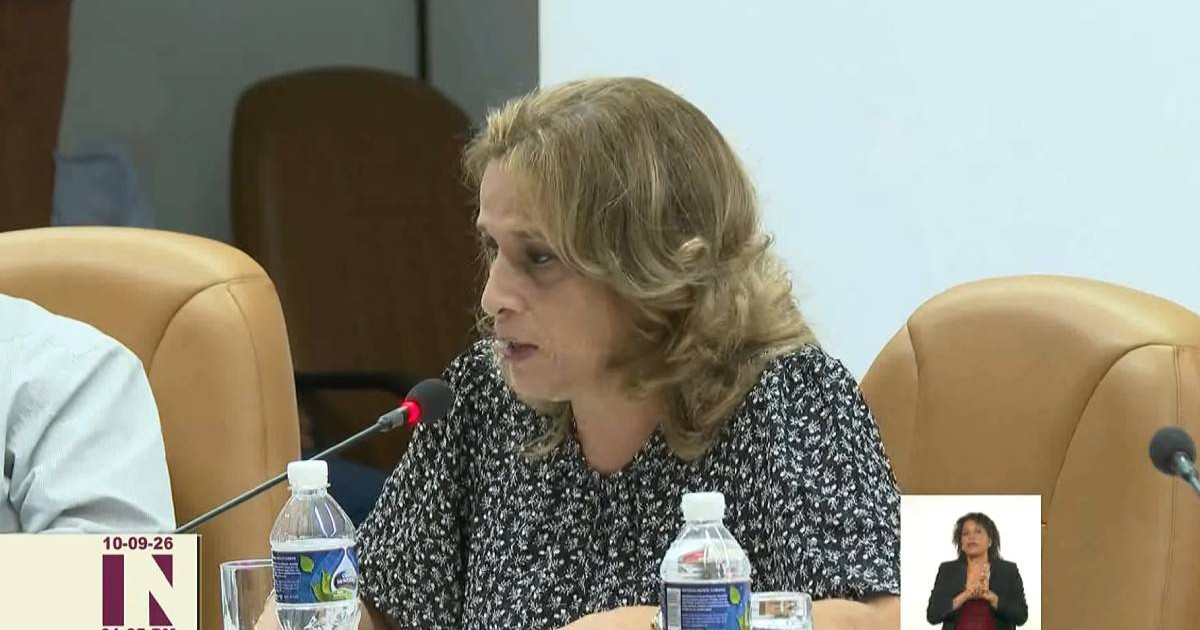
Cuba's Minister of Domestic Trade, Betsy Díaz Velázquez, has heralded the island's new legal framework governing commerce as a reflection of "modern policies." This assertion was made during a training seminar on economic reforms, attended by leaders from state agencies, regional governments, and business groups.
The seminar, led by Prime Minister Manuel Marrero Cruz alongside National Assembly President Esteban Lazo Hernández and Vice President Salvador Valdés Mesa—all members of the Political Bureau—aimed to brief officials on the progress of reforms in trade, agriculture, and municipal autonomy.
Central Legislation and E-commerce Recognition
Díaz Velázquez highlighted Decree 167/2026, sanctioned by the Council of Ministers on August 7 and documented in the Official Gazette later that month, as the principal legislation steering changes within her sector. "It is a modern policy that, for the first time, encompasses all aspects of commerce in a single legal provision. It defines wholesale and retail trade and establishes a system of violations and institutional competencies," she stated.
Among the decree's highlights, the minister noted that, for the first time, a Cuban legal norm acknowledges e-commerce as a sales modality. It also consolidates all existing forms of marketing—regulated, controlled, standardized, royalty, gift, and garage sales—into one text. Garage sales are limited to weekends and, exceptionally, to holidays as per local decisions.
Challenges and Agricultural Reforms
Despite these advancements, Díaz Velázquez admitted that adjustments to subsidies, shifting from products to individuals, remain unimplemented—one of the most anticipated changes by the populace.
On the agricultural front, Deputy Minister of Agriculture Tels Abdel González Morera outlined the scope of the Land Law (Law 185) and its regulations. The law allows land to be granted in usufruct to natural persons, legal entities, and both state and private micro, small, and medium enterprises, irrespective of their social purpose. "Land can be granted in usufruct without limitation, provided the applicant can substantiate it with their project proposal," González Morera explained.
The deputy minister also emphasized that the law recognizes the usufructuaries' property rights over improvements and housing, with usufruct periods extendable by mutual agreement.
Reform Implementation and Municipal Autonomy
Prime Minister Marrero Cruz dismissed interpretations suggesting these reforms signify a departure from the state model. "All the decision-making we're implementing through these transformations, which involve greater participation from non-state actors—let's call them private—does not mean that the state, the government, is disengaging," he asserted.
The seminar also explored municipal autonomy. Nancy Acosta Hernández, director of local government support, cautioned that decentralizing competencies to municipalities should not equate to neglecting them. "The body or institution that decentralizes a municipality or a competence doesn't just hand it over and turn its back. There must be follow-up and support," she emphasized.
The overall reform package, announced in June 2026 to the National Assembly, comprises 176 changes grouped into 23 strategic axes. By the seminar's conclusion, 155 of these changes had approved legal norms, with another 17 expected to be implemented by the end of September.
Understanding Cuba's Recent Economic Reforms
What is Decree 167/2026?
Decree 167/2026 is a legislative act approved by Cuba's Council of Ministers that serves as the central framework for recent changes in the commerce sector. It defines wholesale and retail trade, establishes institutional competencies, and introduces e-commerce as a recognized sales modality.
How does the new Land Law affect agriculture in Cuba?
The new Land Law (Law 185) allows land to be granted in usufruct to individuals and entities, both public and private. It recognizes usufructuaries' property rights over improvements and housing, with extendable usufruct periods based on agreements between the parties involved.
What are some challenges faced in implementing Cuba's economic reforms?
One significant challenge is the pending implementation of subsidy adjustments, which aim to shift subsidies from products to individuals. This change is highly anticipated by the Cuban public.