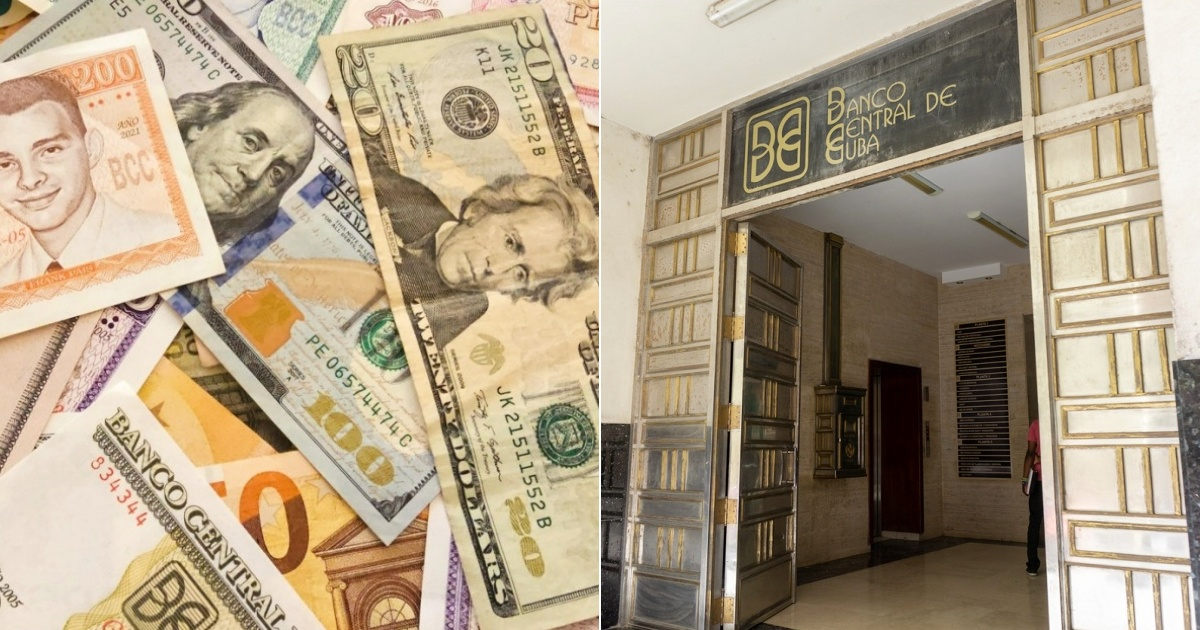
The Cuban government has implemented new regulations to determine the portion of foreign currency earnings that businesses can retain and the amount they must sell to the state. This policy acknowledges the "partial dollarization" of the country's economy.
According to Resolution 103/2026 from the Ministry of Economy and Planning, signed on August 31 and made public in Official Gazette No. 76, the new guidelines outline the management, control, and allocation of foreign currencies in the national economy.
This regulation replaces Resolution 140/2025 from the same ministry and is based on Decree-Law 113/2025, which empowers the Minister of Economy and Planning to authorize foreign exchange transactions within Cuba's economy.
Retention Rates Based on Economic Actors
A key aspect of the new regulation is the introduction of varying retention rates for foreign currency, depending on the economic actor and the source of income. For those without an approved retention coefficient in the national economic plan, the Resolution mandates an 80% retention rate on certain income sources.
These sources include exports, e-commerce, sales to the Mariel Special Development Zone, foreign investment projects, and authorized entities trading in foreign currency, along with specific intercompany transactions, wholesale trade, and other legitimate sources.
The remaining 20% is contributed to the central treasury and converted to the national currency at the applicable exchange rate. The regulation specifies that unretained foreign currencies are sold to the Central Bank of Cuba, which then transfers the equivalent national currency to the business's account using the operational exchange rate.
Full Retention Opportunities
The new regulation also identifies income sources where businesses can retain 100% of their foreign currency earnings. These include external financing, foreign investors' contributions to joint ventures, international cooperation project funding, and certain benefits from foreign investment contracts.
However, if Cuban entities receive dividends or profits in foreign currency, they must contribute them entirely to the central treasury, receiving the national currency equivalent in return.
Increased Flexibility for Foreign Currency Transactions
This regulation is part of a broader effort to expand foreign currency operations, which the government describes as "partial dollarization." It allows intercompany and wholesale transactions in either national currency or foreign currencies, as agreed by the parties involved.
For non-state economic actors, there is a significant provision allowing them to accept cash payments in foreign currencies and deposit these funds in foreign currency accounts or convert them to national currency at the current exchange rate.
This measure was hinted at in June when the government announced that small businesses, cooperatives, and other non-state actors could deposit and withdraw foreign currencies from bank accounts as part of a comprehensive economic transformation plan. The plan also includes opening foreign currency accounts without prior administrative approval.
Resolution 103/2026 formalizes these measures, allowing economic actors to open foreign currency accounts both domestically and abroad without prior approval. However, accounts opened outside Cuba must be reported to the Central Bank of Cuba and the National Office of Tax Administration (ONAT).
Staggered Implementation of New Regulations
Published alongside Resolution 103/2026, the Central Bank's Resolution 102/2026 sets out rules for managing foreign currency bank accounts. It allows non-state economic actors to receive income from exports, e-commerce, international transfers, and cash deposits in currencies accepted by the Central Bank, provided these come from legitimate sources.
While Resolution 103/2026 took effect on September 10, upon its publication, Resolution 102/2026 will take effect seven days later. This new regulatory package deepens a model where the government allows businesses, producers, and workers to handle more foreign currency operations while maintaining centralized control over retention, conversion, and allocation mechanisms. Despite this partial dollarization, the Cuban peso remains the official currency.
FAQs on Cuba's New Foreign Currency Regulations
What is the retention rate for businesses without an approved coefficient?
Businesses without an approved retention coefficient must retain 80% of their foreign currency earnings from specified sources.
What sources allow full retention of foreign currency?
Full retention is allowed for external financing, foreign investment contributions, international cooperation project funds, and certain foreign investment contract benefits.
Can non-state economic actors accept foreign currency payments?
Yes, non-state economic actors can accept cash payments in foreign currencies and deposit these funds in foreign currency accounts or convert them to national currency at the current exchange rate.