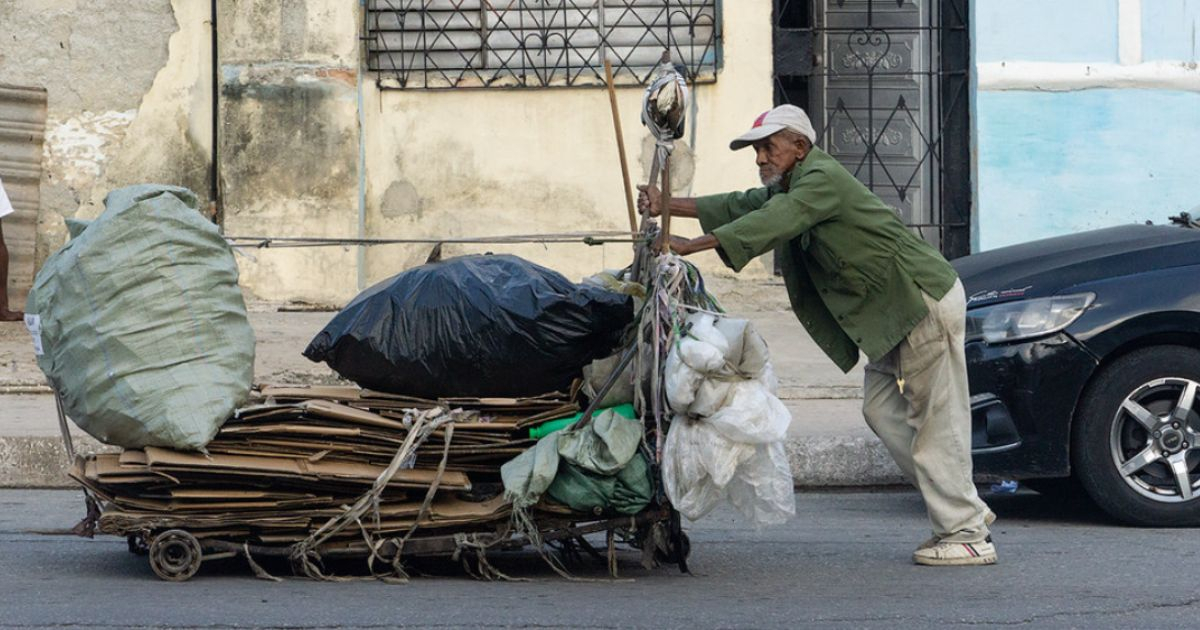
The Cuban economy is on track to end 2026 with a Gross Domestic Product (GDP) contraction of 10.3%, marking the steepest decline across Latin America and the Caribbean. This downturn mirrors the economic collapse experienced during the initial year of the COVID-19 pandemic.
This grim forecast is highlighted in the Economic Study of Latin America and the Caribbean 2026 report by the Economic Commission for Latin America and the Caribbean (ECLAC), which predicts an overall regional growth of 2.2% for the year.
Comparative Economic Outlook
Cuba's economic downturn starkly contrasts with other declining economies in the region. Haiti is projected to see a 1.9% decrease, while Jamaica might face a 1.2% reduction. No other nation in ECLAC's projections comes close to Cuba's dramatic fall.
The current prediction represents a significant deterioration from earlier estimates. In April, ECLAC had anticipated a 6.5% GDP drop for Cuba in 2026. The revised forecast increases the contraction by 3.8 percentage points, reaching 10.3%.
Expert Insights on Cuba's Economic Woes
Pedro Monreal, a Cuban economist, suggests that ECLAC's estimation may even understate the situation. He pointed out that the latest official Cuban data on the State Production of Goods and Services indicated a 13.4% drop in value at current prices. Given the substantial role of the state sector in Cuba's economy, this decline might hint at a GDP contraction exceeding the regional body's projection.
Monreal estimates that with a moderate GDP deflator range of 15% to 20%, Cuba's real economic decline could range between 26.4% and 30.7%. "A brutal fall for a single year," he summarized.
Long-Term Economic Challenges
The downturn didn't start in 2026. According to UN estimates, Cuba's GDP shrank by 3.8% in 2025, following declines of 1.9% in 2023 and 1.1% in 2024, marking several consecutive years of contraction.
Additionally, the outlook for recovery remains bleak. ECLAC forecasts another 5.1% decline for Cuba in 2027, once again predicting the worst outcome among Latin American and Caribbean economies.
In a detailed report on Cuba's economy, ECLAC identifies the primary drivers of the 2026 downturn as the disruption of external oil supplies, the collapse of international tourism, and the island's increasing financial and logistical isolation.
Tourism and Energy Crises
Tourism, a key source of foreign currency for Cuba, is experiencing one of its lowest points. The country welcomed only 387,591 international visitors in the first half of 2026, a staggering 60.7% drop from the same period last year.
ECLAC also reports that hotel occupancy rates plunged to 12.9% in the first quarter, compared to 23.7% a year earlier, while revenue from tourism entities fell by 42.4%.
The tourism crisis is compounded by energy challenges. Fuel shortages and the deterioration of the National Electric System have intensified blackouts and reduced electricity availability for industry, services, and other productive activities.
Domestic Demand and Inflation Pressures
On the domestic demand front, ECLAC anticipates contractions in both private consumption and investment, coupled with a heightened scarcity of goods and fuels and a continuous depreciation of the Cuban peso.
Inflation adds further strain to the backsliding economy. The Consumer Price Index showed a year-over-year increase of 20.70% in July, according to official figures from the ONEI, while ECLAC estimates inflation could approach 27% by the end of 2026.
Broader Economic Perspective
Looking at a broader perspective, an analysis published in the Cuba Economic Review by the Cuba Study Group indicates that, based on ECLAC's data series, Cuba's GDP will have contracted by about 23% between 2018 and 2026. Meanwhile, Latin America and the Caribbean are expected to have grown approximately 14% during the same period.
The analysis attributes this divergence to a mix of external shocks and internal economic policy issues, including low productivity, heavy state dependency, lack of predictability for the private sector, and investment decisions that favored hotel construction while neglecting the declining electrical infrastructure.
Understanding Cuba's Economic Decline: Key Questions
What are the main factors contributing to Cuba's economic downturn in 2026?
The main factors include disruptions in external oil supply, a severe drop in international tourism, and increased financial and logistical isolation of the island.
How does ECLAC's 2026 prediction compare to previous estimates for Cuba?
ECLAC's current prediction of a 10.3% GDP decline in 2026 is a significant deterioration from its earlier estimate of a 6.5% drop, indicating a worsening economic situation.
What impact has the tourism sector faced in Cuba?
Cuba's tourism sector has suffered greatly, with a 60.7% drop in international visitors in the first half of 2026 and a sharp decline in hotel occupancy and tourism revenue.