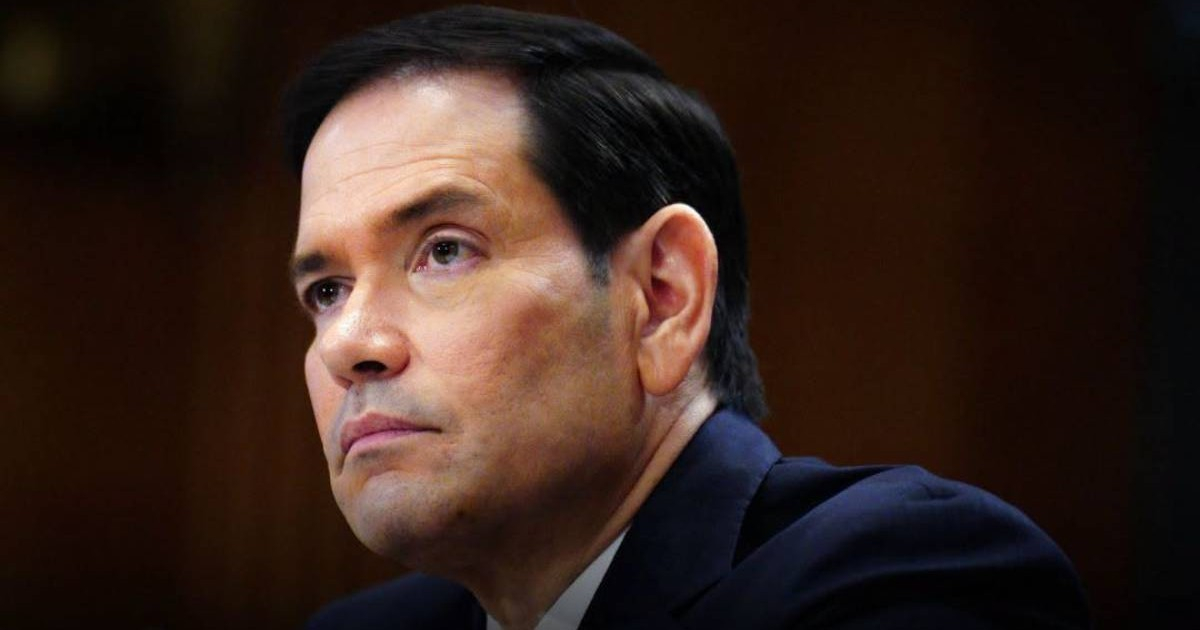
U.S. Secretary of State Marco Rubio declared that Washington has enforced the most stringent sanctions ever in the history of its bilateral relations with Cuba. In an exclusive interview with Noticias RCN and NTN24 in Colombia, he hinted at the possibility of even tougher measures in the future.
Rubio was unequivocal in his stance: “Regarding Cuba, we will not continue to allow a military enterprise like GAESA to keep siphoning off Cuba’s money. That’s why we have enacted the strongest sanctions in the history of our dealings with Cuba.”
He adamantly denied that the hardships faced by the Cuban population are due to U.S. actions, attributing the suffering to the regime's economic model and the incompetence of its leaders.
“Tragically, the Cuban people are suffering, but it’s not because of us,” Rubio asserted. He emphasized that the current model “does not work and never has.”
The Historical Dependence of Cuba's Regime
To illustrate the dictatorship's historical reliance, Rubio drew a direct line: “First, it was the Soviet Union, then Hugo Chávez. When the free oil they were pilfering from Venezuela ran out, they found themselves without oil. That’s not on us; that’s on them for not having a functioning market.”
He was equally critical of the current regime leaders: “Many of the leaders in Cuba today are incompetent, they don’t know how to manage an economy, and they have directly contributed to the people’s suffering.”
U.S. Commitment to Enforcing Sanctions
Rubio emphasized that the U.S. would not allow these leaders to evade sanctions and continue benefiting at the expense of the population. He noted that as a result of the measures, numerous bank accounts have been closed, and foreign businesses have left the island because they were involved with regime elements profiting at the people’s expense.
When asked about the potential for harsher actions, Rubio did not rule it out: “There can always be actions. I’m not going to speculate on what they might be, but we always reserve the right to operate and take steps to protect the national security of the United States.”
Broader Implications for Nicaragua
Rubio also addressed the situation in Nicaragua, stating that the U.S. “does not support” what’s happening there and has imposed sanctions against individuals contributing to the unrest.
He reiterated that “the primary responsibility to change a system lies with the people of those countries.”
These remarks come shortly after Washington sanctioned the Banco Exterior de Cuba and key energy entities such as Comercial CUPET S.A., ABAPET, NICAROTEC, and CEXNI.
Cuban Foreign Minister Bruno Rodríguez had previously responded to the latest sanctions by accusing Rubio of “lying about Cuba” and labeling the measures as “crimes” and “collective punishment” against the civilian population.
Since January, the Trump administration has executed over two dozen actions against Cuba, including sanctions on at least 40 entities and numerous officials.
In May, the U.S. sanctioned the business conglomerate GAESA, along with Ania Guillermina Lastres Morera, identified as its CEO and accused by the U.S. of managing the organization’s assets outside Cuba.
In August, eight Cuban state-owned companies linked to nickel, steel, and tourism were added to the list of specially designated nationals, and five entities in the arms sector met the same fate weeks earlier.
Understanding U.S. Sanctions on Cuba
What are the main reasons behind the U.S. sanctions on Cuba?
The U.S. sanctions on Cuba are primarily aimed at curbing the military-owned conglomerate GAESA from misappropriating funds and addressing the Cuban regime's failed economic model and leadership incompetence.
How have U.S. sanctions impacted foreign businesses in Cuba?
The sanctions have led to the closure of many bank accounts and the withdrawal of foreign businesses from Cuba, as these companies were involved with regime elements enriching themselves at the expense of the Cuban people.