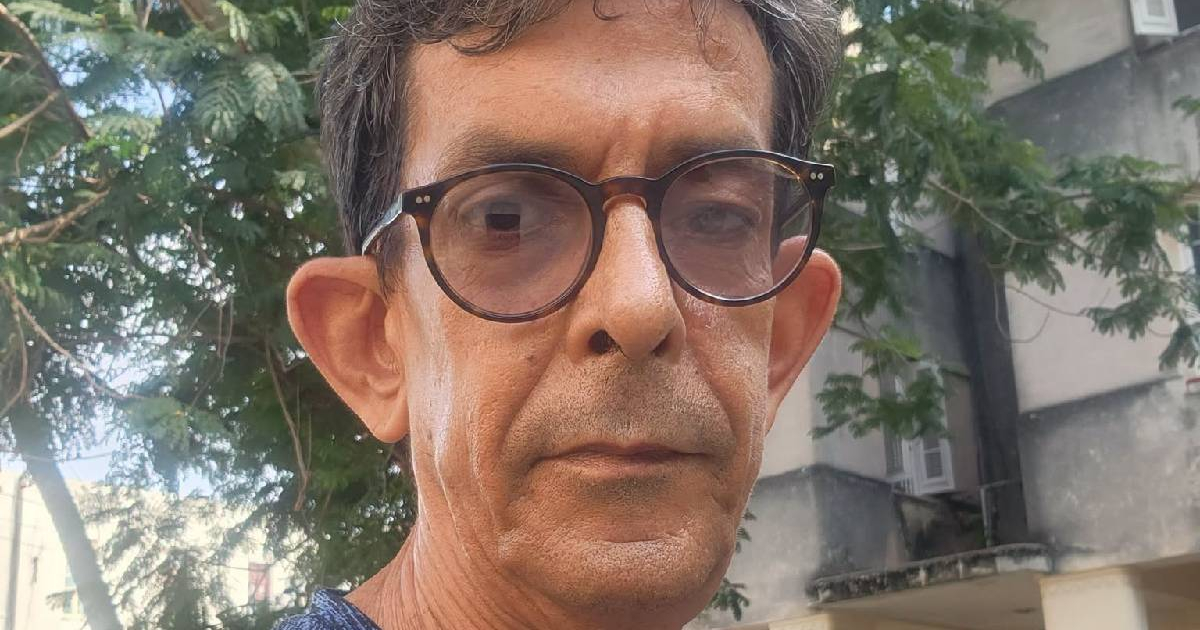
Renowned Cuban comedian Ulises Toirac has attributed the country's ongoing electrical crisis to decades of mismanagement and flawed internal decisions by the Cuban government, rather than external factors.
In a detailed analysis shared on his Facebook profile, Toirac critiques the decisions he believes have led to the deterioration of the National Electric Power System (SEN).
"I've repeatedly emphasized that the current state of our energy sector (an epic disaster) is not solely or directly the result of the restrictive policies of successive U.S. administrations, especially the current 'energy blockade'," Toirac stated.
He argues that the collapse stems more from misguided internal decisions driven by "planning" lacking in scientific basis and future vision.
Historical Context of Energy Dependency
Before pursuing a career in comedy, Toirac studied Electrical Engineering at CUJAE. In his analysis, he traces a historical trajectory from Cuba's energy reliance on the Soviet Union, through the Special Period, to the aftermath of the so-called "Energy Revolution" launched by Fidel Castro in 2005.
The popular actor recalls Castro's bold declaration that "in 2006, we will have surplus electricity," a statement starkly contrasting with the current severe crisis of the Cuban power system.
Energy Revolution's Downfall
The Energy Revolution aimed to decentralize power generation using thousands of generators distributed throughout the country. According to Toirac, the diesel engine program exceeded 1,300 MW of installed capacity and officially concluded by early 2007, coinciding with the introduction of fuel oil engines.
He points out that these engines had factory warranties of just five years, and by 2017, resources necessary for their maintenance became scarce.
Citing 2022 statistics, Toirac notes the presence of 1,401 engines across 189 locations, with 366 out of service due to a lack of parts and another 150 awaiting maintenance. The generation from these units reportedly declined by 42% between 2018 and 2022.
Consequences of Distributed Generation
Toirac argues that while the focus was on distributed generation, the development of new thermoelectric plants to replace aging ones was neglected, and existing facilities received insufficient maintenance.
This neglect was compounded by the increased wear from using Cuban crude oil, which contains high sulfur content and requires more intensive upkeep.
He also criticizes a key objective of the Energy Revolution: reducing consumption through more efficient appliances.
An German technical report cited by Toirac, based on 2009 data from the Electric Union, showed that average daily household consumption remained stable between 5.2 and 5.4 kWh from 2005 to 2008.
Missed Opportunities for Energy Independence
Toirac highlights that Cuba transitioned from dependency on Soviet fuel to Venezuelan oil without seizing the opportunity to develop sustainable alternatives that could mitigate the country's energy vulnerability.
Though he acknowledges U.S. measures complicated financing and purchasing mechanisms, Toirac concludes that internal decisions were ultimately more impactful.
"The solutions, which included massive purchases, were pivotal in the extreme deterioration of our country's electrical production," he asserted.
This analysis surfaces at a critical juncture for the SEN. On August 5, Cuba experienced a record deficit of over 2,400 MW in generation, with prolonged blackouts continuing to afflict the population.
This isn't the first time Toirac has criticized the Cuban regime's long-standing energy policies. In March, he blamed the collapse on "30 years of lag" due to inadequate investment strategy. By July, he attributed the disaster to "six decades of poor economic decisions."
Frequently Asked Questions about Cuba's Energy Crisis
What are the main causes of Cuba's current electrical crisis?
The current electrical crisis in Cuba is primarily attributed to decades of internal mismanagement, flawed decision-making, and lack of scientific planning by the Cuban government, rather than external influences.
What was the Energy Revolution in Cuba?
The Energy Revolution, initiated by Fidel Castro in 2005, aimed to decentralize power generation in Cuba by deploying numerous generators across the country. While it initially increased capacity, it eventually led to significant maintenance challenges and contributed to the current crisis.
How did Cuba's dependency change post-Soviet Union?
After the Soviet Union's collapse, Cuba shifted its dependency from Soviet fuel to Venezuelan oil. However, this transition did not involve developing alternative energy sources, leaving the country vulnerable.