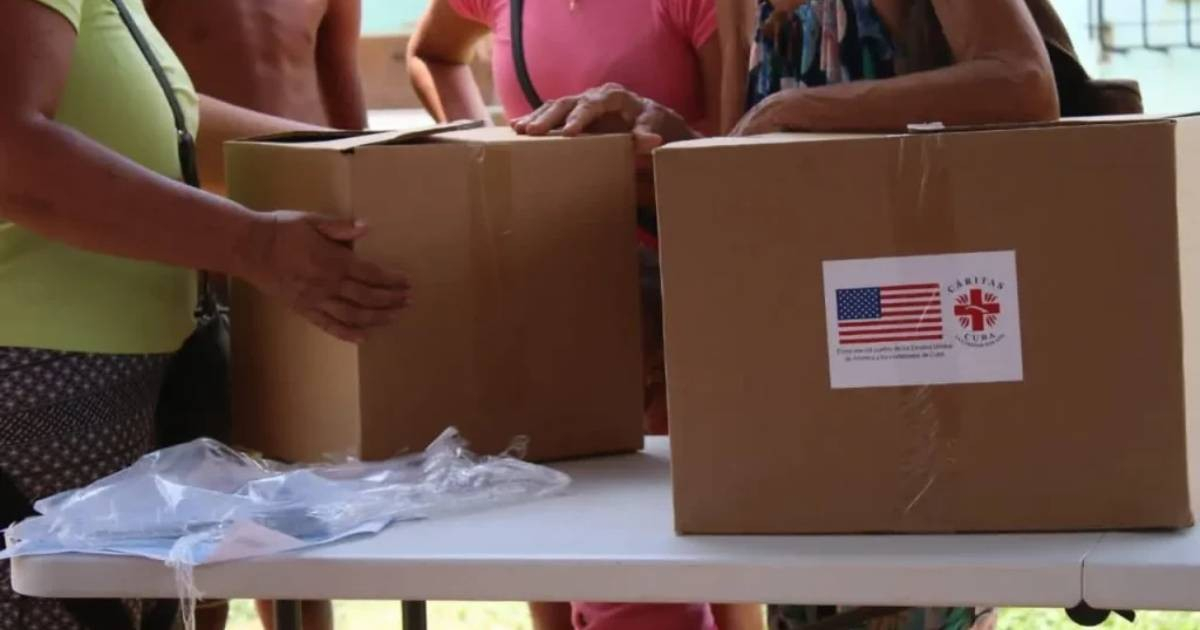
This week, humanitarian aid from the United States will begin arriving in the Diocese of Santa Clara. The initial shipment, arriving via the city’s airport, is intended for vulnerable families in Quemado de Güines.
The Diocese of Santa Clara announced the arrival of this assistance through a letter from Bishop Arturo González Amador. In the letter, he outlined the distribution plan for the $100 million aid package pledged by Washington to Cuba.
After Quemado de Güines, additional areas within the diocesan territory will be identified and visited for subsequent deliveries.
Caritas to Manage Major Portion of Aid
Out of the national $100 million package, the Catholic Church, through Caritas, will oversee the distribution of aid valued at $60 million. The remaining funds will be dispersed through other trusted organizations.
In June, the U.S. confirmed that Caritas would manage $60 million, while $40 million would be allocated by other organizations.
Bishop González clarified that Caritas’ managed portion includes food modules, hygiene products, and household items, along with necessary logistics. No cash will be handed to Caritas directly.
Collaborative Efforts with Catholic Relief Services
The project is supported by Catholic Relief Services (CRS), a U.S.-based Catholic Church organization that has collaborated with Caritas Cuba for over 30 years.
CRS and Caritas Cuba jointly prepare food, sanitary, and household modules, which are then dispatched to the island.
Caritas accepts these shipments at ports or airports and distributes them to families assessed and chosen based on their level of vulnerability.
Commitment to Serving the Truly Needy
Bishop González emphasized that the project's aim is to assist the genuinely needy, not just friends or supporters, respecting the donors' intentions.
He acknowledged that the aid wouldn’t reach all in need: “We can only address the most urgent cases and the most painful situations,” he stated, adding that the modules offer temporary relief rather than a permanent social assistance program.
The bishop also stressed that beneficiaries need not be Catholic: “This aid is for any family in extreme poverty and urgent need, regardless of their religious beliefs.”
A Nationwide Effort Amidst Dire Circumstances
The arrival of the first shipment in Santa Clara signifies a new phase of the national program at a time when, according to González, Cubans face "harsh and distressing" conditions, with families deprived of basic necessities.
In July, the initial shipment from the $100 million package left Miami with supplies for vulnerable families in Havana.
Caritas Cuba explained that beneficiaries are selected through home visits and vulnerability criteria, prioritizing elderly living alone, pregnant and nursing mothers, individuals with disabilities or bedridden, and families with young children at risk.
This new initiative continues the aid efforts following Hurricane Melissa, where Washington initially allocated $3 million, later adding another $6 million, bringing the emergency package to $9 million, primarily channeled through Caritas and eastern Cuban parishes.
Frequently Asked Questions About U.S. Aid to Cuba
How will the aid be distributed in Cuba?
The aid will be distributed by Caritas, which will manage $60 million of the package, delivering food, hygiene products, and household items to families in need based on vulnerability assessments.
Who are the primary beneficiaries of this aid?
The aid primarily targets vulnerable groups, including elderly living alone, pregnant and nursing mothers, persons with disabilities, and families with young children in risk situations.
Is the aid limited to Catholic families?
No, the aid is intended for any family facing extreme poverty and urgent needs, regardless of their religious affiliations.