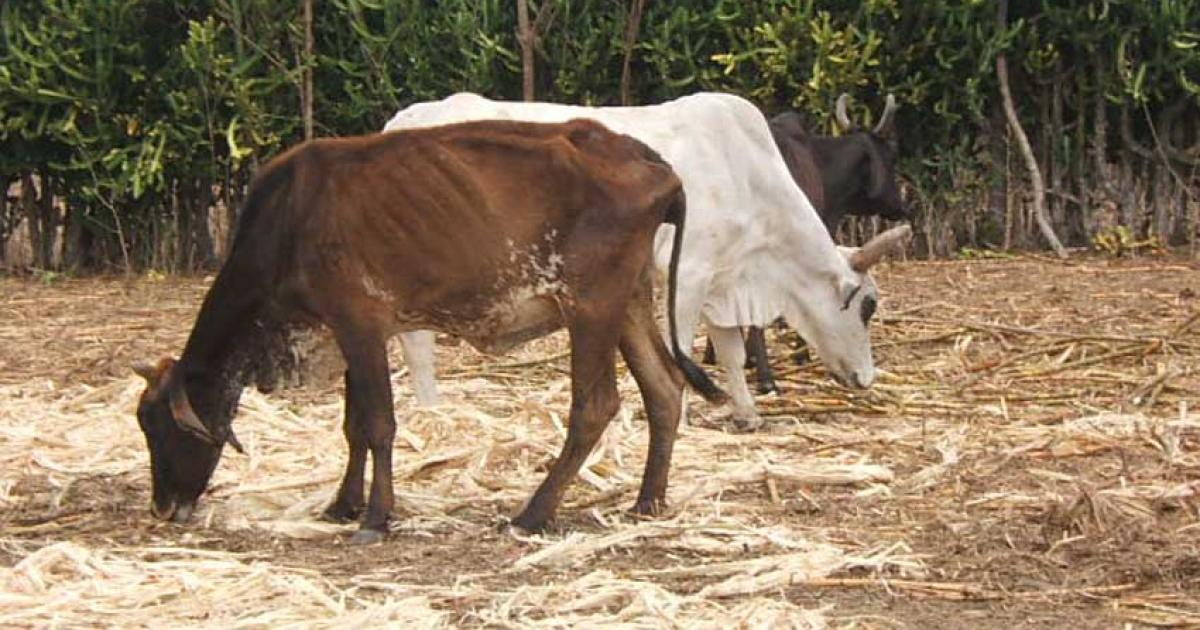
The Cuban government has introduced new regulations governing the slaughter, consumption, and sale of beef and equine meat by agricultural producers. These changes revise the framework set in 2021 and even allow individuals without land to engage in the fattening of certain animals.
The Ministry of Agriculture published Resolution 162/2026 in Ordinary Official Gazette No. 75, laying out the new procedures, which will take effect 30 days post-publication.
This regulation applies to both individuals and legal entities owning cattle and equines who wish to slaughter their animals for sale or personal use. The objectives include encouraging livestock rearing, acknowledging ownership rights, and enhancing producers' access to various markets.
Opportunities for Landless Individuals in Livestock Fattening
A notable change is that individuals meeting specific criteria can fatten male calves and yearlings without owning land. In such cases, they must register the animal with the appropriate Livestock Registry and obtain a sanitary license from the competent authority.
New Requirements for Livestock Slaughter
For legal slaughter, owners need to be registered with the Land Registry and Livestock Control Registry, adhere to animal health regulations, and respect established categories and minimum weights.
For cattle, the resolution specifies:
- Bulls: 100% with a minimum weight of 370 kilograms.
- Young bulls: 40%, at least 300 kilograms.
- Heifers unsuitable for reproduction: 5%, with 290 kilograms.
- Cows unsuitable for reproduction: 6%, with 345 kilograms.
- Oxen and discarded breeding stock: extraction rate of 10%, with 450 kilograms.
Similar percentages and weights are set for buffalo, while equine slaughter can occur without an extraction rate at the producer's discretion. Adult horses must weigh at least 280 kilograms, and non-reproductive females, 250 kilograms.
After assessing meat production potential, producers will negotiate deliveries with municipal balance officers, determining what will be used for personal consumption, with agreed-upon prices and quantities.
Process for Slaughter and Sale
Producers must request a slaughter certificate from the veterinary authority and then visit the Livestock Registry for a transit pass to an authorized slaughterhouse or slaughter slab.
These facilities must have veterinary inspection to ensure the meat's health standards. The slaughter and processing costs will be negotiated between the producer and the slaughterhouse. Additionally, owners can claim by-products, including meat, blood, hides, offal, and other edible and non-edible items.
Owners may consume the meat or sell it at authorized locations, provided they meet quality, safety, and current health regulations.
A Shift from 2021's Stringent Conditions
This new regulation expressly repeals Resolution 139 from April 2021, which allowed producers to slaughter and sell cattle under numerous strict conditions. Previously, ranchers had to fulfill state delivery commitments for milk and meat, ensure herd growth, and report no animal shortages, among other requirements. The process also involved applications to municipal authorities and approvals from the Agricultural Affairs and Livestock Commission.
One of the most restrictive rules stated that producers could only slaughter one animal for every three added to their herd. The Minister of Agriculture, Ydael Jesús Pérez Brito, clearly outlined the formula: a herd increase of three animals permitted the slaughter of one; an increase of six allowed for two.
The 2021 relaxation was part of a broader effort to boost agricultural production amid food shortages. Legal slaughter under these rules began shortly thereafter, with ten producers from a cooperative in Sancti Spíritus legally slaughtering and selling beef to the public starting in June of that year.
Five years later, the government is once again adjusting the system amid a prolonged food crisis, as beef remains a hard-to-obtain commodity for many Cubans.
FAQ about Cuba's New Beef Regulations
What changes have been made to Cuba's beef slaughter regulations?
The Cuban government has eased the rules, allowing even individuals without land to fatten certain animals and setting new criteria for legal slaughter, including registration and weight requirements.
How does the new regulation affect landless individuals?
Landless individuals can now participate in livestock fattening, provided they register the animals and obtain necessary sanitary licenses.
What are the new weight requirements for cattle slaughter?
The resolution specifies minimum weights for various categories, such as 370 kilograms for bulls and 300 kilograms for young bulls.