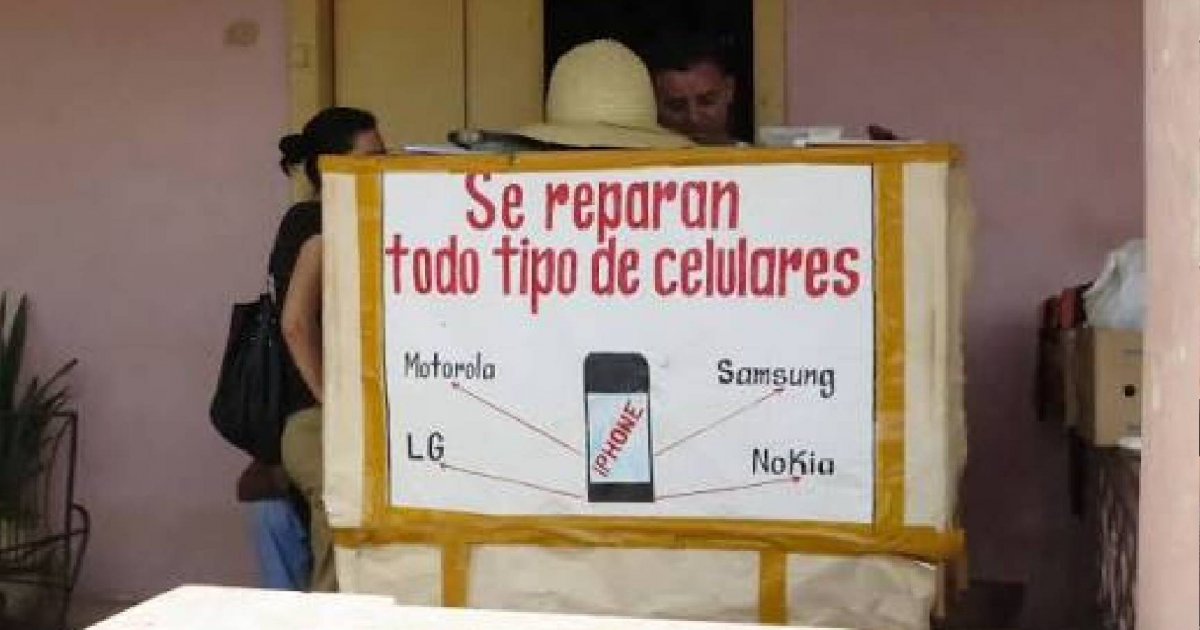
The Cuban Council of State has released an updated and consolidated version of Decree-Law 90 concerning self-employment in the country. This document outlines who is eligible for self-employment, under what conditions, and which entity is responsible for its oversight. The law was published in the Official Gazette No. 12 Special Edition of 2026, which was made available on Sunday.
This special edition is a direct consequence of the mandates outlined in Decree-Law 133 of 2026, issued by the Council of State on August 19 and published in the Ordinary Gazette No. 71 on September 2. It amended Decree-Laws 88, 89, and 90, requiring their consolidated texts to be published within 30 working days.
The 2026 Special Edition of the Gazette compiles the three key regulations governing Cuba's non-state sector: Decree-Law 88, concerning small and medium-sized enterprises (SMEs) and private companies with over 100 employees; Decree-Law 89, regarding non-agricultural cooperatives; and Decree-Law 90, related to self-employment.
Self-Employment Guidelines and Oversight
In the updated Decree-Law 90, it is specified that the National Institute of Non-State Economic Actors is responsible for directing and controlling the state's policy on the development and operation of self-employed workers.
This institute, which operates under the Council of Ministers and was officially established in August 2024, is tasked with managing authorizations and overseeing the organization and control of the sector.
Eligibility and Employment Cap
According to the regulation, self-employment is open to Cuban citizens residing within the nation's borders and foreign permanent residents.
The decree states that self-employment can be conducted independently or by hiring up to three employees.
Notable Changes in the 2026 Regulatory Framework
The 2026 regulatory framework introduces substantial changes compared to the original 2024 version. Notably, it formally recognizes the role of street vendors within the self-employment category, offering a simplified authorization process.
Another significant adjustment is the removal of the concept of "scope" of activity. The Ministry of Finance and Prices now determines the scope based on the project proposal submitted by the applicant, providing greater flexibility.
Additionally, the tax regime has been revised: the fixed quota system has been replaced with a quarterly income-based payment scheme, allowing for the deduction of a minimum exemption.
Previously, Decree 160 of the Council of Ministers, effective since August 4, 2026, redefined the list of permitted, conditional, and prohibited activities for non-state economic actors, including self-employed workers, thereby completing the new regulatory framework for the sector.
Understanding Cuba's Self-Employment Regulations
What is the role of the National Institute of Non-State Economic Actors?
The National Institute of Non-State Economic Actors is responsible for managing the development and functioning of self-employment in Cuba, controlling policy, issuing authorizations, and overseeing the sector.
Who can engage in self-employment in Cuba?
Self-employment in Cuba is available to Cuban citizens residing in the country and foreign permanent residents.
What changes were made to the tax system for self-employed workers?
The tax system for self-employed workers was revised to replace the fixed quota system with a quarterly income-based payment scheme, including a minimum exemption deduction.