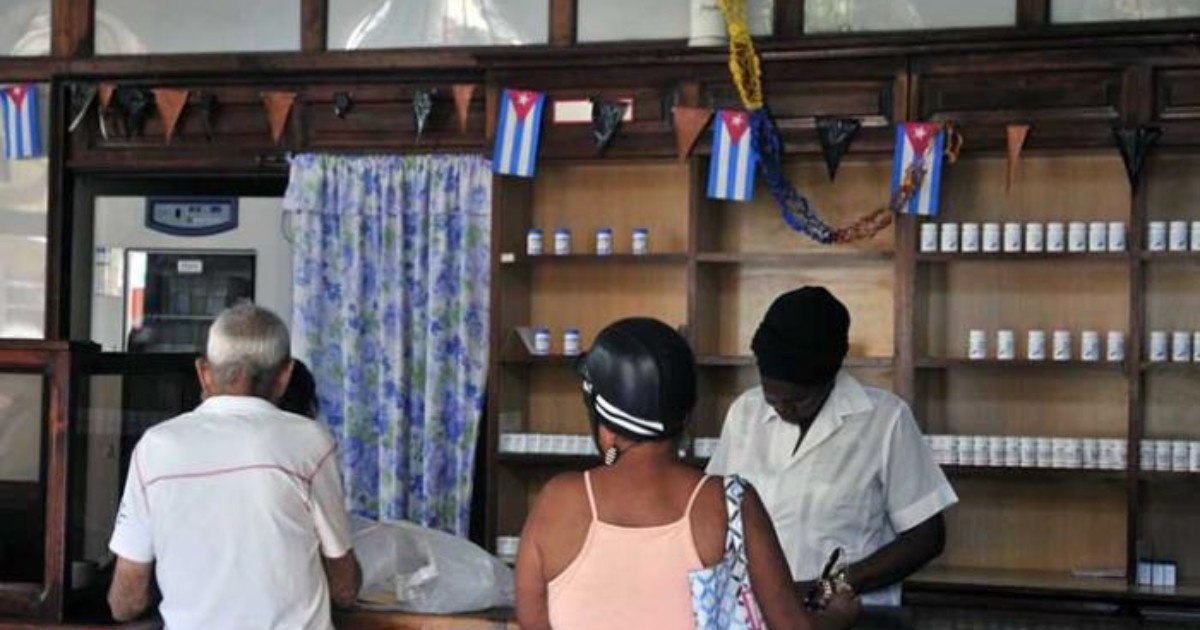
The Cuban government has announced that 14 projects aimed at establishing privately managed community pharmacies have been approved to advance in their proceedings. Meanwhile, three additional proposals are still in the process of formation.
According to Cristina Lara Bastanzuri, the National Director of Medications and Medical Technologies at the Ministry of Public Health (Minsap), a total of 36 projects are currently under evaluation for the non-state management of community pharmacies.
However, Lara emphasized that no pharmacies under this new model have yet started serving the public.
New Opportunities for Non-State Actors
This initiative allows non-state entities to manage pharmacies, provide pharmaceutical services, and sell medications along with other health-related products. Strict regulations will be enforced regarding the storage and dispensing of medications, and professional personnel will be required to manage the technical operations.
It's important to note that the premises of existing state-run community pharmacies will not be leased for these new ventures. The state will maintain control over the current network, as underscored in the official report.
Scope of Medication Sales
Privately managed pharmacies will have the ability to develop their own list of health products, but they must adhere to the regulations established by Minsap. They are prohibited from selling hospital-use medications, drugs classified under national restrictions, or any products listed as controlled substances.
All medications available for sale must be registered with the Cuban regulatory authority. Initially, a temporary health registration valid for two years can be used before applying for permanent registration.
Minsap has also created a guideline listing medications in high demand by the population, some of which are inconsistently available in the state network, alongside medical supplies and other health products.
State-Controlled Imports Continue
Although the pharmaceutical sector is opening up to private businesses and other non-state actors, the importation of medications will still be managed through state-run entities. "All imports must go through our two importers, Medicuba from Minsap and Farmacuba from the Cuban pharmaceutical industry," explained Lara.
These companies will assist new pharmacy managers in finding suppliers and handling import procedures. They can also utilize the services of Emcomed, a state pharmaceutical distributor with the necessary licenses, warehouses, transportation, and specialized staff.
The authorities emphasized that these businesses will be subject to stringent health controls due to the direct impact of medication sales on public health.
A Shift in Policy
This initiative is grounded in Decree 160/2026, which authorized pharmaceutical services for private micro, small, and medium enterprises (MSMEs) and non-agricultural cooperatives. This was previously a prohibited activity for the private sector.
Taking effect on August 4th, the decree classifies pharmaceutical, optical, care, and rehabilitation services as permissible activities, albeit under state permits and regulations. This deregulation is part of a larger package aimed at revitalizing Cuba's struggling economy.
Back in June, the government unveiled 176 measures to spur economic recovery, including increased private sector involvement in certain activities.
The opening of this market comes amid a severe shortage of medications that has plagued the state network for years, forcing many Cubans to seek pharmaceuticals outside traditional pharmacies.
In August, a pharmacy in Regla, Havana, showcased medications, vitamins, and natural products with prices reaching thousands of pesos, as workers explained the business was expanding and seeking official authorization.
FAQs on Private Pharmacy Initiatives in Cuba
What is the purpose of allowing non-state management of pharmacies in Cuba?
The initiative aims to diversify the management of pharmacies, enhance access to pharmaceutical services, and address the longstanding shortage of medications in the country.
Will non-state pharmacies in Cuba be able to import medications directly?
No, the importation of medications will remain under the control of state entities. Non-state pharmacies must work with state-run companies like Medicuba and Farmacuba for their import needs.
What are the restrictions on the types of medications non-state pharmacies can sell?
Non-state pharmacies cannot sell hospital-use medications, controlled substances, or products under national restrictions. All medications must be registered with the Cuban regulatory authority.