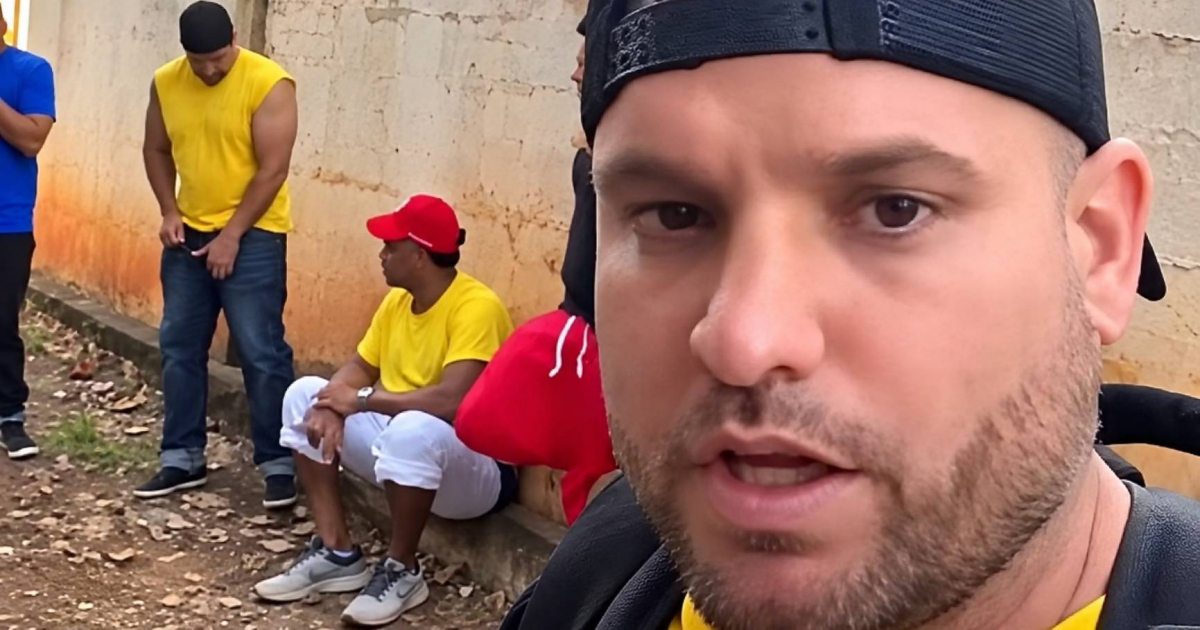
Yasmany Moreno de Armas, a Cuban national deported to the Central African Republic (CAR), is working tirelessly to bring together fellow Cubans and Nicaraguans in detention centers across Bangui. He has taken on the role of liaison, bridging the gap between deportees and their families abroad.
In videos posted on Facebook, which have garnered thousands of views, Moreno shares his success in receiving authorization from a UN official to relocate Cubans to the organization's facility. He is also in the process of securing paperwork to include Nicaraguans in the move.
"We've already spoken with the UN officer, and they’ve agreed to let us bring them to our facility because we're all Latinos. The Cubans have already been authorized to join us," Moreno states.
Impact on Families and Social Media
The videos have had a profound impact on the families of the deported individuals. Moreno shares that thanks to the recordings shared on social media, families who had lost contact for up to ten days were able to reconnect.
"Thanks to you, yesterday all the families of those boys who were out of touch could communicate. They messaged me privately, and I managed to link them with their families," he mentions in one of his reels.
Challenges and Ongoing Deportations
Moreno warns that the situation is far from resolved. UN officials have informed him that a new group of deportees is expected to arrive soon. "More people will arrive in three days; they're already on the flight," he noted.
He also advises families of potential deportees to reach out if someone they know is sent to CAR. "If by any chance, God forbid, they send a relative here, contact me privately. I'll come, find them, and bring them to our center," he expressed.
The Grim Reality in Bangui
The conditions for deportees in Bangui are dire. One of the three Nicaraguans sent to CAR in late August, marking the first instance of citizens from that country being deported to Africa under this policy, described the situation starkly: "There's no water, nothing, we don't have the necessary conditions."
Reports from El País highlight that deportees were handcuffed during flights, remain detained without the freedom to move, and lack the immigration documents needed to legally reside in the country.
While the UN, through its MINUSCA mission, provides food, their legal status remains unsolved.
Background and Political Context
Moreno arrived in Bangui on August 1, 2026, as part of the second group of 30 deportees sent from the United States to CAR. The first group, consisting of 25 individuals, arrived on June 13. These deportations are part of a policy initiated by the Trump administration, targeting migrants from countries such as Cuba and Nicaragua that do not accept or limit direct repatriations.
The agreement between Washington and CAR was signed in May 2026, involving a payment of $85 million.
Among the deportees in Bangui are Arístides Fernández García, detained by ICE despite having a valid work permit until 2030 and a pending asylum application, and Daniel Fuentes, a 31-year-old transgender woman from Miami arrested by ICE in March 2026.
Moreno sums up the gravity of the situation with a cautionary note: "Anyone can end up in this situation, even if they have papers and no criminal record."
In early September, Moreno and Fernández García regained some hope as their cases were reopened by judges with promising prospects according to their lawyers, although their situation in Bangui remains unresolved.
Deportations to unusual destinations like Africa reflect the ever-changing landscape of immigration policies. Stay updated on U.S. Immigration news to understand how these policies impact Cubans and other Latinos.
Understanding the Impact of Deportations to Africa
Why are Cubans and Nicaraguans being deported to Africa?
Due to constraints on direct repatriations from the U.S. to Cuba and Nicaragua, the Trump administration initiated a policy of sending deportees to third countries like the Central African Republic.
What challenges do deportees face in the Central African Republic?
Deportees face harsh conditions, including lack of water and inadequate living conditions. They also remain without the necessary documents to reside legally in the country.
How is the UN involved with deportees in CAR?
The UN, through its MINUSCA mission, provides food to the deportees but has not been able to resolve their legal status in the Central African Republic.