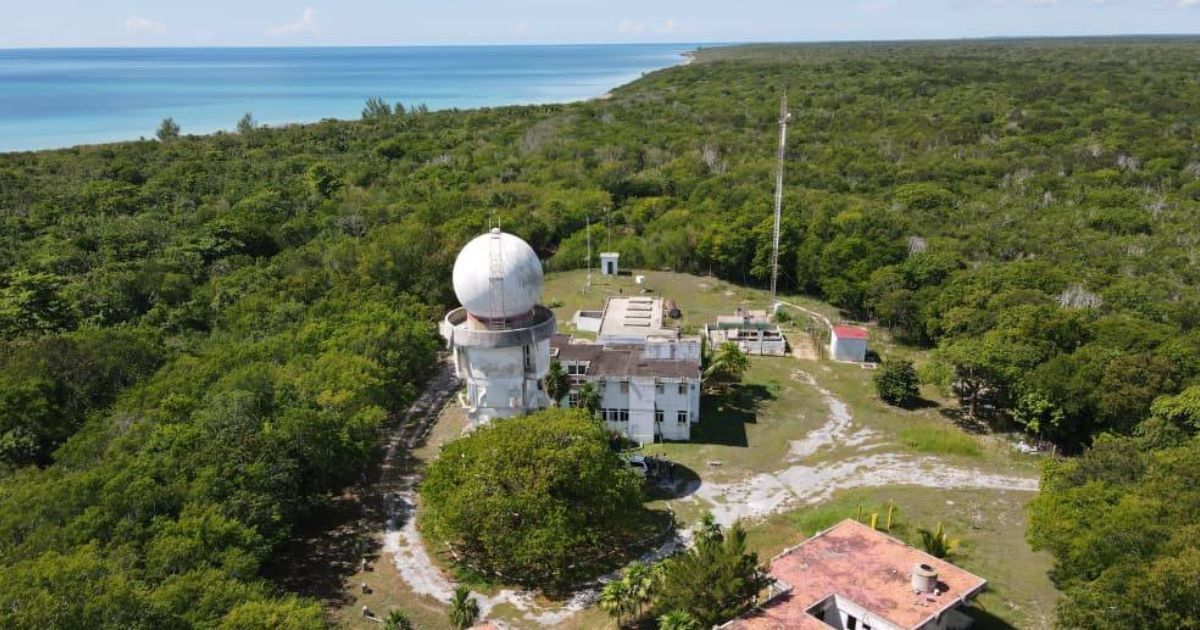
The ongoing crisis in Cuba has extended its reach to the country's meteorological surveillance system. A Cuban meteorologist has reported that all eight of the nation's weather radars are shut down 24/7, and their images are unavailable to the public on the official website of the Institute of Meteorology (INSMET), during the critical hurricane season.
Meteorologist Yosmelvi Páez took to Facebook on Tuesday to highlight the decline of INSMET's digital services, focusing particularly on the radar systems that are crucial for monitoring rain, storms, and other weather phenomena in real-time.
"All radars are turned off 24/7," Páez stated, expressing regret that people can no longer check radar images in the summer afternoons to track storms and view their progression.
Critical Role of Weather Radars
The national network comprises eight meteorological radars, which, according to official data, cover the Cuban archipelago and surrounding seas. Their role is vital in detecting precipitation and tracking the development of tropical storms and cyclones.
As of Tuesday, images from these radars were not loading on the INSMET's official website, preventing the public from accessing this crucial data through the institutional portal.
Public Access and Information Challenges
The absence of public radar images aligns with Páez's claims, although the inability to access them online doesn't conclusively prove each radar is physically off.
This issue is particularly urgent as the island is in the midst of hurricane season, which started on June 1 and runs through late November, a time when the Caribbean faces heightened risks from tropical storms and hurricanes.
Besides, Páez criticized the overall state of the Institute’s website, noting that users encounter outdated information and difficulties in accessing meteorological data. "There's no information on anything, nothing is updated, there are no data from the weather stations," he lamented.
Alternative Sources and Communication Barriers
He also questioned the quality and frequency of information released by INSMET on platforms like WhatsApp, Telegram, and Facebook, emphasizing the important role that amateur and professional meteorology groups on social media have taken on.
"Where would the Cuban population be without the Meteorology groups on social media?" he pondered, noting that many of these groups provide information not easily found through official channels.
Páez offered a stark critique of the official information channels during dangerous weather events, stating, "While waiting for good information from the Institute of Meteorology, a hurricane could pass over us without us even realizing it."
He also linked the difficulties in accessing televised weather reports to the extended power outages that affect the Cuban population. "I don’t know why the meteorologist goes on TV to give the weather report because without electricity, nobody watches," he remarked sarcastically.
The current situation starkly contrasts with the plans announced months ago to enhance the country's observational capabilities. In February, Cuba declared an initiative to modernize its network of meteorological stations with United Nations funding, aiming to improve data quality and preparedness against extreme weather events.
This program includes the installation of a new surface meteorological station, two radiosonde stations, and the modernization and updating of eight existing stations.
The latest warning comes at a particularly sensitive time: Cuba entered the 2026 hurricane season amid ongoing power outages, water and medicine shortages, and a severe economic crisis, factors that increase the population's vulnerability to intense weather events.
Weather Radar System in Cuba: FAQs
Why are Cuba's weather radars turned off?
Reports suggest that the ongoing crisis in Cuba has affected the meteorological surveillance system, resulting in all eight radars being shut down continuously. This impairs real-time weather monitoring critical during the hurricane season.
What impact does the radar shutdown have on the Cuban population?
The lack of operational weather radars limits the ability to track storms and cyclones, increasing the risk of unpreparedness during the hurricane season, which could have severe consequences for the population.
What are the plans for improving Cuba's meteorological infrastructure?
Cuba announced plans in February to modernize its meteorological infrastructure with United Nations funding. This includes installing new stations and updating existing ones to enhance data quality and readiness for extreme weather.