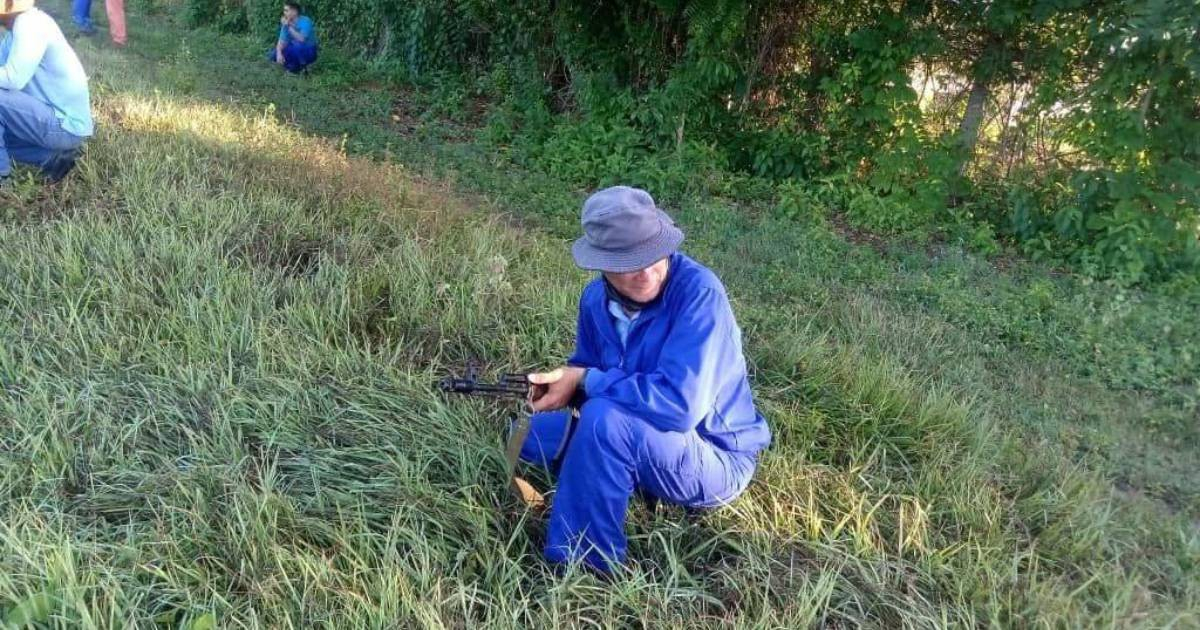
In a recent post, ETECSA showcased its employees on the Isle of Youth participating in a defense training exercise, some of them holding rifles. This sparked a wave of criticism and sarcasm from Cubans, who urged the company to focus on improving its deteriorating telecommunications services.
"Fix the data connection, that would really be noteworthy," commented one user in response to the images shared on Facebook by ETECSA's Territorial Division in this special municipality.
The photographs, posted on August 31, depicted several workers clad in the company's signature blue uniforms, practicing in a vegetation-covered area while carrying long firearms.
According to ETECSA, the event aimed to "test the response protocols and preparedness of the workforce for potential contingencies," and reaffirm "the commitment to safeguarding company resources and defending national sovereignty."
However, the post quickly turned into a platform for numerous Cubans to challenge the company's priorities.
One comment highlighted that the service had been down for hours on the same day in the Isle of Youth, affecting emergencies and daily operations reliant on the internet.
"No coverage, until 4 PM there wasn't a single signal to make an emergency call from the clinic or for families unable to buy food due to a failed transfer, and here you are boasting about a defense exercise," criticized the user.
The irony didn't stop there.
"That's why the service is so poor; they have to occupy their time somehow," remarked one person.
"In a normal country, the baker bakes, the fisherman fishes, and the doctor heals patients because that's what they're paid for," another person wrote.
A third user directly questioned the company's priorities: "ETECSA's biggest challenge is to provide quality service to the people, something they have never accomplished; they should focus on that and leave defense to those it's meant for."
This activity is part of the "Year of Defense Preparation" promoted by the Cuban regime in 2026, involving state-run company workers.
In June, over 400 ETECSA employees in Camagüey participated in National Defense Day activities, which included shooting practice and rifle assembly and disassembly exercises.
The images from the Isle of Youth were released amidst widespread complaints about Cuba's sole telecommunications provider due to connectivity issues and interruptions linked to prolonged power outages.
In August, ETECSA mistakenly sent a false earthquake alert to thousands of phones across nine provinces, leading to panic and evacuations, which they blamed on a "technical-human error."
"The worst service in the world. Neither the mobile nor the landline networks work. With power outages exceeding 20 hours, a millionaire company can't even install battery banks to support the system," another user protested.
The post intended to highlight employee preparedness for potential contingencies ended up igniting a more pressing demand from ETECSA's customers: reliable phone and internet service.
ETECSA's Challenges and Public's Response
What was the public's reaction to ETECSA's defense exercise?
The public reacted with criticism and sarcasm, urging ETECSA to improve their telecommunications services instead of focusing on defense exercises.
Why did ETECSA conduct this defense training?
ETECSA stated that the training was to test response protocols and workforce preparedness for potential contingencies, as part of the "Year of Defense Preparation" promoted by the Cuban regime.
What issues are ETECSA customers facing?
Customers are dealing with poor service quality, connectivity problems, and interruptions linked to extended power outages.
How did ETECSA's false earthquake alert affect the public?
The false alert, attributed to a "technical-human error," caused widespread panic and evacuations in nine provinces.