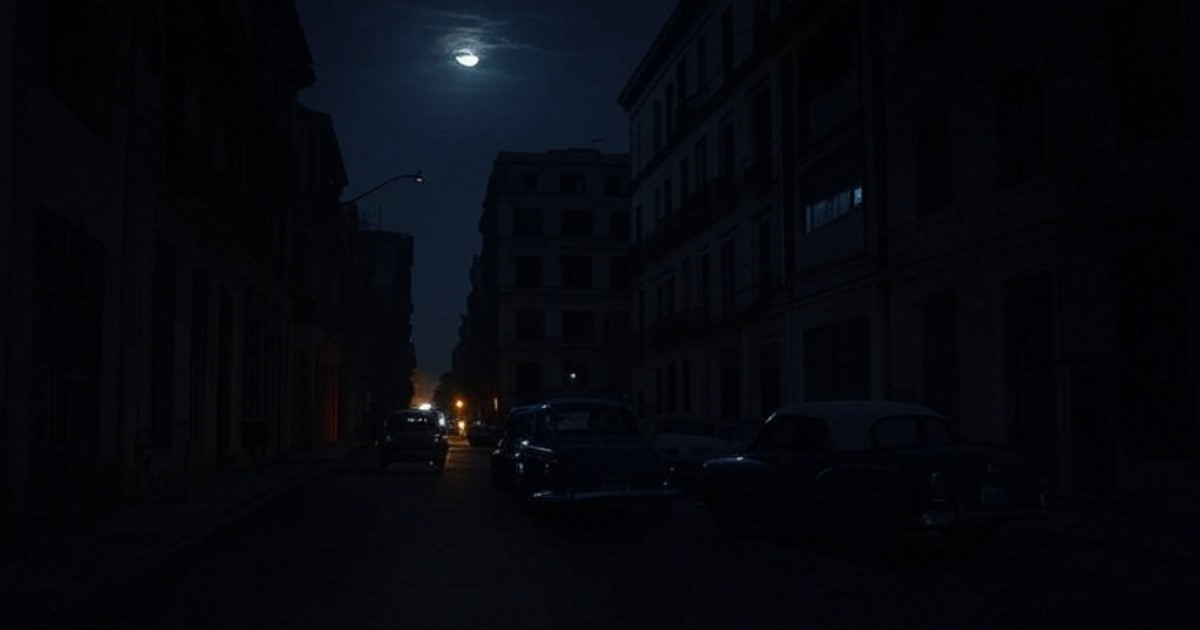
Residents of the towering 18-story buildings in Garzón, Santiago de Cuba, have been left without electricity for nearly 40 hours, according to a public complaint shared by journalist Yosmany Mayeta Labrada on his Facebook page, Súbelo Mayeta, this Sunday.
A neighbor residing on the 10th floor of the complex, who requested anonymity, described the situation as "inhumane" for the families living there.
According to her account, electricity was briefly restored around midday on Sunday but lasted only about ten minutes. A malfunction in the so-called "caballito" occurred, and by the time it was fixed, the two-hour cycle they were supposed to receive had already passed, leaving residents unable to benefit from it.
Challenges of High-Rise Living
The lack of electricity is particularly severe because of the nature of these high-rise buildings. With elevators out of service, residents are forced to climb up and down as many as 18 flights of stairs. Moreover, water doesn’t reach the upper floors as its distribution relies on a pump that requires electricity to operate.
"The saddest part... we've had to carry water from the street across and climb several trips up 9, 10, and 17 floors just to bathe and cook. You wouldn't want to see how [...] children aged eight and six have had to carry small containers to help their mothers and grandmothers," commented a resident online.
"There are elderly, sick, and children here who cannot sleep at night. Everything in these buildings is more complicated. It’s heartbreaking to see elderly and children climbing all those stairs," the complainant shared.
The History Behind the Structures
Referred to as Centro Urbano Sierra Maestra, locally known as the "18 Plantas de Garzón," this complex consists of five 18-story towers located on Victoriano Garzón Avenue, between Pedrera and San Miguel. Built in the 1980s using the IMS system, a Yugoslavian technology for prefabricated, post-tensioned concrete designed with earthquake-resistant features.
The towers were originally home to about 2,000 people. Each of the five buildings carries names associated with episodes and locations related to the guerrilla struggle in the Sierra Maestra: Turquino, La Plata, El Jigüe, Cinco Palmas, and Combate de Uvero.
Widespread Power Outage Issues
This complaint is not an isolated incident. Since June 16, the Santiago de Cuba Electric Company reorganized power outages across nine residential blocks, allowing just one or two hours of service per day per block. In July, residents of Veguita de Galo, also in Santiago, reported 26 consecutive days without electricity due to a transformer failure.
Prolonged blackouts are a recurring problem in high-rise buildings across other provinces. In July, a 12-story building in Santa Clara went over 112 hours without power or water, facing the same issue with electric pumping. In the same Garzón buildings, the dangers of smoke and toxic gases from cooking with charcoal were highlighted due to the inability to use electric stoves.
The national situation is equally concerning. This Sunday, the National Electroenergetic System had only 1,010 MW available against a forecasted demand of 3,250 MW, with a maximum predicted impact of 2,125 MW. Cuba has faced seven total collapses of the National Electric System in 2026 so far.
Mayeta Labrada summed up the human aspect of the crisis: "It's one thing to talk about blackouts from an office and another to climb 18 floors in darkness, without an elevator, in the heat and possibly without water, after tens of hours without electricity." He concluded his complaint with a direct demand: "After 40 hours, they need much more than explanations: they need electricity."
Common Questions About Power Outages in Cuba
What causes prolonged power outages in Cuba?
Long-term power outages in Cuba are often due to an outdated and underfunded electrical infrastructure, compounded by equipment failures and management inefficiencies.
How do residents cope with power outages in high-rise buildings?
Residents often face immense challenges, such as climbing numerous flights of stairs due to non-functional elevators and carrying water manually, as the water pumps require electricity.
What is the government doing to address these power issues?
The Cuban government has attempted to reorganize power distribution, but persistent infrastructural problems and resource limitations have hindered significant improvements.